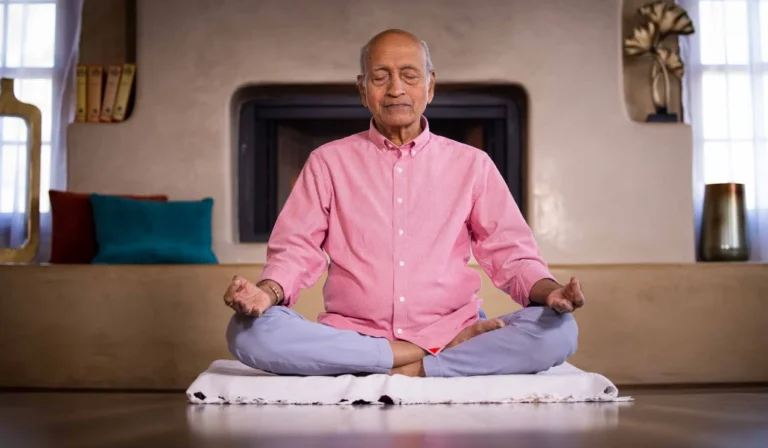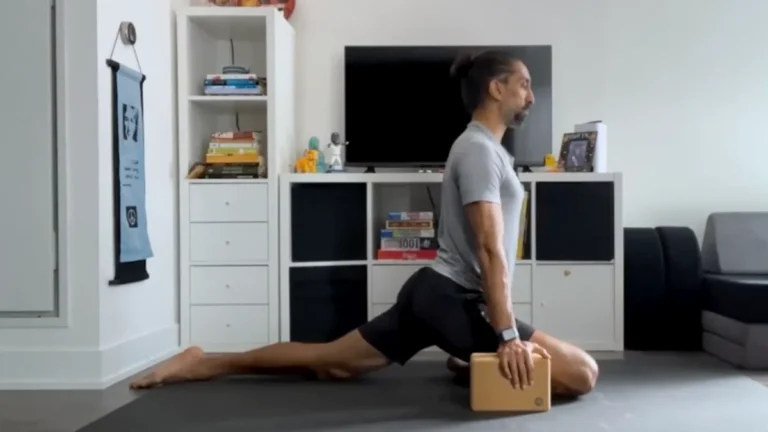












In the foundational texts of classical yoga, the mind is often depicted as a turbulent sea, governed by vrittis—the incessant waves of mental activity. As established in the seminal work of Patanjali, these fluctuations encompass right knowledge, wrong knowledge, imagination, sleep, and memory. Yet, the ultimate objective of yoga, defined as chitta vritti nirodha (the cessation of mental activity), presents a paradox: if the goal is cessation, why is the yogic path paved with such rigorous activity?
The answer lies in the strategic deployment of mental energy. The practices of yoga are designed to manifest the highest potential of the mind in the short term, eventually leading to a state of profound, effortless silence. This transition from activity to stillness is anchored in two essential pillars described in the Yoga Sutras: Abhyasa (repeated practice) and Vairagya (non-attachment).
The Synthesis of Effort and Letting Go: Yoga Sutra 1.12
In verse 12 of the first chapter, Patanjali articulates the mechanism of spiritual liberation: “abhyāsa vairāgyābhyāṁ tan-nirodhah.” This translates to the concept that the cessation of mental fluctuations is achieved through the dual application of persistent effort and the cultivation of non-attachment.
Abhyasa is defined as the commitment to repeated effort, while Vairagya represents the practice of detachment from the fruits of that effort. Together, they form a symbiotic cycle. Without the steadying force of abhyasa, the mind remains scattered; without the tempering influence of vairagya, the mind becomes rigid, fanatical, or trapped in the cycle of desire.
Abhyasa: The Mechanics of Habituation
The Science of Repeated Practice
To transform a new way of being into a natural state, one must navigate the "awkward phase." This is the period of friction where unfamiliar practices feel alien, mistakes are frequent, and the pull of past behaviors is strong. Patanjali’s philosophy recognizes that lasting change is not a sudden epiphany but a result of neurological and psychological conditioning.
Repeated practice allows the practitioner to move beyond the struggle of conscious effort. Whether in meditative practice or Ayurvedic lifestyle adjustments, the repetition of a constructive behavior eventually rewires the personality, making what was once "work" feel like "spontaneity."
Defining Stability (Sutra 1.13)
Patanjali clarifies the nature of this effort in Sutra 1.13: “tatra sthitau yatnah abhyāsah.” Here, abhyasa is identified as the effort to maintain sthiti—steadiness or stability. In a world defined by constant flux, distraction, and instability, maintaining an internal state of equilibrium is an act of defiance against entropy.
Patanjali suggests that within every individual resides a spark of purusha—the unchanging witness. By exerting the effort to remain steady in the face of external chaos, we begin to manifest this witness consciousness. This is the beginning of the transition from the ego-self to the svarupa, or the true form of the self.
Building the Firm Foundation: Dridha Bhumi
Steadiness is not a fleeting state but a solid ground, known in the tradition as dridha bhūmi. In Sutra 1.14, Patanjali outlines the requirements for establishing this foundation: “sa tu dīrgha kāla nairantarya satkāra āsevito dridha bhūmih.” This verse reveals that a firm attitude is the result of helpful behavior practiced continuously over a long duration, performed with deep care and respect.
Dirgha Kala: The Long-Term Horizon
The modern appetite for "quick fixes" is antithetical to abhyasa. Dirgha kala implies that true transformation requires weeks, months, or years of consistent application. Sudden, forced changes often trigger a psychological backlash, as the old personality fights to maintain its identity. Gradual, incremental integration is, therefore, the most sustainable path to growth. A sincere practitioner understands that the timeframe for progress is unique to every individual and situation.
Nairantarya: The Continuity of Awareness
Nairantarya denotes an unbroken continuity of practice. A common pitfall for many is the compartmentalization of spiritual life—maintaining a pious demeanor on the meditation mat while engaging in destructive, undisciplined behavior in the "real world."
True continuity means integrating yogic ideals into every interaction, especially during complex or difficult social situations. The value of one’s meditation is ultimately measured by the quality of one’s service to others and the stability maintained when one is pushed to the limits of comfort.
Satkara: The Balance of Care and Respect
Satkāra—the practice of care, respect, and awareness—acts as the vital counterweight to the firmness of dridha bhūmi. Without satkāra, discipline can easily curdle into rigidity or fanaticism.
Satkāra requires a sense of vulnerability. It is the acknowledgement that while we must be firm in our boundaries and practices, we must remain soft and open to the influence of spirit. This balance is the essence of spiritual maturity: being active and disciplined toward the material world while remaining passive, open, and receptive to the divine.
Vairagya: The Art of Non-Attachment
Shifting the Orientation of Desire
If abhyasa is the engine of change, vairagya is the steering mechanism. Sutra 1.15 defines vairagya as the mastery of the mind regarding objects that can be seen or heard. It is the conscious shift from a material orientation—seeking fulfillment in the external world—to an orientation attuned to the subtle, unmanifested dimensions of existence.
The Interdependence of Practice and Detachment
Vairagya prevents the practitioner from becoming overly identified with their progress or their failures. If a practitioner is attached to the outcome of their efforts, they will inevitably react with aversion when things do not go as planned. Vairagya provides the flexibility to accept what is, without the need to control or resist reality. Conversely, one cannot achieve true detachment through mere wishful thinking; it requires the "taming" process of abhyasa to prepare the mind to let go.
Guna Vaitrishnya: Transcending Material Thirst
Patanjali offers a profound insight in verse 16: “tat param purusha khyāter guna vaitrshnyam.” The ultimate form of vairagya arises not from forcing oneself to give up things, but from the realization of the supreme spirit (purusha).
When one experiences the silence and stillness of the soul, the "thirst" for material stimulation naturally fades. This is akin to the dietary shift where, after experiencing the genuine vitality provided by nourishing food, the craving for processed, nutritionally empty food vanishes without the need for forced willpower.
Implications for Modern Life
The application of these principles in the modern era is perhaps more critical than ever. In an age of digital distraction and constant sensory bombardment, the "diktat" of rigid self-improvement often fails. Instead, the yogic path offers a model based on inspiration and love.
When a practice is rooted in genuine interest and love, it becomes a natural part of one’s identity. Just as a parent finds the sleepless nights of caring for a newborn not to be a burden but a natural expression of love, the practitioner who connects with the stillness of the spirit finds that the "effort" of discipline is replaced by the joy of alignment.
Conclusion: The Effortless State
The final implication of Patanjali’s teachings is that nirodha—the cessation of mental activity—is ultimately an effortless state. The "active" phase of abhyasa is a temporary scaffolding, necessary to construct the edifice of a stable mind. As that stability matures into dridha bhūmi and the attachments of the material world are transmuted through vairagya, the effort itself dissolves.
By balancing the hard work of daily practice with the soft, vulnerable opening of the heart, the individual moves from a life of reactive habit to one of conscious, spontaneous presence. In this state, the practitioner no longer "does" yoga; they simply exist as the witness, resting in the blissful, silent oneness of the true self.