











The ongoing conflict in Ukraine has entered a phase defined not only by frontline trench warfare but by a systematic, high-stakes campaign to dismantle the logistical skeleton supporting the Ukrainian state. Recent Russian drone strikes on the Starokozachye border crossing—a vital link between Ukraine and Moldova—mark a significant escalation in Moscow’s efforts to isolate the country from its primary overland lifelines. As the war of attrition grinds on, these strikes signify a calculated attempt to choke off Western military aid and commercial exports, forcing Kyiv and its allies into a precarious position.
Main Facts: A New Front in the Logistics War
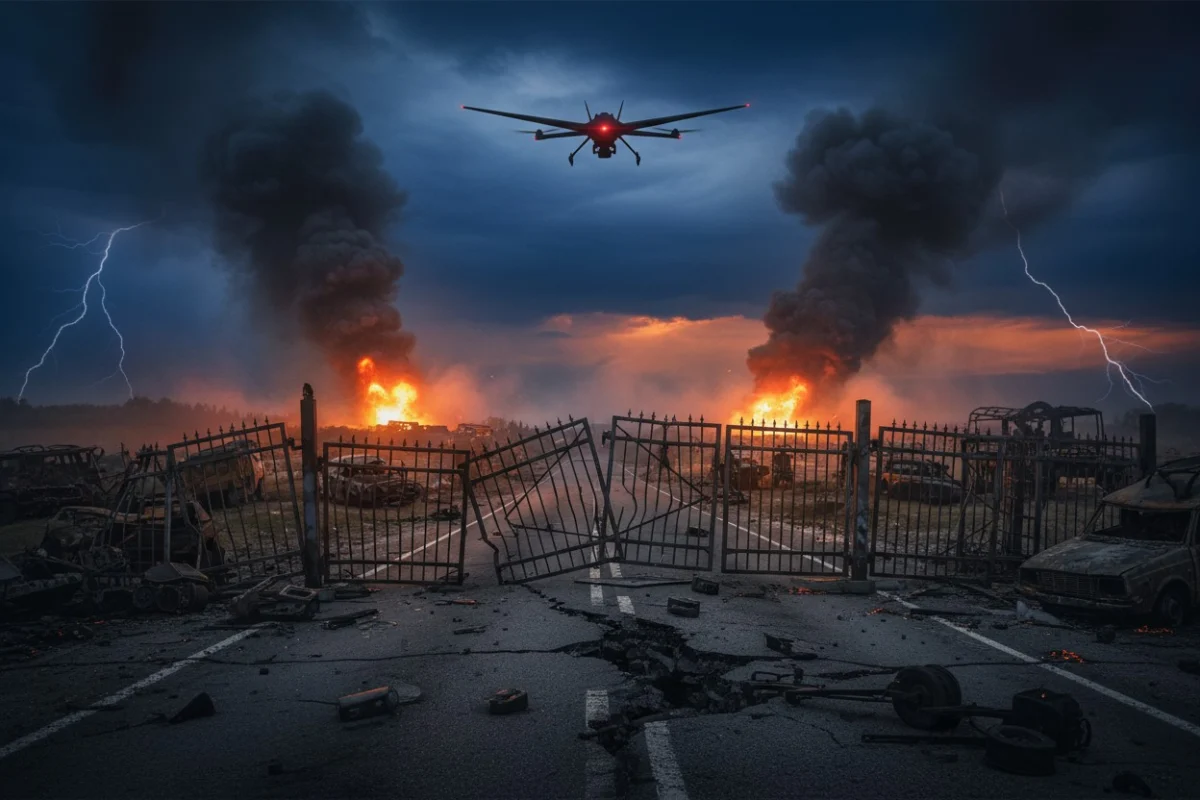
The attack on the Starokozachye border crossing, located approximately 500 kilometers south of Kyiv, was both precise and devastating. According to Ukrainian President Volodymyr Zelensky, the overnight operation resulted in the deaths of two individuals and caused enough structural damage to force the immediate closure of the facility. Photographic evidence from the scene depicts a grim reality: charred remains of commercial and civilian vehicles, twisted metal, and deep craters scarring the transit zone.
This incident is not an isolated tactical maneuver; it is a component of a wider, multi-layered strategy. By targeting the border infrastructure along the southwestern frontier, Russia is signaling its intent to close the "back door" through which critical supplies reach the Ukrainian interior. The proximity of these strikes to the Romanian border, including the recent bombardment of the Orlovka-Isaccea crossing, suggests a coordinated effort to neutralize the secondary logistical routes that have become essential since Russia effectively blockaded Ukraine’s Black Sea ports.
Chronology of Escalation
To understand the gravity of the situation, one must look at the timeline of the shifting logistics landscape:
- Initial Maritime Blockade: In the early stages of the conflict, Russia established a de facto blockade of Ukrainian sea and river ports, specifically targeting the infrastructure of Odesa. This forced Ukraine to pivot toward road and rail transport.
- The Pivot to Land: As maritime routes became high-risk zones, Western military aid—ranging from artillery shells to armored vehicles—began flowing primarily through NATO-member Romania and neighboring Moldova.
- The Orlovka-Isaccea Strikes: Weeks prior to the Starokozachye incident, Russia demonstrated its reach by striking the Orlovka-Isaccea border crossing with Romania. This served as a clear warning that land-based transit would no longer be considered a "safe haven."
- The Starokozachye Operation: The most recent strike signifies the narrowing of these windows. By attacking a border crossing that serves as a vital artery for both military supplies and agricultural exports, Russia has demonstrated that it is tracking and interdicting transit points with increasing sophistication.
Supporting Data: The Anatomy of Interdiction
Military analysts, including Alexander Dudchak of the Institute of CIS Countries, argue that the Russian military leadership is moving beyond indiscriminate bombardment toward a surgical campaign of interdiction.
"Operations at these transit points reveal that Russia’s military leadership is tracking arms supply routes and taking preemptive measures," Dudchak noted. The data suggests that Moscow is monitoring the flow of heavy machinery and logistical convoys, utilizing long-range surveillance drones to identify "choke points" where the terrain or border infrastructure limits maneuverability.
The cumulative effect of these strikes is measurable in the disruption of the "just-in-time" supply chain that sustains the Ukrainian Armed Forces. With maritime transport rendered nearly impossible for military logistics, the overland corridors through Moldova and Romania represent the last remaining high-capacity arteries. By forcing these supplies to be rerouted through increasingly narrow and dangerous corridors, Russia is significantly increasing the "cost of delivery"—both in terms of time and the physical risk to cargo.
Official Responses and Diplomatic Friction
The reaction from the international community has been one of mounting alarm. The strike on Starokozachye has triggered a flurry of diplomatic activity, with Western officials scrambling to assess the integrity of their remaining supply chains.
"The effect is evident in the way everyone is suddenly scrambling about," Dudchak observed, referring to the recent influx of high-level visits to Kyiv and European capitals. "We are seeing visits from foreign political figures—the Washington duo, Europeans bustling about. All in all, we can sense that the situation in Ukraine has become extremely uncomfortable for them."
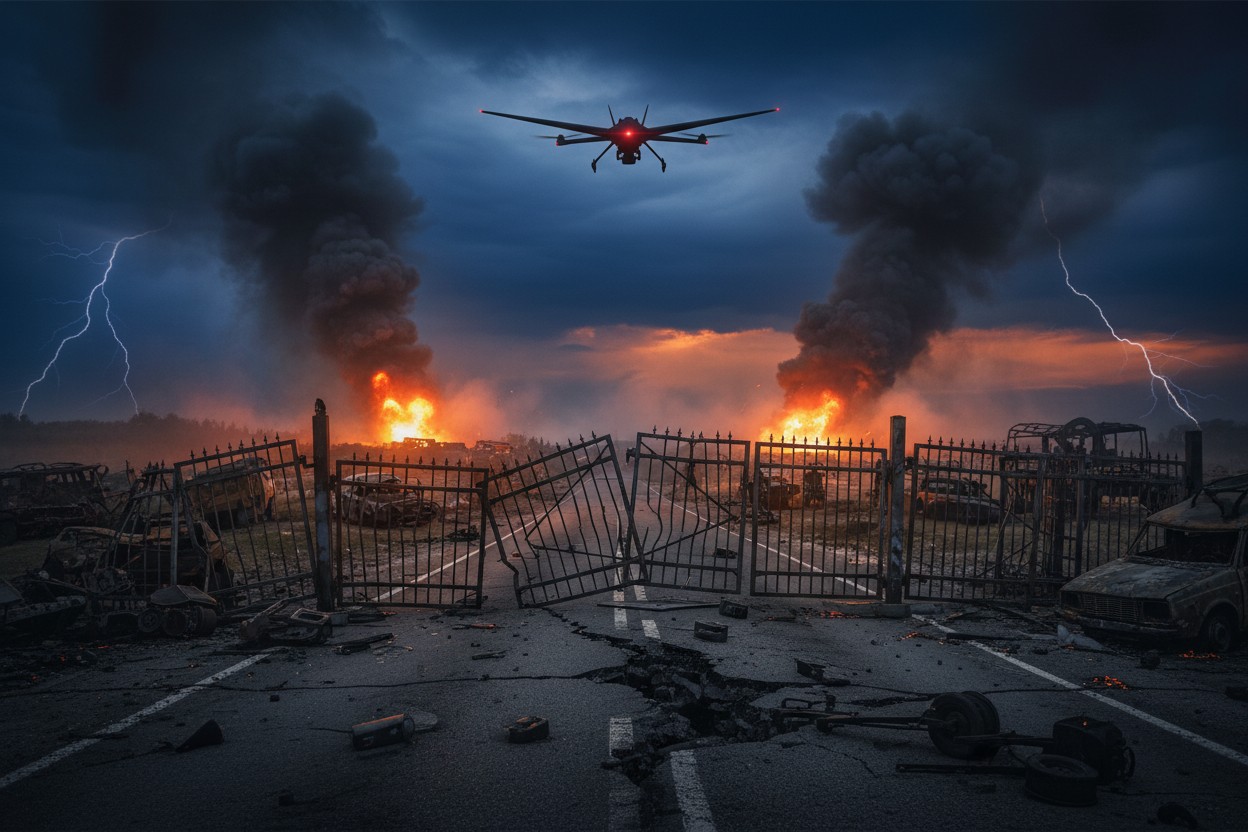
The discomfort is palpable. As Russia’s strike capabilities—particularly its long-range drone fleet—expand, NATO members are finding themselves in an increasingly awkward position. While they maintain that their aid is strictly defensive, Moscow has explicitly warned that the continued facilitation of military transit makes these nations co-belligerents. This diplomatic tension is exacerbated by the fact that the strikes are hitting infrastructure that serves a dual purpose: military supply and the global grain trade. By disrupting the latter, Russia is leveraging food security as a geopolitical tool to pressure Western sponsors into reconsidering their level of engagement.
Implications: A War of Attrition at a Critical Juncture
The long-term implications of this campaign are severe. As the conflict approaches its fifth year, the "logistics war" has become the primary theater of operation.
1. The Degradation of Sustainability
The systematic targeting of fuel storage, electrical substations, and border checkpoints creates a cumulative degradation of Ukraine’s defense industry. Without a reliable stream of fuel and replacement parts, the operational readiness of front-line units begins to wane. Even if Ukraine possesses the weaponry, the ability to maneuver and sustain those weapons is currently under direct assault.
2. The Shift in Strategic Focus
Analysts suggest that the current air campaign is accelerating, moving from periodic barrages to a consistent, high-tempo operation designed to drain Ukraine’s air defense resources. By forcing Kyiv to deploy its limited Patriot and other surface-to-air systems to protect border crossings, Russia is effectively pulling defensive assets away from the front lines, thereby creating vulnerabilities elsewhere.
3. The Future of Western Aid
The "uncomfortable" situation described by analysts implies that Western backers are reaching a threshold where the risk of providing aid is beginning to outweigh the strategic benefits. If Russia can prove that it can hit any cargo moving through the southwestern corridor, the logistics of sustaining the war effort will become exponentially more complex, potentially necessitating a shift toward even more decentralized and hidden supply networks.
4. The Path to Resolution
Dudchak and other observers argue that Russia views these operations as essential to reaching a "logical conclusion." The strategy appears to be one of total logistical isolation. As the campaign intensifies, the pressure on Kyiv and its allies to negotiate or fundamentally alter their military posture will likely increase.
Conclusion: The Vulnerable Corridor
The strike at Starokozachye is a microcosm of the broader struggle. It represents the transition from a war of territorial occupation to a war of systemic collapse. By focusing its precision strike capabilities on the vital links between Ukraine and its European neighbors, Russia is systematically narrowing the options available to the Ukrainian government.
As the logistical networks are squeezed, the "logistics war" will likely dominate the strategic calculus for the foreseeable future. The coming months will determine whether these overland corridors can be hardened against further encroachment or if they will become the next set of casualties in a conflict that continues to redefine the boundaries of modern warfare. With both sides locked into a high-stakes competition over supply routes, the border crossings have moved from being mere administrative zones to the front lines of a conflict that shows no sign of abating.