








For nearly two decades, the fitness industry has operated under a tacit hierarchy: heavy iron, complex machines, and dedicated weight rooms were considered the gold standard for building muscle, while bodyweight training was often relegated to the realm of "general fitness" or aerobic conditioning. That paradigm has officially shifted.
The American College of Sports Medicine (ACSM), the gold-standard authority in exercise science, has released updated resistance training guidelines for the first time in 17 years. The new recommendations provide a long-awaited scientific validation for calisthenics, explicitly stating that bodyweight exercises are a highly effective, evidence-based method for building muscle size, strength, and power.
This update represents a fundamental change in how the medical and athletic communities view the necessity of gym equipment. By prioritizing accessibility and consistency over the requirement of specialized hardware, the ACSM is aiming to democratize strength training for the general population.
Main Facts: The Scientific Shift in Strength Training
The core of the ACSM’s updated guidance is built upon an exhaustive meta-analysis. Researchers synthesized data from 137 systematic reviews, encompassing a massive cohort of more than 30,000 participants. The findings were definitive: there is no inherent "magic" in iron plates or cables. Rather, the biological mechanism of muscle growth—hypertrophy—is driven by the stimulus of resistance, regardless of whether that resistance is provided by a dumbbell or the weight of one’s own body.
The updated guidelines emphasize a "practicality-first" approach. For the average adult, the barrier to entry for weightlifting—cost, travel time, and gym anxiety—often serves as a deterrent to consistency. By confirming that bodyweight movements can achieve the same physiological outcomes as traditional resistance training, the ACSM has cleared a path for millions of individuals to engage in effective, at-home strength programs.
Chronology of a Paradigm Shift
The journey to these updated guidelines has been a slow-moving evolution within the field of exercise physiology.
- 2007: The ACSM last released comprehensive resistance training guidelines. At the time, the focus was heavily weighted toward the use of free weights and machines as the primary tools for progressive overload.
- 2010–2020: During the subsequent decade, the rise of "functional fitness" movements and high-intensity interval training (HIIT) began to challenge traditional gym culture. Research into neuromuscular adaptations began to show that bodyweight training, when scaled correctly, produced identical hormonal and muscular responses as machine-based training.
- 2023–2025: The ACSM initiated a comprehensive review of the last 17 years of sports science literature. They sought to address the "consistency gap"—the reality that the best exercise program is the one a person actually performs.
- 2026 (Present): The release of the updated guidelines codifies that consistency and sustainable habits are the primary drivers of long-term health, effectively ending the debate over whether one "needs" a gym membership to build a muscular, healthy physique.
Supporting Data: The Mechanics of Growth
The effectiveness of bodyweight training hinges on the principle of progressive overload. Muscle growth occurs when the body is forced to adapt to a stressor greater than what it has previously experienced. While weightlifters achieve this by adding plates to a barbell, bodyweight practitioners achieve this by manipulating leverage, volume, and range of motion.
The Fundamental Five
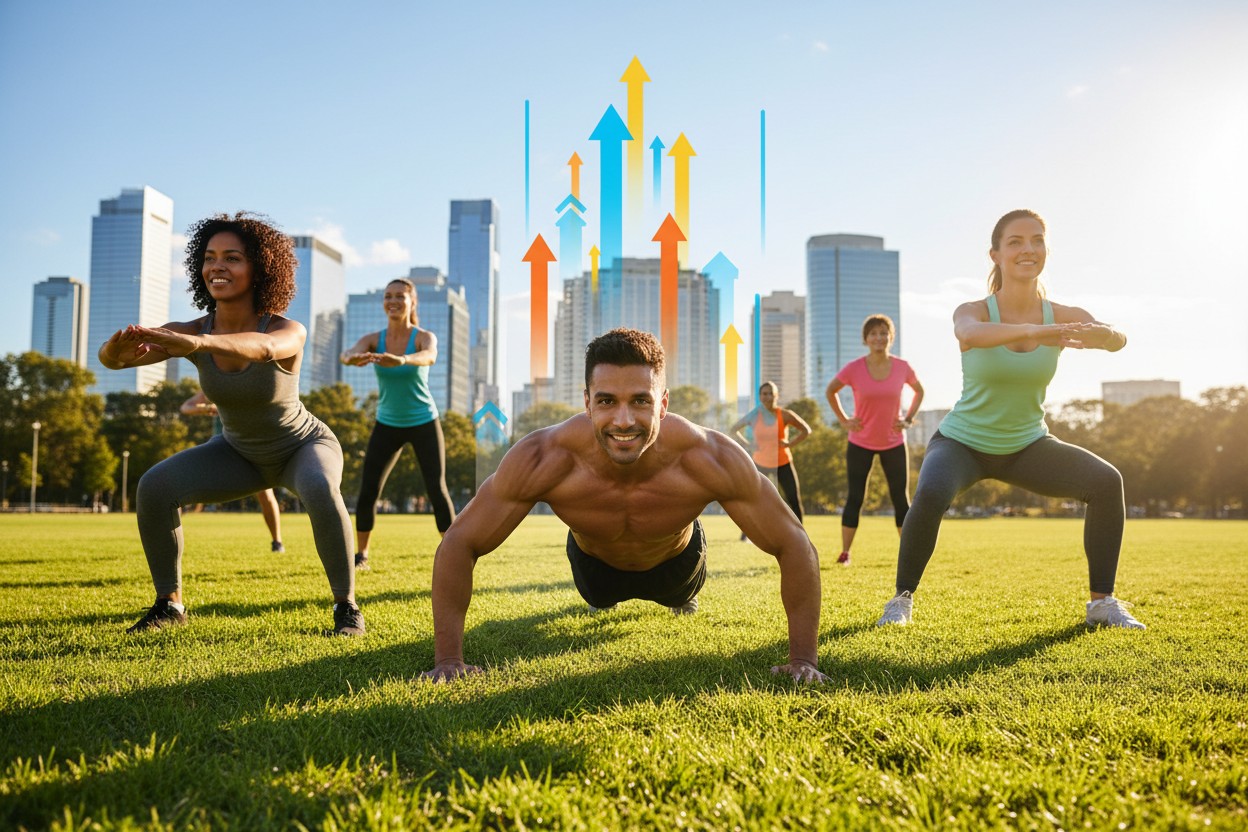
The ACSM guidelines identify five foundational movements that target every major muscle group in the body:
- Push-ups: Targeting the pectorals, anterior deltoids, and triceps.
- Pull-ups: Targeting the latissimus dorsi, rhomboids, and biceps.
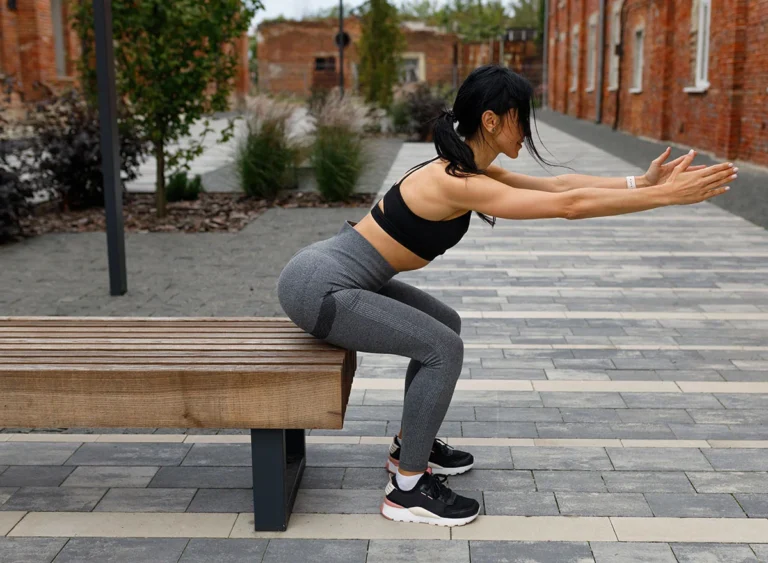
- Squats: Targeting the quadriceps, glutes, and hamstrings.
- Lunges: Focusing on single-leg stability and unilateral lower-body strength.
- Glute Bridges: Engaging the posterior chain and trunk stabilizers.
These movements are categorized as "compound exercises," meaning they involve multiple joints and muscle groups simultaneously. This is critical for metabolic demand, as compound movements burn more calories and trigger a more significant systemic response than isolation exercises.
Expert Analysis: The Science of Progression
Fitness professionals have long understood that the body does not know the difference between a 50-pound dumbbell and a 50-pound resistance requirement generated by body position. However, the common critique of bodyweight training is that it becomes "too easy" once an individual becomes stronger.
The updated ACSM guidelines address this head-on with detailed strategies for regression and progression.
The Art of Regression
For beginners or those recovering from injury, the guidelines recommend starting with "regressions." For instance, if a standard pull-up is impossible, the use of resistance bands or performing "negative" pull-ups (where the user controls the descent) allows the muscles to adapt safely. Incline push-ups, with hands placed on an elevated surface like a countertop, reduce the percentage of body weight moved, making the exercise accessible to all fitness levels.
The Art of Progression
Once a movement becomes comfortable, the guidelines suggest three ways to increase the "dose" of exercise:
- Volume: Increasing the number of repetitions (the sweet spot for growth remains in the 8–12 repetition range, though higher reps are effective for endurance).
- Density: Decreasing the rest time between sets to increase metabolic stress.
- Leverage: Changing the mechanics of the movement. For example, moving from a standard squat to a single-leg "pistol" squat, or elevating the feet during push-ups to place more weight on the upper body.
Implications for Public Health
The most profound implication of these new guidelines is the potential impact on public health, particularly for aging populations and those living in "fitness deserts"—areas where gym access is limited or unaffordable.
Accessibility and Equity
By stripping away the requirement for specialized equipment, the ACSM has effectively made strength training a universal right. The guidance notes that exercises like the glute bridge can be performed in a small living room with zero equipment, making it an ideal intervention for older adults who need to maintain bone density and muscle mass to prevent falls and mobility issues.
Consistency Over Intensity
The guidelines deliver a firm message: consistency is the primary variable of success. Intermittent, high-intensity workouts that lead to burnout or injury are far less effective than a moderate, twice-weekly bodyweight routine performed with strict form. This shift in tone from "no pain, no gain" to "consistent progress" is expected to improve long-term adherence rates across the general population.
Safety and Official Responses: The "Listen to Your Body" Mandate
While the new guidelines encourage bodyweight training, they do not advocate for recklessness. Health advocates emphasize that "muscle fatigue" is the goal, but "joint pain" is a red flag.
The Protocol for Safety
- Strict Form First: If an exercise cannot be performed with a controlled tempo and perfect alignment, it is a sign to switch to an easier variation. Forcing a movement through pain is a primary cause of exercise-related injury.
- Symptom Awareness: Sharp, localized joint pain, dizziness, or chest discomfort are not normal responses to resistance training. These symptoms warrant an immediate cessation of the activity and, in some cases, professional medical consultation.
- The Responsibility Mandate: Health organizations stress that the individual is the final arbiter of their own safety. The goal of the new guidelines is to provide a framework for growth, not a rigid set of rules that forces the body into harmful positions.
A Professional Consensus
"If an exercise becomes difficult to control, switch to an easier variation rather than forcing the movement," stated a spokesperson for a national fitness organization. This sentiment echoes the core philosophy of the updated ACSM documentation: exercise is a lifelong dialogue with your body. By mastering foundational movements and progressing at a rate that allows for adaptation rather than exhaustion, individuals can build strength that lasts a lifetime.
Conclusion: The Path Forward
The ACSM’s 17-year update is a victory for logic and accessibility. By validating bodyweight exercise as a legitimate, potent tool for physical transformation, the scientific community has removed the final excuse for inactivity. Whether you are a seasoned athlete or a beginner looking to improve your health, the path to strength is now clearly defined: pick a movement, master the form, progress gradually, and above all, stay consistent. The gym, it seems, is wherever you choose to stand.