











For decades, the scientific community has grappled with one of biology’s most enduring mysteries: what exactly governs the transition between consciousness and slumber? While the general understanding of sleep as a restorative process is well-established, the specific "on-off" mechanisms that regulate our internal rhythm have remained elusive.
However, a groundbreaking study recently published in the journal PLOS Biology by researchers at the University of Toronto has brought us closer than ever to answering that question. By identifying a specific neural "switch" in the brainstem, scientists have mapped a critical component of the body’s internal balancing act between sleep and wakefulness. This discovery not only refines our understanding of basic neurobiology but also offers a promising new frontier for treating debilitating sleep disorders, including narcolepsy.
The Discovery: A Neural Switch in the Brainstem
The research team, led by neurobiologist Dr. Jimmy Fraigne of the University of Toronto’s Department of Cell & Systems Biology, focused their attention on a primitive region of the brain: the brainstem. Historically, the brainstem has been known for controlling essential autonomic functions such as breathing, heart rate, and temperature. However, this study reveals that it plays a far more active role in the complex oscillation of sleep states.
The "switch" identified by the team consists of a specialized collection of neurons known as GABAergic (GABA) neurons. GABA, or gamma-aminobutyric acid, is the primary inhibitory neurotransmitter in the mammalian central nervous system. Its role is to reduce the activity of neurons to which it binds.
In this context, these GABA neurons act as a brake on the brain’s arousal systems. When these neurons are activated, they effectively induce sleep by suppressing the neural pathways that maintain alertness. Because the brain structure of mice—the subjects of this study—shares profound evolutionary similarities with the human brain, researchers are confident that this same inhibitory mechanism is the primary driver of sleep onset in humans.
Chronology of the Research
The path to this discovery was neither linear nor simple. It required years of mapping the intricate circuitry of the mouse brain to isolate the specific population of neurons responsible for the sleep-wake transition.
- Initial Observations: The team began by examining known wake-promoting cells, specifically orexin neurons. It has long been established that orexin serves as a critical chemical for maintaining wakefulness. However, the researchers noted that the cessation of wakefulness was not merely a passive decline in orexin activity but appeared to be an active, regulated process.
- Hypothesis Formulation: Dr. Fraigne and his colleagues, including professor Dr. John Peever and former lab member Dr. Hanhee Lee, hypothesized that if there were "on" switches for wakefulness, there must logically be corresponding "off" switches for sleep.
- Mapping and Modulation: Using advanced optogenetic techniques—where light is used to control neurons that have been genetically sensitized to light—the team successfully identified the specific cluster of GABA neurons in the brainstem. By selectively activating these neurons, the researchers observed immediate transitions into sleep.
- Validation: Subsequent testing confirmed that these cells do not act in isolation; they exist in a dynamic, reciprocal relationship with wake-promoting neurons. This "push-pull" dynamic allows the brain to maintain a stable state of alertness or initiate sleep as needed.
The Biological Balancing Act: Sleep vs. Wakefulness
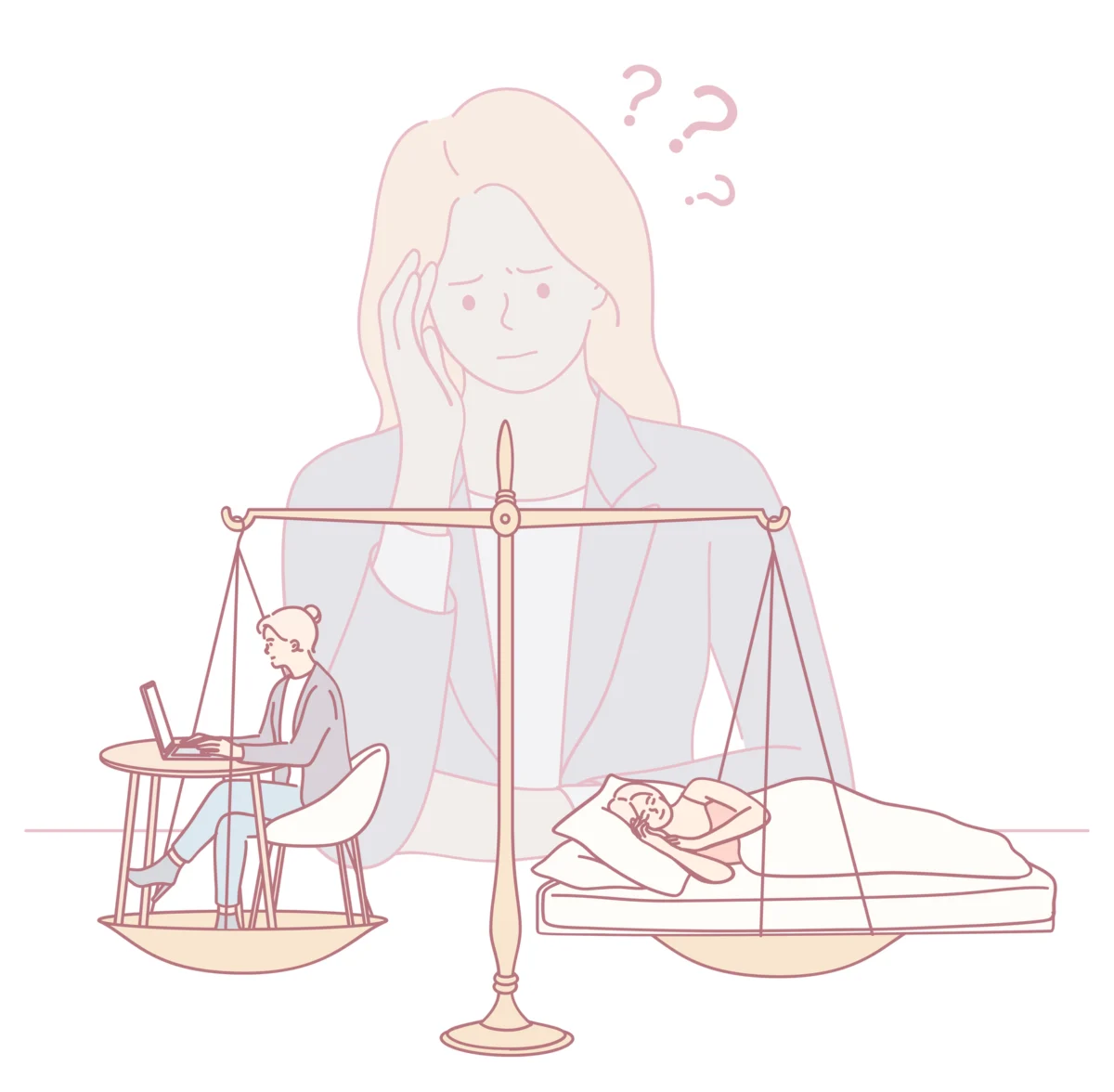
The brain’s ability to transition between sleep and wakefulness is often described as a "balancing act." For most of human history, we viewed sleep as a passive state—the absence of wakefulness. This research fundamentally challenges that paradigm.
The findings suggest that sleep is an active, neurologically driven process. The GABA neurons discovered in the brainstem function like a thermostat. When the brain senses a need for rest, these neurons release inhibitory signals that "cool down" the wake-promoting circuits. Conversely, when it is time to wake up, the brain suppresses these GABAergic neurons to allow the arousal systems to regain dominance.
This discovery clarifies why certain conditions, such as narcolepsy, can be so destructive. In individuals with narcolepsy, the "switch" may be faulty, causing the brain to lose the ability to maintain the necessary balance. If these GABA neurons are overactive or improperly regulated, they can trigger an involuntary, sudden onset of sleep, effectively overriding the brain’s intention to remain awake.
Official Responses and Expert Commentary
In a formal release regarding the publication, Dr. Jimmy Fraigne emphasized the novelty of the findings: "We already knew that cells known as orexin neurons trigger wakefulness. Now, we’ve identified inhibitory neurons that trigger sleep. This is new."
The implications of this statement are significant. By identifying the inhibitory neurons, the team has provided a missing piece of the puzzle that neuroscientists have been searching for since the early 20th century.
Dr. Fraigne further noted the importance of this region in the context of neurological function: "We didn’t have any notion before that these cells could do what we observed, nor that this region of the brain had anything to do with the balancing act between sleep and wakefulness."
The research team, which includes veteran sleep researcher Dr. John Peever, views this as a foundational step toward a new era of sleep medicine. They argue that by focusing on these specific GABAergic pathways, the medical community can move away from "blanket" sedatives or stimulants and toward targeted neuro-therapeutics.
Implications for Sleep Disorders and Future Treatment
The medical implications of this discovery are vast, particularly for those suffering from chronic sleep disorders. Currently, treatments for narcolepsy, insomnia, and hypersomnia are often non-specific, frequently leading to unwanted side effects.
Narcolepsy
Narcolepsy is characterized by the brain’s inability to properly regulate sleep-wake cycles. By identifying these GABA neurons as a potential "culprit" in narcoleptic symptoms, researchers now have a specific biological target. Future drug development could focus on modulating the activity of these neurons to prevent the "intrusions" of sleep that define the condition.
Insomnia and Hypersomnia
Beyond narcolepsy, this mechanism likely underlies a variety of other disorders. For instance, in cases of insomnia, it is possible that these sleep-inducing neurons are failing to activate at the appropriate times. In hypersomnia, the opposite may be true. By understanding the chemical and electrical triggers of these cells, scientists may be able to develop therapies that act as a "tuner," helping the brain achieve the correct balance.
Future Research Directions
The research team is not stopping at the identification of these cells. Their next phase of investigation aims to answer two critical questions:
- Specificity: What makes these particular GABA neurons unique compared to the millions of other cells in the brain? Identifying a unique molecular signature or receptor profile would allow for the development of drugs that only affect these specific cells, minimizing side effects.
- Control: Can these cells be externally modulated in a safe, clinical setting? If researchers can find a way to safely activate or dampen these neurons using non-invasive technology or highly specific pharmacological agents, it could revolutionize the treatment of sleep medicine.
"The more information we gather about how these cells work, the more effectively we can target them for treatment," says Dr. Fraigne.
Conclusion: A New Era for Neurobiology
The discovery of the brainstem’s "sleep switch" is a testament to the power of modern neuroscience to deconstruct the most complex behaviors into their constituent biological parts. By proving that sleep is not merely a passive state but an active, regulated function of specific inhibitory circuits, the University of Toronto researchers have opened a door that will likely remain a focus of study for years to come.
As we move toward a future where sleep disorders are treated with precision medicine, the work of Dr. Fraigne, Dr. Peever, and their colleagues serves as a vital reminder that our most basic, daily functions are governed by an exquisite, delicate, and ultimately understandable biological architecture. The "balancing act" between rest and activity, once thought to be a black box, is finally coming into focus.