











By Alina Savulescu
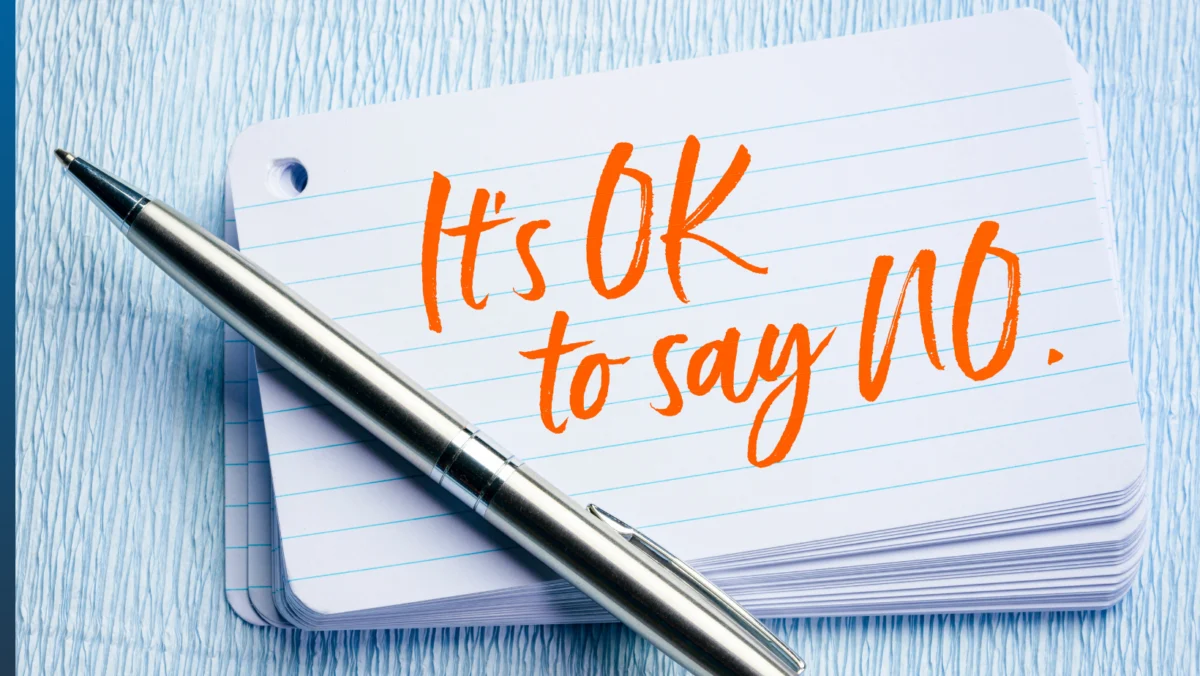
For those living with chronic pain, the word "no" is perhaps the most difficult syllable to utter. It is a word fraught with social anxiety, the weight of perceived obligation, and an internal struggle that often pits physical necessity against the desire for social connection. Even for those who have spent years learning the hard lessons of their own physiological limits, the discomfort of setting a boundary remains a persistent, haunting presence.
In an era defined by high-functioning expectations and the "hustle culture" of social availability, the act of refusing an invitation or stepping back from a commitment is often viewed as a failure of character rather than a survival mechanism. This article explores the intersection of chronic pain, interpersonal boundaries, and the profound psychological shift required to reclaim one’s life from the cycle of over-commitment.
The Invisible Toll: Living in the "In-Between"
The reality of chronic pain is often hidden behind a veneer of normalcy. To the outside observer, a person suffering from chronic illness may appear to be living a full life—attending weddings, engaging in professional networking, or enjoying a dinner with friends. However, these snapshots represent only the "highs" of a life that is, in reality, dictated by a constant, exhausting internal calculation.
The Myth of the "Easy" Social Life
The public-facing side of chronic pain—the photos of beach days or graduation ceremonies—creates a dangerous narrative. It omits the hidden labor: the early-morning medication routines, the anxiety-driven energy management before leaving the house, and the persistent, throbbing ache that intensifies with every social "extra."
As one storyteller on the podcast The Moth famously reflected regarding his 30-year marriage, the tragedy of human connection is that we often capture the beauty but ignore the friction. We keep photos of the joy but lack documentation of the moments where needs were trampled and limits were ignored. For those in pain, this resonates deeply. When a friend suggests "one more drink" or a "late night out," the person in pain is not just deciding on a drink; they are performing a high-stakes calculus of how much suffering they are willing to endure to avoid the discomfort of saying "no."
The Chronology of Compliance: From Habit to Exhaustion
The trajectory of a person living with chronic pain often follows a predictable, if destructive, pattern of behavior.
- The Phase of Implicit Expectation: Initially, many patients harbor a silent, often subconscious hope that those around them will recognize their limits. There is a longing to be "seen" and for loved ones to offer an out—a permission slip to go home and rest.
- The Internal Conflict: When that permission is not offered, the patient enters a state of profound cognitive dissonance. The questions become circular: Can I push through? Am I just being lazy? What will they think if I stop now?
- The Performance of Capability: Fearful of being perceived as a burden or a "faker," the individual pushes through the pain. They perform health, effectively tethering themselves to social obligations like a horse tied to a flimsy plastic chair—capable of leaving at any time, yet bound by the belief that they have no choice.
- The Crash: Eventually, the body reaches a breaking point. The "yes" that was given to please others results in a "no" that is forced by the body, often leading to longer recovery times, increased medication, and a deepening cycle of bitterness.
Data and Psychological Implications: The Cost of People-Pleasing
While chronic pain is a physical reality, the psychological impact of ignoring personal boundaries is documented by the significant correlation between chronic stress and inflammatory responses.
The Biology of Resentment
Clinical observations suggest that when an individual overrides their physical needs to satisfy social expectations, they trigger a "fight-or-flight" response. This constant state of autonomic arousal can exacerbate existing pain conditions.
Psychologists often refer to the "mechanical toy" analogy: when a person who has historically said "yes" to everything begins to set boundaries, the social dynamic—the "toy"—wobbles. It appears broken, unstable, and disjointed. This is a normal part of the recalibration process. However, the failure to endure this temporary instability leads to long-term resentment. According to recent behavioral health surveys, individuals who maintain rigid, guilt-driven social obligations report 40% higher levels of psychological distress compared to those who practice "assertive self-protection."
The Art of the "Clean" No: Strategies for Sustainable Boundaries
Setting a boundary is not synonymous with ending a relationship. In fact, honesty is the most effective tool for long-term connection. The following strategies have been identified by patient advocates and therapists as the most effective methods for maintaining social ties while protecting health:
1. The Proactive Pivot
Instead of waiting for the moment of exhaustion to arrive, set expectations early. Telling a friend, "I can’t make dinner tonight, but I would love to grab a short coffee next week," replaces a vague rejection with a concrete alternative. It shows investment in the relationship while respecting physical limitations.
2. The "Early Exit" Clause
At gatherings, preemptively stating, "I may need to leave early if my symptoms flare up," removes the anxiety of having to justify a departure later. It transforms a potential "failure" into a planned logistical necessity.
3. Resisting the "Performance of Rest"
One of the most significant hurdles is the feeling that one must prove their "need" for rest. Many patients feel they must act productive during their downtime to justify the boundary they set. Experts emphasize that rest does not need to be performative. Staring at the ceiling, reading, or resting in silence is a valid use of time. You do not owe anyone a narrative of your productivity.
Professional Perspectives on Boundary Setting
Dr. Helena Vance, a clinical psychologist specializing in chronic illness management, notes that the "guilt" following a boundary-setting event is often a ghost of past conditioning.
"Patients often treat guilt as a moral indicator," Dr. Vance explains. "They interpret the feeling of guilt as proof that they have done something wrong. In reality, that guilt is often just the echo of an old habit—the sound of a nervous system that is accustomed to prioritizing others’ comfort over its own survival. It is not an indicator of a moral failing; it is a side effect of growth."
The Implications of Radical Self-Honesty
The ultimate implication of shifting from a culture of compliance to a culture of boundaries is the restoration of agency. When a person with chronic pain stops pushing through their limits, they stop being a "spectator" in their own life.
By saying "no," the individual is not necessarily rejecting the person asking; they are affirming their own capacity to participate in the future. The "wobble" in the relationship—the awkwardness, the silence, or the disappointment from others—is the price of admission for a more sustainable, honest, and balanced existence.
As the grip on the "flimsy plastic chair" is loosened, the individual finds that the world does not collapse. Relationships that are strong enough to withstand the truth will adapt, and those that required constant self-sacrifice to maintain were never truly balanced to begin with. Ultimately, the ability to say "no" is not about closing doors; it is about ensuring that when you say "yes," you have the energy, the presence, and the genuine desire to be fully there.