







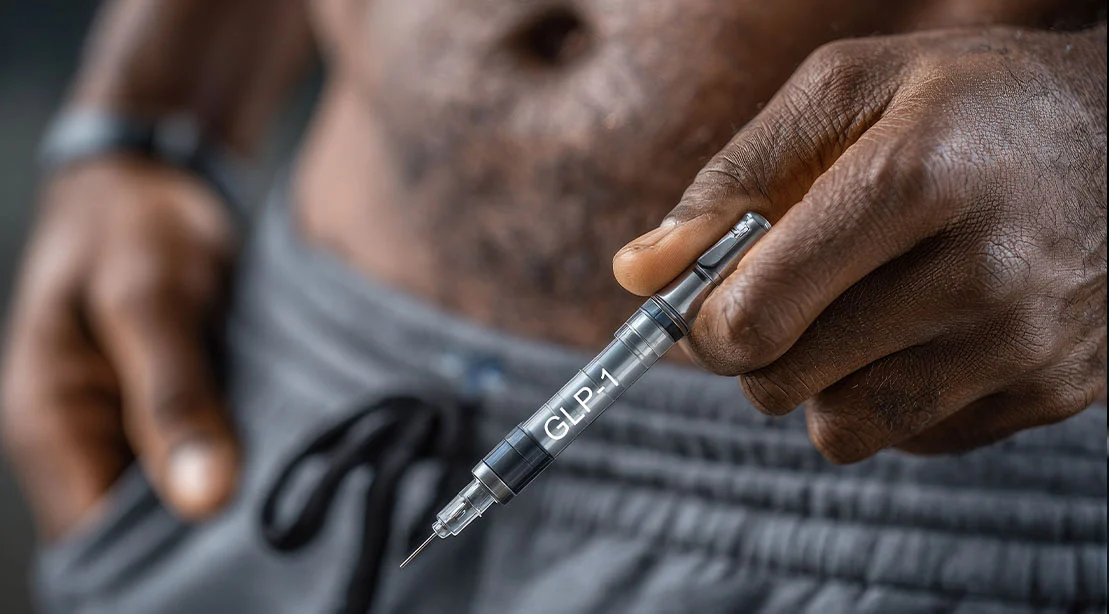
The sight has become increasingly common in airport terminals, corporate boardrooms, and neighborhood parks: individuals who appear to have undergone a rapid, radical transformation. They are the visible footprint of the "GLP-1 revolution." Whether it is Ozempic, Wegovy, Mounjaro, or Zepbound, these medications have moved beyond the doctor’s office to become a defining cultural phenomenon of the 2020s.
Yet, as the weight drops, a pervasive anxiety has gripped the fitness community: "Aren’t these drugs just melting away muscle mass?" It is the persistent question that haunts the discourse surrounding the most successful pharmaceutical intervention for obesity in history. As we delve into the data, the reality proves far more nuanced than the alarmist headlines suggest.
Main Facts: Deconstructing the "Muscle-Wasting" Myth
To understand the impact of GLP-1 receptor agonists (GLP-1 RAs) on body composition, we must first define what is actually being lost. When a person sheds significant weight, the body rarely sheds pure adipose tissue (fat). It loses a cocktail of fat, water, glycogen, and lean mass.
The fear that GLP-1 drugs are uniquely "muscle-wasting" is largely a misconception rooted in a misunderstanding of thermodynamics. When any individual enters a significant caloric deficit—whether via Ozempic or a strict "bro-diet" of chicken and broccoli—the body perceives a survival threat. If the body is not given a compelling reason to maintain metabolically expensive skeletal muscle, it will catabolize that tissue for energy.
The drug itself is not a chemical scalpel that targets biceps; rather, it is a potent appetite suppressant. The "muscle loss" observed is a byproduct of rapid weight loss combined with insufficient protein intake and a lack of resistance training stimulus.
Chronology: The Evolution of the GLP-1 Landscape
The trajectory of GLP-1 RAs has been nothing short of meteoric. Initially developed for the management of Type 2 diabetes, the drugs—specifically semaglutide and later tirzepatide—demonstrated such profound efficacy in weight reduction that they shifted the entire medical paradigm.
- Pre-2020: GLP-1s are niche treatments for glycemic control.
- 2021–2023: The "Ozempic Era" begins. Social media fuels demand, and supply chains struggle to keep up as the world discovers the efficacy of these injections for weight loss.
- 2024–2025: As millions of people hit their goal weights, the "Ozempic face" and "Ozempic body" tropes emerge. Skepticism peaks, with trainers and nutritionists voicing concerns over the loss of lean mass.
- 2026 (The Meta-Analysis Year): A surge of clinical data provides the first clear picture of how these drugs interact with body composition, effectively shifting the conversation from "Do they cause muscle loss?" to "How do we mitigate it?"
Supporting Data: What the Science Tells Us
The most robust evidence to date comes from a 2026 meta-analysis of 20 randomized controlled trials, encompassing 15,782 participants. The data compared the lean-mass loss of those on semaglutide, tirzepatide, and liraglutide against those using lifestyle-based interventions (diet and exercise) alone.
The findings were revealing:
- Semaglutide: Lean tissue accounted for approximately 35% of total weight lost.
- Tirzepatide: Lean tissue accounted for approximately 25%.
- Liraglutide: Lean tissue accounted for approximately 27%.
At first glance, these numbers appear alarming. However, when compared to the control groups—people who lost weight through calorie restriction alone—the story changes. Those in the lifestyle-only groups lost approximately 26% of their weight as lean mass. The disparity between drug-induced loss and natural dieting is significantly narrower than the public narrative suggests.
Crucially, the study noted that when resistance training was integrated into the treatment plan, lean tissue loss dropped to just 17.5%. The conclusion is clear: Weight loss is catabolic by nature, but muscle loss is largely optional.
Official Responses and Clinical Perspectives
The medical community has been quick to distinguish between "lean mass" and "contractile muscle tissue." DXA scans, the gold standard for body composition, are not always perfect—they often conflate water weight and organ mass with muscle.
Clinical experts emphasize that while GLP-1s may lead to a reduction in scale weight that includes some lean tissue, there is no consistent clinical evidence showing a corresponding loss of physical strength or functional capability in patients who maintain an active lifestyle.
Novo Nordisk, the manufacturer of Wegovy and Ozempic, continues to push the boundaries of treatment. Recently, a late-stage trial showed that children aged 6 to 12 experienced significant reductions in BMI after 68 weeks of semaglutide treatment combined with lifestyle intervention. As these drugs move into younger populations, the necessity for robust, exercise-based support systems becomes even more critical.
Implications: The New Paradigm of Weight Management
The implications for the fitness industry are profound. We are moving away from an era where we view medication and exercise as mutually exclusive camps. Instead, we are entering a phase of "pharmacological support for active lifestyles."
The "Appetite Trap"
The primary risk for the athlete on a GLP-1 is not the molecule itself, but the secondary effect of suppressed hunger. If you are training for hypertrophy but your caloric intake drops to near-starvation levels because you simply aren’t hungry, you will lose muscle. The drugs make it "extraordinarily easy" to avoid eating, which is their intended function. For a lifter, this is a dangerous trap. Success on these drugs requires a structured, protein-forward nutritional strategy that ignores hunger cues in favor of performance metrics.
Shifting the Metrics of Success
We must stop measuring success solely by the number on the scale. A 190-pound individual with a high percentage of lean muscle mass is objectively healthier and more functional than a 175-pound individual who has lost both fat and critical muscle tissue. The scale is a blunt instrument; body composition monitoring (measuring fat vs. muscle) is the surgeon’s scalpel.
The Future of Training
The data indicates that the strongest outcomes for body composition come from the synergy of GLP-1s and resistance training. Combining these two forces allows for the "holy grail" of body recomposition: aggressive fat loss with maximum muscle retention.
Conclusion: A Call to Action
The era of GLP-1 medications is not going away; it is expanding. As the clinical applications for these drugs grow, the responsibility falls on both the medical establishment and the fitness community to provide better guidance.
The question we must stop asking is, "How much weight did you lose?" It is a shallow, outdated metric that tells us nothing about a person’s health, strength, or metabolic vitality. The question that matters, the one that defines the future of body transformation, is simple: "What did you keep?"
If you are currently utilizing GLP-1 medications, treat your muscle as a protected asset. Lift heavy, prioritize your protein intake, and ensure that your weight loss journey is a process of refinement, not depletion. The science is on your side—provided you are willing to put in the work to keep what is yours.