











The global news cycle was dominated this Tuesday by a series of high-stakes developments, ranging from long-overdue accountability in New York City regarding the health legacy of the September 11 attacks to a volatile escalation of conflict in the Middle East and a major aviation catastrophe in Florida. As international markets reacted to a volatile geopolitical landscape, government officials across three continents grappled with crises that tested the limits of public trust, infrastructure resilience, and diplomatic relations.
I. The Shadow of 9/11: New York City Confronts Air Quality Disclosures
In a move described by officials as a necessary step toward accountability, New York City released over 170,000 government documents via a newly launched online portal. These records, dating back to the aftermath of the September 11, 2001, terrorist attacks, have reignited a fierce debate regarding the government’s transparency and the health of those who worked in the toxic dust of Ground Zero.
The Findings
The documents suggest that local and federal authorities were significantly more aware of the severe health risks posed by the air quality in Lower Manhattan than they had publicly admitted at the time. Despite official assurances—most notably the assertion that the air was "safe to breathe"—the newly released archives reveal internal warnings and data points that were either suppressed or downplayed in the immediate aftermath of the attacks.
Official Response and Public Outcry
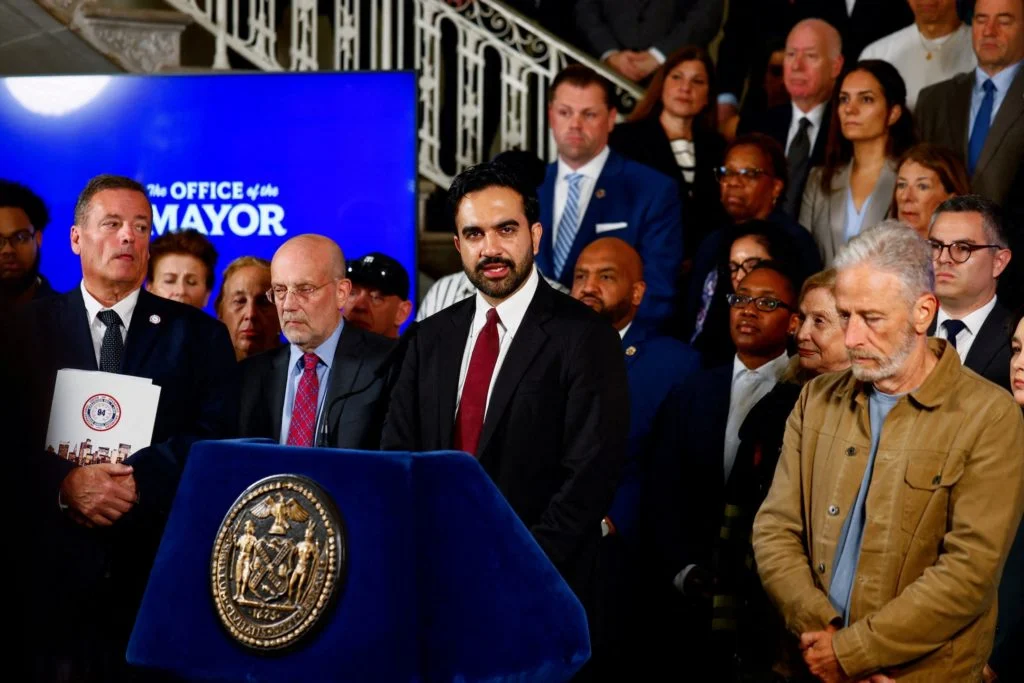
During a press conference, New York City Mayor Zohran Mamdani addressed the families of victims, survivors, and the first responder community. "As the years pass and the human toll grows, we reckon with the cost of September 11 whenever another New Yorker is stolen from us too soon," Mamdani stated. He did not mince words regarding the previous administrations, asserting, "People got sick because the leaders they trusted lied and told them they were safe to breathe in toxic air."
The human toll remains staggering. According to the 9/11 Memorial and Museum, at least 49,000 first responders and survivors have been diagnosed with various forms of cancer linked to their exposure to the debris and toxic particulate matter released by the collapse of the World Trade Center towers.
II. Aviation Tragedy in Miami: Five Killed in Amazon Cargo Jet Crash
Miami-Dade County remains in a state of mourning following a catastrophic plane crash this past weekend. An Amazon cargo jet, arriving at Miami International Airport, overran the runway, leading to a disaster that claimed the lives of five individuals on the ground.
Chronology of the Disaster
The victims were members of an airplane cleaning crew, caught in the path of the out-of-control aircraft while working in a support van. Miami-Dade County Sheriff Rosie Cordero-Stutz expressed profound grief during a news briefing, emphasizing the sudden and arbitrary nature of the loss. "One leaves their house to go to work… and without ever thinking that this is even a possibility, what occurred," she said.
The deceased, whose ages ranged from 47 to 75, were identified by authorities this morning. The incident also resulted in injuries to five other people, including the two pilots of the cargo plane, who have since been released from medical care. Two individuals remain in critical condition, while a third is reported to be in stable condition. Federal investigators are currently working to determine the precise cause of the runway overrun.
III. Infrastructure Failure and Diplomatic Shifts in the U.K.
While the United States dealt with the aftermath of the Miami tragedy, the United Kingdom faced a massive logistical breakdown. A technical failure within the National Air Traffic Services (NATS) flight processing system forced the cancellation of more than 600 flights across the country.
The U.K. Aviation Crisis
Major hubs, including Heathrow, Gatwick, and Stansted, saw scenes of chaos as travelers faced sudden cancellations and indefinite delays. While the agency has since resolved the technical issue, the backlog of flights is expected to cause ripple effects across European travel for days.
Foreign Policy Realignment
Beyond its infrastructure woes, the U.K. government made a seismic shift in its Middle East policy. Foreign Secretary Ed Miliband announced a sweeping ban on trade with Israeli settlements in the occupied West Bank, accusing settler groups of engaging in the ethnic cleansing of Palestinians. The ban encompasses all imported goods and services, including construction and advertising.
"The government believes the unlawfulness of the occupation should be reflected in the economic relationships we choose to have with the occupied territories," Miliband stated in the House of Commons. While France and Canada have signaled their intent to join the ban, the economic impact is expected to be modest due to the relatively small volume of West Bank exports. However, the diplomatic fallout has been swift. Israeli officials condemned the move as "morally distorted," announcing the closure of the British Consulate in East Jerusalem and imposing travel bans on a dozen British lawmakers.
IV. Global Escalation: Persian Gulf and Yemen
The Middle East teetered on the edge of a wider conflict as tensions spiked across multiple fronts.
U.S.-Iran Confrontation
A U.S. official confirmed to the News Hour that the United States military carried out precision strikes on Iranian tankers near Kharg Island in the Persian Gulf and in the Gulf of Oman. The strikes were framed as a retaliatory measure following recent Iranian-backed provocations against U.S. warships in the region.
The Houthi-Saudi Conflict
Simultaneously, Saudi Arabia vowed to retaliate against Yemen’s Houthi rebels following a series of strikes on Saudi oil facilities and civilian sites. The Houthi militia reported the attacks were in response to previous Saudi military actions, including a strike on a prison that resulted in at least seven fatalities. With more than 70 people reported injured in the latest Houthi strikes—including women and children—the conflict represents a significant escalation between the Saudi-led coalition and the Iranian-backed rebels.
V. The Kremlin, Kyiv, and the Global Markets
In the ongoing war in Ukraine, a complex diplomatic dance unfolded between Moscow and Washington.
Putin-Trump Dialogue
The Kremlin reported that Russian President Vladimir Putin held a one-hour phone call with President Donald Trump. According to a senior Kremlin official, Putin reassured the U.S. leader that Russia holds no aggressive intent toward Europe. In turn, President Trump reportedly expressed his desire for a "swift end" to the war in Ukraine and the normalization of U.S.-Russia relations.
The Reality on the Ground
Despite the diplomatic posturing—which followed a weekend visit to both Kyiv and Moscow by U.S. envoys Jared Kushner and Steve Witkoff—the violence persisted. Russia’s air assault on Kyiv resumed, resulting in at least seven deaths in the capital and its surrounding suburbs, shattering the brief pause in hostilities that accompanied the envoys’ visit.
Wall Street’s Reaction
The confluence of geopolitical instability, infrastructure failures, and economic uncertainty took its toll on the financial markets. Following a long holiday weekend, Wall Street experienced a broad sell-off. The Dow Jones Industrial Average dropped more than 600 points, while the Nasdaq and the S&P 500 both closed in negative territory. Analysts suggest that the uncertainty surrounding the war in Ukraine and the volatile situation in the Middle East are fueling investor caution as the fiscal year moves toward its close.
Conclusion: A World in Flux
Tuesday’s events serve as a stark reminder of the interconnected nature of global stability. From the long-term health consequences of the 9/11 attacks—which continue to impact the lives of thousands—to the immediate, visceral tragedies in Miami and the escalating proxy wars in the Middle East, the world remains in a state of high alert. As governments struggle to balance domestic infrastructure needs with aggressive foreign policies, the role of transparency and international diplomacy has never been more critical. The coming weeks will likely reveal whether these tensions lead to further fragmentation or if the current crises will force a recalibration of international relations.