











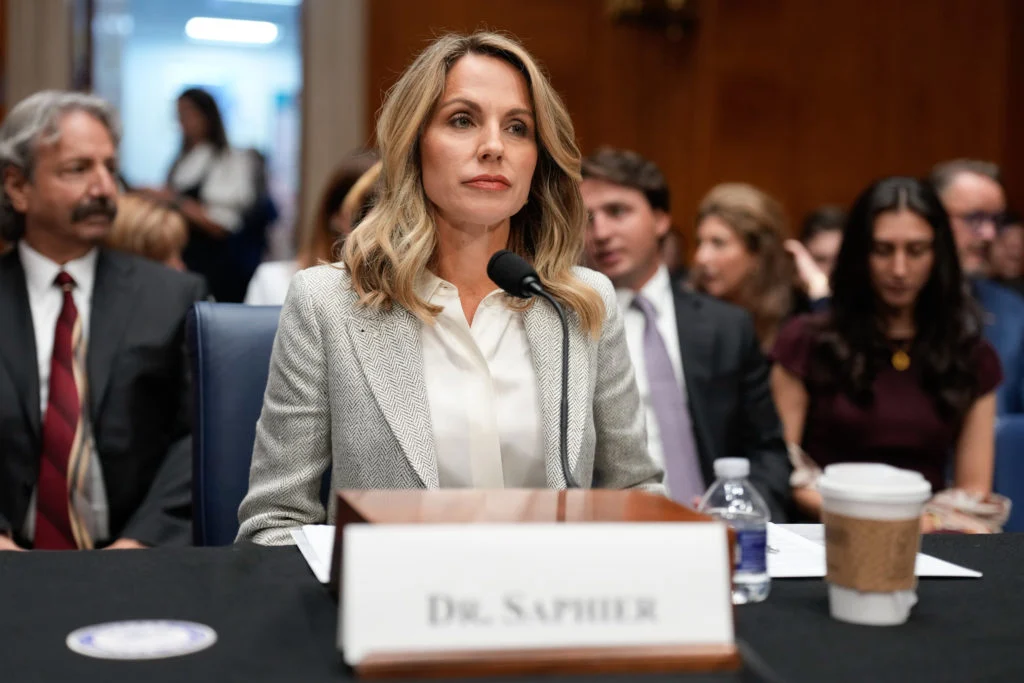
WASHINGTON — In a high-stakes confirmation hearing that underscores the deep ideological fissures within the American public health establishment, Dr. Nicole Saphier appeared before the Senate Health, Education, Labor, and Pensions (HELP) Committee on Wednesday. Her testimony represents the third attempt by the Trump administration to install a Surgeon General, a position that serves as the "nation’s doctor" and the primary federal conduit for communicating medical guidance to the American public.
As a radiologist and former Fox News contributor, Dr. Saphier steps into a vacancy that has persisted throughout President Trump’s second term. Her arrival at the Senate dais follows a tumultuous period of nominations, reflecting the administration’s ongoing struggle to align its health policy vision with the institutional realities of federal oversight.
The Path to the Hearing: A Chronology of Instability
The quest to fill the Surgeon General’s office has been marked by a series of rapid withdrawals and shifts in strategy.
- The Initial Selection: The administration’s first nominee, Dr. Janette Nesheiwat, a medical contributor for Fox News, saw her path to confirmation collapse following intense scrutiny regarding her academic credentials. The administration withdrew her name, leaving the post vacant.
- The Pivot to Influence: The White House then turned to Dr. Casey Means, an entrepreneur and prominent wellness influencer. However, her nomination stalled in the Senate. Her background, which heavily emphasizes alternative wellness perspectives, combined with her vocal skepticism toward established vaccine protocols, triggered significant opposition among lawmakers concerned about the potential for institutional disruption.
- The Current Nominee: President Trump formally pulled the Means nomination and pivoted to Dr. Saphier. A board-certified radiologist currently serving as the director of breast imaging at Memorial Sloan Kettering Monmouth, Saphier brings a more traditional clinical background, though her own past commentary and business interests have already become focal points of the confirmation process.
The persistent vacancy has left the office of the Surgeon General—traditionally a non-partisan, steady hand in times of public health crisis—without a confirmed leader, complicating the administration’s ability to present a unified front during a period of declining public trust in federal health agencies.
Navigating the Kennedy Doctrine
Dr. Saphier’s confirmation is complicated by the shadow of Health and Human Services (HHS) Secretary Robert F. Kennedy Jr. Since his appointment, Kennedy has championed a sweeping overhaul of federal health policy, focusing on the reduction of vaccine guidance, skepticism toward pharmaceutical giants, and a critique of the food industry’s role in chronic disease.
The U.S. is currently grappling with its most severe measles outbreak in decades, a situation that has transformed vaccine policy from a routine public health concern into a polarized battleground. Senators from both sides of the aisle have signaled their intent to grill Saphier on whether she will act as a check on Kennedy’s more contentious policy shifts or serve as a mouthpiece for them.
During the opening of Wednesday’s hearing, Committee Chair Sen. Bill Cassidy (R-La.) did not mince words. Acknowledging the "serious health issues" currently plaguing the nation—most notably the preventable resurgence of measles—Cassidy offered a stark assessment of the status quo.
"That is going to be a terrible legacy for this administration," Cassidy said, addressing the panel of nominees. He expressed a pointed hope that the incoming officials would prioritize the restoration of public confidence, criticizing the administration’s current health leadership as "irresponsible." Cassidy’s comments were particularly poignant given his own political trajectory, having been defeated in his Republican primary by a Trump-backed challenger earlier this year.
Credentials, Conflicts, and Commercial Interests
The scrutiny facing Dr. Saphier extends beyond her policy alignment to her professional background and financial disclosures.
Professional Credentials
Dr. Saphier’s curriculum vitae includes a doctor of medicine degree from Ross University School of Medicine in Barbados, followed by fellowship training at the prestigious Mayo Clinic. Her supporters point to her clinical experience at Memorial Sloan Kettering as evidence of her competency. However, critics have pointed to specific policy stances she has taken that appear to deviate from established medical consensus.
Vaccine Skepticism
Mirroring the concerns raised by the administration’s previous pick, Dr. Means, Saphier has previously questioned the necessity of the hepatitis B vaccine for all newborns—a long-standing recommendation that the current administration is actively attempting to dismantle. Such positions have alarmed public health experts who fear that the Surgeon General’s office could become a platform for questioning foundational immunization programs.
Financial Disclosures and Business Interests
Perhaps the most complex hurdle for Saphier is her financial portfolio. Her ethics filing, dated September 7, reveals significant holdings in major healthcare, insurance, and processed food entities, including Coca-Cola, Yum Brands, the Hershey Co., and the cigarette manufacturer Philip Morris.
Furthermore, Saphier is the owner of DropRx, a company that manufactures and markets concentrated tinctures containing ingredients such as kava kava root. The Food and Drug Administration (FDA) has previously flagged kava kava for its potential to cause severe liver injury. While Saphier has pledged to divest from her holdings and resign from her positions at both DropRx and its parent company, Empower MD LLC, should she be confirmed, the disclosure has raised questions regarding potential conflicts of interest between her business ventures and her prospective role as the nation’s top public health official.
Broader Implications: The Future of Federal Health Policy
The confirmation hearing is not taking place in a vacuum. It is part of a broader confirmation marathon for the Department of Health and Human Services. Also appearing before the committee are Chris Klomp, a chief counselor at HHS nominated to serve as Kennedy’s deputy, and Timothy Westlake, who is seeking confirmation as the assistant secretary for mental health and substance use.
The central tension of these hearings is whether the U.S. government will maintain its commitment to evidence-based, peer-reviewed public health guidance or move toward a model characterized by skepticism of the "medical-industrial complex."
The "Loud Megaphone"
The position of Surgeon General carries limited formal policymaking authority. However, it possesses an unparalleled "loud megaphone." The person in this role acts as the primary communicator to the American public on health crises. If Saphier is confirmed, her messaging will determine whether the administration adopts a stance of conciliation with traditional health institutions or continues its aggressive campaign against them.
Restoring Public Trust
The urgency expressed by Sen. Cassidy highlights the fragility of the current health landscape. With vaccine uptake falling and chronic disease rates climbing, the committee is looking for a nominee who can bridge the gap between political mandates and the realities of clinical science.
The question remains: Can Dr. Saphier, given her own history of questioning established guidelines and her previous ties to the wellness industry, convince a skeptical Senate—and a concerned public—that she is capable of providing independent, data-driven leadership?
Conclusion: A Turning Point for Public Health
As the hearings conclude, the Senate faces a binary choice. A confirmation for Dr. Saphier would signal a victory for the administration’s push to disrupt the status quo of the Department of Health and Human Services. A rejection, however, would force the White House back to the drawing board for a fourth time, further extending a vacancy that is increasingly viewed as a symptom of a broader dysfunction in the nation’s public health infrastructure.
For the American public, the proceedings in the HELP committee are more than just a bureaucratic ritual; they are an indication of how the government will manage the health risks of tomorrow. Whether through the lens of traditional medical practice or the reformist zeal of the current administration, the office of the Surgeon General remains a vital, if currently embattled, pillar of American national security. As the committee weighs the evidence, the nation waits to see who will step into the role of the nation’s doctor, and what that appointment will mean for the future of public health in the United States.