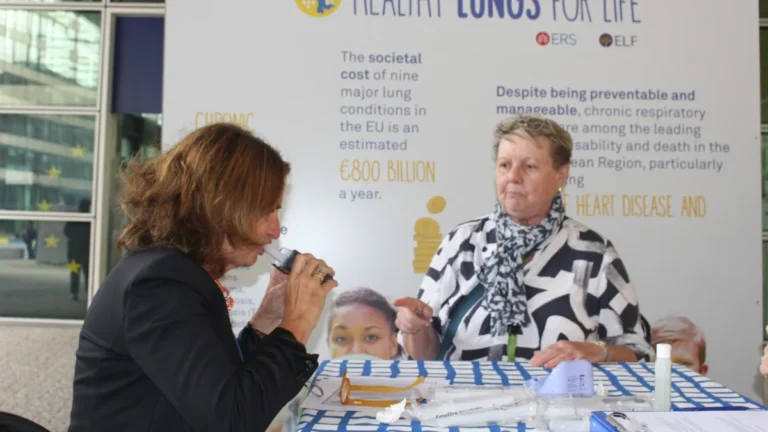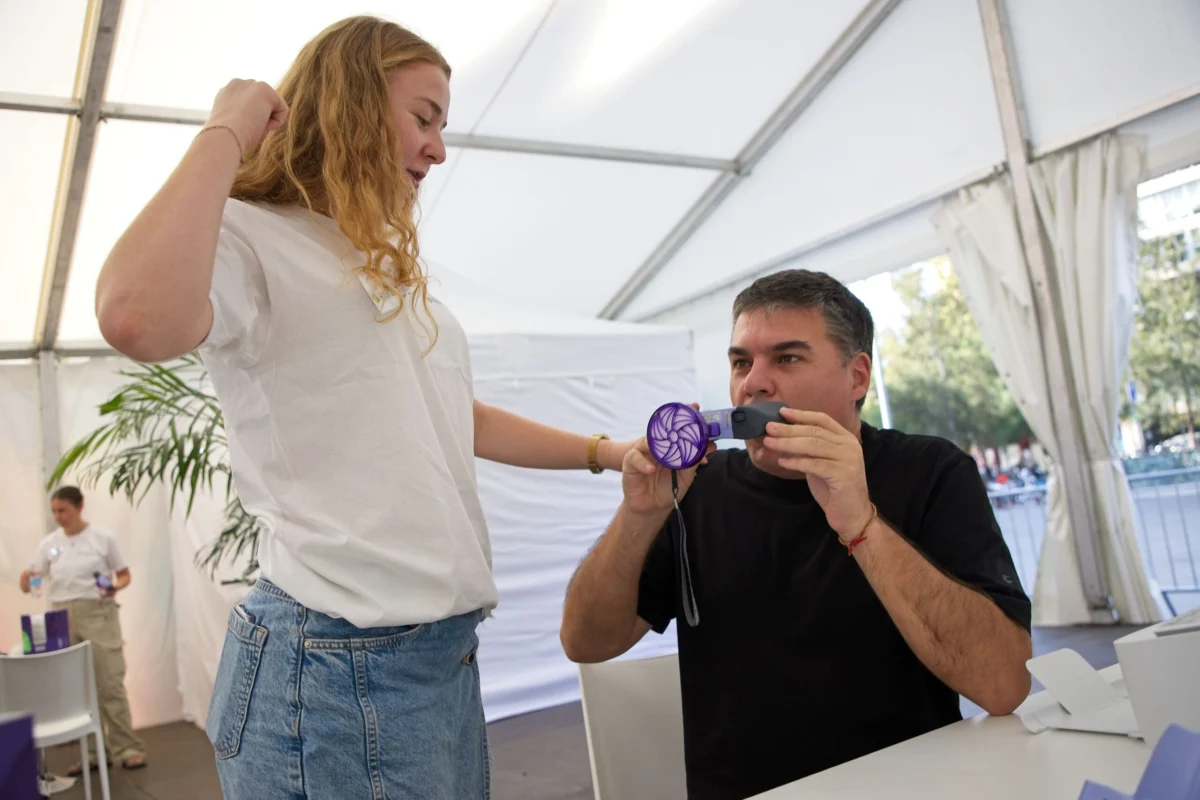
BARCELONA, SPAIN – As the international medical community descended upon the Catalan capital for the European Respiratory Society (ERS) Congress 2026, the focus extended far beyond the walls of the convention center. In a vibrant display of public health advocacy, the "Healthy Lungs for Life" (HLfL) campaign transformed Plaça Universitat into a hub of respiratory awareness, offering free spirometry testing, expert consultations, and a stark reminder of the urgent need for cleaner air in our urban centers.
Coinciding with the International Day of Clean Air for Blue Skies on September 7, the event served as a high-profile call to action, drawing hundreds of citizens eager to prioritize their respiratory wellbeing. By blending clinical excellence with community engagement, the initiative underscored a fundamental message: lung health is a human right that begins with the air we breathe.
Main Facts: A Landmark Day for Respiratory Health
The HLfL event in Barcelona was a significant logistical and educational undertaking. Nearly 300 individuals participated in free, professional-grade spirometry tests, providing them with immediate insights into their lung function. This non-invasive diagnostic tool—the gold standard for identifying conditions like asthma and Chronic Obstructive Pulmonary Disease (COPD)—was made accessible to the public, breaking down the barriers that often prevent early diagnosis.
Beyond the tests, the event acted as an educational lighthouse. Healthcare professionals from some of Spain’s most prestigious institutions were on hand to offer practical, actionable advice on protecting lung health in an urban environment. From understanding the impact of particulate matter to managing respiratory triggers, the event empowered citizens to take charge of their long-term health.
The initiative is a collaborative masterpiece spearheaded by the European Lung Foundation (ELF) and the ERS, with the strategic support of the Clean Air Fund. It operates on the philosophy that true health outcomes require a synergy between medical evidence, public policy advocacy, and community-level engagement.
Chronology: A Day of Action and Advocacy
The event’s success was the culmination of meticulous planning and strategic timing.
Morning: The Grand Opening
The festivities commenced with a formal opening led by Dimitris Kontopidis, Chair of the ELF (2023–2026), and Dr. Judith García-Aymerich, Deputy Director of the Barcelona Institute for Global Health (ISGlobal) and former ERS Secretary General. Their presence signaled the intersection of academic respiratory medicine and real-world public health policy.
Midday: High Engagement
Throughout the day, the pop-up site at Plaça Universitat remained a hive of activity. Queues formed as residents sought expert guidance. Media interest was intense, with local and national press outlets broadcasting the campaign’s core message: that clean air is not a luxury but a necessity for human survival.
Afternoon: Digital Integration and Stakeholder Synergy
A key component of the afternoon was the integration of the "Lovexair CheckAir" tool. Approximately 200 participants utilized this digital resource to assess their personal exposure to air pollution. By inputting their location and lifestyle factors, users gained a clearer understanding of how environmental pollutants influence their respiratory health.
The day concluded with an exclusive stakeholder meeting held within the ERS Congress framework. This session brought together international partners to dissect the successes of the Barcelona model and strategize the rollout of similar "clean air" events in other nations, ensuring the HLfL momentum continues to build globally.
Supporting Data: The Hidden Burden of Poor Air Quality
The urgency behind the Healthy Lungs for Life campaign is supported by mounting evidence regarding the long-term health consequences of urban pollution. According to current health indicators, urban dwellers are disproportionately exposed to nitrogen dioxide (NO2) and fine particulate matter (PM2.5), both of which are strongly linked to the exacerbation of chronic respiratory diseases.
The use of the Lovexair CheckAir tool highlighted a critical knowledge gap: many citizens are unaware of the daily "pollution dose" they receive during their commute or while residing in high-traffic areas. By providing this data, the HLfL campaign is shifting the narrative from passive acceptance of air quality to active environmental stewardship.
Furthermore, the participation of 300 individuals in a single day for spirometry testing provides a microcosm of the potential for early intervention. If such initiatives were scaled nationally, the reduction in late-stage diagnoses for COPD and restrictive lung diseases could lead to a massive decrease in public healthcare spending and, more importantly, a significant increase in quality of life for the general population.
Official Responses and Strategic Vision
The campaign’s leadership emphasized that the Barcelona event was not merely a one-off health screening, but a catalyst for systemic change.
"We are here to show that respiratory health is not just about medical treatment; it is about the environment in which we live," stated Dimitris Kontopidis. "When we empower the public with the tools to understand their own lungs, we create a constituency for cleaner air policies."
Dr. Judith García-Aymerich noted the importance of the event as a teaching tool for medical professionals: "It is crucial for delegates at the ERS Congress to witness the power of direct engagement. We cannot just talk about respiratory health in lecture halls; we must see how our work resonates with the people we serve."
The organizers also highlighted that the event is a collaborative victory. By uniting bodies like the Vall d’Hebron University Hospital, the Hospital Clínic de Barcelona, and patient advocacy groups like Fenaer Pacientes and APEPOC, the campaign established a robust support network that links clinical care with patient advocacy.
Implications: Building a Sustainable Future
The impact of the 2026 Barcelona event will extend well into the future, particularly through the upcoming schools programme. Starting in October 2026, the HLfL initiative will move into classrooms across the city. This is perhaps the most vital long-term investment of the campaign. By educating the next generation on the intricate relationship between physical activity, air quality, and lung health, the program aims to foster a culture of prevention.
The Educational Pipeline
The school curriculum will focus on:
- Air Quality Literacy: Teaching children to understand air quality indices and the importance of advocating for green spaces.
- Healthy Lifestyles: Promoting physical activity as a means to strengthen lung capacity.
- Environmental Stewardship: Encouraging students to influence their family’s habits, creating a "trickle-up" effect of awareness.
Policy Advocacy
For policymakers, the visibility of this event serves as a warning and a guide. The fact that the public is queuing for lung checks is a tangible sign that the community is concerned about the quality of the air they breathe. The Healthy Lungs for Life campaign provides the evidence base that politicians need to justify more aggressive clean-air zones, better urban planning, and stricter emission regulations.
Global Scaling
The stakeholder meeting at the ERS Congress served as a blueprint for the future. By sharing the logistical challenges and successes of the Barcelona event, organizers are creating a "toolkit" for other cities. The goal is to standardize these events across Europe and beyond, turning the Healthy Lungs for Life campaign into a global movement that mirrors the success of the Barcelona model.
Conclusion: A Breath of Fresh Air
The success of the Healthy Lungs for Life initiative in Barcelona stands as a testament to the power of community-focused medical advocacy. By moving beyond the sterile environment of the hospital and into the heart of the city, the campaign successfully bridged the gap between complex respiratory science and the daily lives of citizens.
As the city looks toward the future, the integration of educational programs in schools and the continued focus on data-driven environmental awareness suggest that the legacy of this event will be long-lasting. The fight for clean air is far from over, but in Barcelona, the conversation has shifted. With the support of institutions like ISGlobal, the expertise of the ERS, and the passion of local patient organizations, the path to healthier lungs—and a healthier planet—has become significantly clearer.
For those interested in following the campaign or learning how to bring these initiatives to their own regions, the European Lung Foundation continues to provide comprehensive resources. The message from Barcelona is simple, yet profound: check your lungs, protect your air, and advocate for the health of your community.
For more information on the campaign, visit the Healthy Lungs for Life website.