








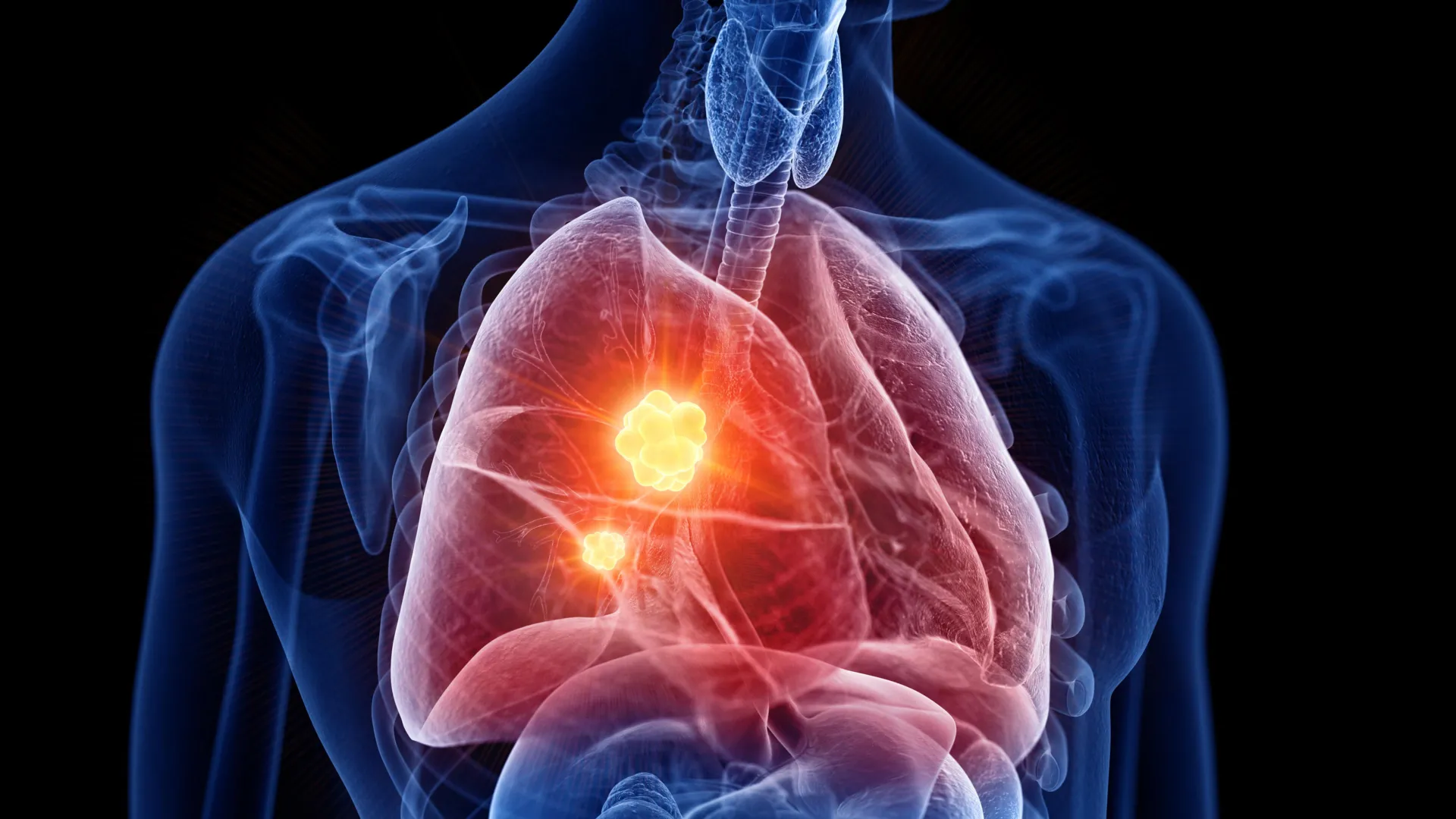
Mesothelioma, a rare and aggressive form of cancer predominantly triggered by decades-old exposure to asbestos, has long stood as a formidable challenge to modern oncology. For the 30,000 individuals diagnosed globally each year, the prognosis has historically been grim, defined by limited treatment options and a median survival rate of only 12 months. However, a pioneering study published in Nature Communications has unveiled a radical new therapeutic strategy that effectively turns a cancer cell’s own protective mechanisms against it, offering a potential "game changer" for those fighting this terminal disease.
The Weight of the Diagnosis: Main Facts
Mesothelioma is fundamentally a disease of chronic inflammation. When microscopic asbestos fibers are inhaled, they lodge deep within the lungs, causing persistent cellular irritation that can remain dormant for decades before manifesting as malignant tumors. Because the cancer often develops long after the initial exposure—frequently affecting men who spent careers in shipbuilding, oil refining, or asbestos manufacturing—it is often caught at advanced stages.
Current standard-of-care treatments, including chemotherapy and immunotherapy, provide only modest relief. With a five-year survival rate hovering at a sobering 10 percent, the medical community has recognized mesothelioma as a "disease of significant unmet medical need." The scarcity of effective interventions has necessitated a search for novel biological pathways that can bypass the traditional limitations of oncology.
From Lab Bench to Clinical Reality: A Chronology
The genesis of this breakthrough traces back to 2015 at the University of Vermont (UVM) Cancer Center. Researchers, led by Professor Brian Cunniff and research scientist Victoria Gibson, began investigating the unique metabolic profile of mesothelioma cells.
- 2015–2018: The team identifies that mesothelioma cells rely heavily on an antioxidant enzyme called peroxiredoxin 3 (PRX3) to survive the high-stress environment of tumor growth.
- 2019–2021: Working in partnership with the pharmaceutical startup RS Oncology, LLC, the team successfully repurposes thiostrepton—a naturally occurring antibiotic—into a clinical formulation designated as RSO-021.
- 2022–2023: A phase one clinical trial is conducted in the United Kingdom under the oversight of the Medicines and Healthcare products Regulatory Agency (MHRA).
- 2024: Results are published in Nature Communications, demonstrating that the drug not only controlled disease progression in 67% of trial participants but also showed significant promise in tumor shrinkage and improved survival times.
Overloading the Tumor: The Biological Mechanism
To understand why this treatment works, one must look at how cancer cells manage their own volatile internal environment. Tumor cells possess highly active metabolisms, which generate an excess of "reactive oxygen species" (ROS)—unstable molecules that can cause catastrophic damage to a cell’s internal architecture.
To prevent these molecules from killing them, cancer cells ramp up the production of antioxidant enzymes. PRX3 is the "guardian" of the mitochondria, the cell’s energy powerhouse, ensuring that ROS levels remain just low enough to allow the cancer to thrive.
The UVM team decided to flip the script. While decades of cancer research attempted to boost antioxidants to combat disease—a strategy that largely failed and occasionally backfired by fueling tumor growth—the UVM team chose to block the defense mechanism entirely. By using RSO-021 to inhibit PRX3, the researchers force hydrogen peroxide to accumulate within the mitochondria until the tumor cells succumb to oxidative stress and die.
Because tumor cells are already operating at the edge of metabolic disaster, they are far more vulnerable to this "overload" than healthy cells. Furthermore, research indicates that PRX3 turns over more rapidly in malignant tissue, providing a natural selectivity that minimizes damage to the patient’s healthy organs.
Supporting Data: Clinical and Pre-clinical Evidence
The efficacy of this approach was substantiated through rigorous testing. In animal models, when researchers completely deleted the gene responsible for PRX3, mesothelioma cells could no longer form tumors. Crucially, studies in healthy mice showed that the removal of PRX3 did not result in adverse physical effects, debunking the long-held fear that targeting mitochondrial enzymes would be inherently toxic to the patient.
In the phase one clinical trial, the results were equally compelling:
- Safety: The trial met all safety and tolerability goals at a 90-milligram dose, with no treatment-related deaths.
- Progression-Free Survival: The average progression-free survival was 4.2 months, matching current standards, but the overall survival data significantly exceeded expectations.
- Biological Targeting: Tissue samples confirmed that RSO-021 successfully hit its intended target, validating the laboratory findings in human patients.
Official Responses and Expert Perspectives
"It’s a disease of a significant unmet medical need," said Brian Cunniff, now the chief science officer at RS Oncology and an associate professor at the UVM Larner College of Medicine. Regarding the survival data, Cunniff noted, "Our overall survival data is very promising and will hopefully persist with additional patients."
Victoria Gibson, the lead author of the study, emphasized the humanitarian aspect of the work. "People will come up to us at conferences and state that you can’t target the mitochondria because they’re too important," she explained. "The evidence—that you can knock out PRX3 in mice and there’s no adverse phenotype—supports our approach."
The transition from a laboratory setting to clinical trials has been a humbling experience for the research team. Gibson recalls the moment she realized the real-world impact of their work: "We just work in a lab all day working with cells, and the fact that we’re making an impact on people, that they’re wanting to be on this clinical trial, just was amazing to me."
Implications: A New Frontier in Oncology
The success of RSO-021 suggests that the drug may offer a dual-action benefit. Beyond directly inducing cell death (cytotoxicity), the treatment appears to have immunomodulatory capacity, potentially altering the tumor microenvironment to make it more receptive to the patient’s own immune system.
The delivery method is also a significant logistical advancement. Because approximately 90 percent of mesothelioma patients develop "pleural effusions"—a painful buildup of fluid between the lungs and the chest wall—they often have a catheter already in place. By delivering RSO-021 directly into this space, doctors can concentrate the drug locally at the tumor site, drastically reducing systemic toxicity and side effects.
Looking Ahead
The research trajectory is now expanding rapidly. The team is currently working with the University of Leicester to develop second-generation PRX3 inhibitors with improved solubility. These future iterations could potentially be administered as oral tablets, significantly broadening the reach of the treatment.
Furthermore, the scope of the research is moving beyond the lungs. New studies are being launched to investigate the application of thiostrepton-based therapies in peritoneal malignancies, including gastric and other gastrointestinal cancers.
As the second phase of the clinical trial concludes, the scientific community awaits the presentation of full results at upcoming global oncology conferences. For a disease that has seen little innovation in decades, the UVM-RS Oncology collaboration represents a vital shift in strategy: instead of fighting the cancer with external toxins, they are teaching the body to exploit the tumor’s own desperate, survival-driven metabolism. This "weakness-targeted" approach may soon become a pillar of future cancer care, transforming mesothelioma from an inevitably fatal diagnosis into a manageable condition.