





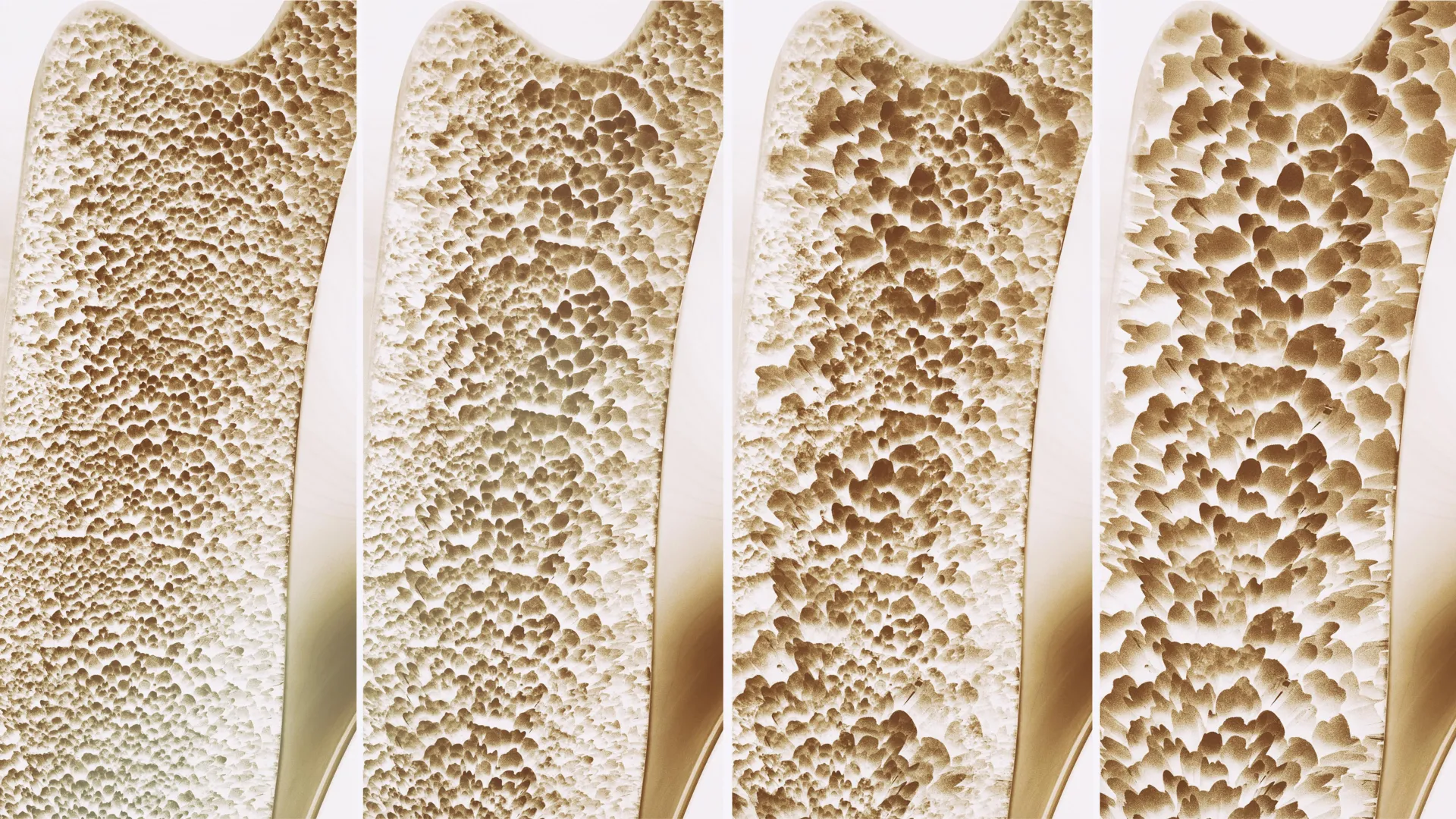
Osteoporosis represents one of the most pervasive and challenging medical conditions facing the modern world. Characterized by a systemic decline in bone mineral density and structural integrity, the condition renders the skeletal system fragile and susceptible to fractures that can significantly diminish quality of life. With approximately six million people in Germany alone—a demographic skewed heavily toward women—suffering from the disease, the global burden of osteoporosis is staggering.
For decades, clinicians have struggled to find "gold standard" treatments that are both efficacious and safe for long-term administration. Current pharmacological interventions often come with a laundry list of limitations, ranging from systemic side effects to diminishing returns after prolonged use. However, a significant breakthrough from researchers at Leipzig University has shifted the landscape, identifying a biological "switch" that could fundamentally change how we manage bone health.
The Discovery of GPR133: A New Frontier in Skeletal Biology
At the heart of this research is a previously little-known protein receptor called GPR133. Part of the larger family of adhesion G protein-coupled receptors (GPCRs), GPR133 sits on the surface of cells, acting as a sophisticated sensory antenna that helps cells perceive and react to their mechanical and chemical environment.
While the scientific community has long been fascinated by GPCRs, the specific role of GPR133 in bone metabolism had remained elusive until the team at the Rudolf Schönheimer Institute of Biochemistry began their investigations. The team, led by Professor Ines Liebscher, identified that GPR133 is not merely a bystander; it is a central orchestrator in the complex cellular ballet of bone remodeling.
The significance of this discovery cannot be overstated. By targeting a receptor that is already naturally present in the body, researchers hope to tap into the skeleton’s innate capacity for self-repair, moving away from aggressive chemical interventions toward a more physiological approach to treatment.
Chronology: A Decade of GPCR Excellence
The identification of GPR133 as a target for osteoporosis is not an overnight sensation; it is the culmination of more than a decade of focused, high-level research at Leipzig University.
- The Foundation (2014–2020): Leipzig University established itself as a global hub for GPCR research. Through the Collaborative Research Center (CRC) 1423, titled Structural Dynamics of GPCR Activation and Signaling, the university invested heavily in understanding how these complex receptors change shape and transmit signals.
- The Identification (2021–2023): Using advanced computer-assisted screening technologies, the team successfully identified a small molecule, AP503, capable of stimulating the GPR133 receptor. This computational breakthrough provided the "key" to the "lock" that had been studied for years.
- The Experimental Phase (2023–2024): The researchers transitioned to in vivo studies. They observed that genetic impairment of GPR133 in mouse models resulted in premature bone loss, effectively mimicking human osteoporosis.
- The Breakthrough (2024–2025): The team successfully administered AP503 to mice with osteoporosis-like bone loss. The results were striking: the substance not only halted the disease but actively bolstered bone density and strength in both healthy and diseased subjects.
Mechanisms of Action: How GPR133 Builds Bone
To understand the promise of GPR133, one must look at the "bone cycle." Our skeletons are not static; they are in a constant state of flux. Two primary cell types dictate this process: osteoblasts (the builders) and osteoclasts (the breakers).
In a healthy individual, these two cell populations exist in a state of dynamic equilibrium. In osteoporosis, however, the balance tips: osteoclasts become overactive, carving away bone tissue faster than the osteoblasts can replace it.
GPR133 appears to act as a regulator of this balance. When the receptor is activated—either naturally through physical mechanical stress or pharmacologically via AP503—it triggers a signaling cascade that simultaneously stimulates osteoblast activity while putting the brakes on osteoclasts. By shifting this metabolic equilibrium, the receptor effectively encourages the body to prioritize the creation of new, durable bone tissue.
"AP503 appears to imitate the natural process that activates GPR133," explains Professor Liebscher. "That raises the possibility that the compound could eventually be used to increase bone strength or help restore bone that has already been weakened."
Official Responses and Scientific Perspective
The research team, which includes lead author Dr. Juliane Lehmann, emphasizes that the implications of this study extend beyond the skeleton. In a notable parallel, earlier research from the same group demonstrated that AP503 also improves the health and strength of skeletal muscle.
Dr. Juliane Lehmann notes, "The newly demonstrated parallel strengthening of bone once again highlights the great potential this receptor holds for medical applications in an aging population."
This dual-benefit approach is being hailed by the broader scientific community as a potential "game changer" for geriatric medicine. Frailty in older adults is rarely limited to one system; it is usually a combined decline in both bone and muscle (sarcopenia and osteoporosis). A single treatment that targets both systems could provide a holistic approach to maintaining mobility, stability, and independence in the elderly.
Furthermore, the team is already looking toward the horizon. They are currently investigating whether the GPR133 receptor could have implications in other diseases characterized by tissue degradation. The ongoing support for the CRC 1423 ensures that the structural dynamics of these receptors will continue to be probed with the highest level of academic rigor.
Implications for Future Medical Practice
If human clinical trials mirror the success of the mouse models, the therapeutic implications are vast.
1. Tackling Postmenopausal Osteoporosis
One of the most pressing needs is for better treatments for postmenopausal osteoporosis. As hormone levels drop, the natural protective effect on bone disappears, leading to rapid degradation. A treatment that specifically activates the GPR133 pathway could offer a targeted alternative to hormone replacement therapies, which are not suitable for all patients.
2. A Synergistic Approach to Aging
By addressing bone and muscle health simultaneously, doctors could potentially reduce the incidence of falls—the leading cause of injury in the elderly. Stronger bones are less likely to fracture, and stronger muscles provide the stability required to prevent the fall in the first place.
3. Long-Term Safety and Sustainability
Because the researchers are focusing on stimulating an endogenous receptor rather than introducing a foreign substance to force a chemical response, there is hope that this approach will yield fewer long-term side effects. The ability to "titrate" the activity of GPR133 using a molecule like AP503 could provide clinicians with the precision needed for long-term patient management.
Conclusion: A New Horizon
While the journey from a laboratory in Leipzig to a pharmacy shelf is long and fraught with regulatory hurdles, the identification of GPR133 as a potent regulator of bone health provides a clear, scientifically grounded path forward.
As the aging population continues to grow, the pressure on healthcare systems to manage chronic, age-related conditions will intensify. Breakthroughs like this—rooted in deep structural biology and validated by robust experimental data—offer a glimmer of hope. By mastering the molecular mechanisms that define our skeletal and muscular strength, the researchers at Leipzig University are not just studying cells; they are laying the groundwork for a future where aging does not necessarily equate to fragility.
The next phase of research will undoubtedly be watched closely by the global pharmaceutical and medical communities. With the continued investigation into the wider functions of GPR133, we may find that this "little-known receptor" is one of the most important keys to unlocking the secrets of the human skeletal system.