








September 17, 2026
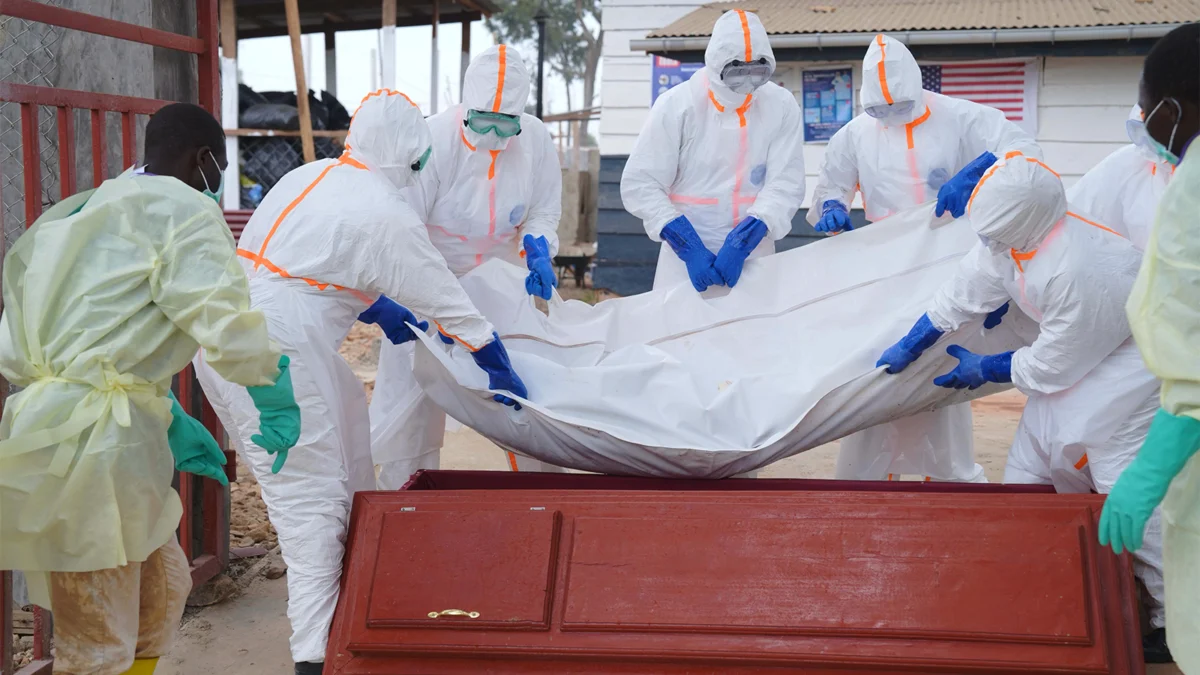
The Democratic Republic of the Congo (DRC) is currently navigating one of the most complex public health emergencies in modern history. As the World Health Organization (WHO) struggles to contain an expansive Ebola outbreak, the situation on the ground has become a stark study in contrasts. While health officials report tentative success in quelling transmission in certain provinces, the virus is simultaneously gaining alarming momentum in others, challenging the limits of international medical intervention and regional infrastructure.
The Current Landscape: A Multi-Front Battle
On Wednesday, WHO Director-General Tedros Adhanom Ghebreyesus, PhD, delivered a briefing from Geneva that encapsulated the fragility of the current response. While he highlighted “encouraging signs” in the fight against the Bundibugyo virus—a rare and particularly virulent strain of Ebola—he underscored that the epidemic is far from under control.
The current epidemiological data paints a harrowing picture of an outbreak that has transcended a singular geographic focus. With more than 7,200 confirmed cases and a staggering death toll exceeding 3,500, the virus has entrenched itself across seven provinces. The challenge, according to Dr. Tedros, is that this is not a monolithic crisis; it is a series of interconnected, yet distinct, outbreaks occurring in vast, often inaccessible regions.
"We are now starting to see encouraging signs that we are gaining ground," Dr. Tedros told reporters. "In the most affected parts of Ituri province, transmission is going down." Furthermore, South Kivu, once a hotspot, has remained silent, reporting no new cases since May—a milestone that offers a blueprint for potential containment strategies.
However, the optimism is tempered by a sobering reality in North Kivu. In that province, the virus is moving with terrifying speed, with weekly case counts doubling from roughly 100 to over 200 in the span of just 14 days.
Chronology of the 2026 Outbreak
The current crisis did not emerge overnight. To understand the volatility of the situation, one must look at the timeline of the 2026 outbreak, which has been characterized by its rapid expansion.
- Early 2026: Initial clusters of the Bundibugyo virus were identified in isolated, rural communities in the eastern DRC. Due to the remoteness of these areas, initial reporting was delayed, allowing the virus to seed itself across multiple border regions.
- Late Spring 2026: The outbreak began its rapid expansion, moving from initial pockets into neighboring provinces. By May, the WHO had officially upgraded its assessment of the threat, acknowledging that the geographic spread was outpacing the available supply of vaccines and therapeutics.
- Summer 2026: Despite increased international aid, the virus reached seven distinct provinces. In June and July, transit hubs and densely populated trading centers became primary sites of transmission, complicating contact tracing efforts.
- August 2026: The WHO and Congolese health authorities pivoted toward a localized containment strategy, attempting to ring-fence hot zones. While this succeeded in South Kivu, the vast, forested topography of North Kivu rendered similar strategies difficult to implement.
- September 2026: The current status indicates a bifurcation in outcomes. While stabilization has been achieved in the east, the surge in North Kivu is forcing a reallocation of emergency resources, testing the logistical capacity of medical NGOs operating in the region.
Supporting Data and Epidemiological Challenges
The numbers released by the WHO this week provide a cold, mathematical look at the crisis. With a case-fatality rate currently hovering near 48%, the Bundibugyo strain remains one of the most dangerous pathogens to ever hit the region.
The primary difficulty in data collection remains the "vastness" of the terrain. Health workers are often required to trek for days to reach suspected cases, and in many instances, patients are not reaching medical centers until the final stages of the disease. This delayed presentation makes the virus harder to treat and significantly increases the risk of household transmission.
Furthermore, the genomic sequencing of the virus suggests that the outbreak is not being driven by a single "patient zero" but by multiple, concurrent introductions into the human population. This complexity means that even if a single province is declared "Ebola-free," the risk of re-introduction from a neighboring area remains high, necessitating a permanent, high-alert surveillance presence across the entire eastern corridor of the DRC.
Official Responses: Cautious Optimism vs. Realism
The response from the international community has been a blend of high-level diplomatic support and on-the-ground operational grit. Maria Van Kerkhove, PhD, the WHO’s director for epidemic and pandemic management, offered a pragmatic assessment that serves as a counterweight to the more hopeful narrative.
"We can be cautiously optimistic about what is happening, but I think we need to be realistic about the road that’s ahead of us," Van Kerkhove stated. "Looking at trends takes time." Her remarks highlight the danger of "epidemic fatigue," where initial progress leads to a relaxation of safety protocols—a mistake that has historically preceded the most devastating waves of Ebola outbreaks.
Local Congolese health officials have been working in tandem with the WHO to implement community-based education programs. By partnering with local tribal leaders and influencers, they are attempting to address the deep-seated mistrust of government and medical authorities that has historically hindered vaccination efforts. These "social vaccines"—communication and trust-building—are being described as just as vital as the biological vaccines currently being distributed.
Implications: The Future of Containment
The implications of the 2026 outbreak extend far beyond the immediate humanitarian toll. If the situation in North Kivu continues to accelerate, it could overwhelm the healthcare systems of neighboring nations, potentially turning a national crisis into a regional catastrophe.
Several critical factors will determine the trajectory of the next few months:
- Vaccine Supply Chain: The logistical challenge of maintaining cold-chain requirements for vaccines in areas with limited electricity is immense. Future success depends on the ability to scale up production and distribution channels to reach the most remote clusters in North Kivu.
- Infrastructure and Mobility: The virus is following the flow of trade and human movement. Strengthening screening at transit points and provincial borders is a priority, yet it creates economic friction that can cause public resentment.
- Long-term Surveillance: Even if the current surge is contained, the WHO is looking at a long-term commitment to the region. The goal is to move from "emergency response" to "endemic management," which involves training local medical staff to handle future spikes without needing the massive international presence currently on the ground.
Conclusion
"But make no mistake, the epidemic continues to grow and continues to kill," Dr. Tedros reminded the world on Wednesday. The juxtaposition of falling cases in Ituri and surging cases in North Kivu is a reminder that in the fight against Ebola, progress is neither linear nor guaranteed.
As the international community watches, the health workers on the front lines remain the last line of defense. They are tasked with the unenviable job of fighting a disease that thrives on the very human connections that define life in the Congo. For now, the world remains in a holding pattern, waiting to see if the current containment efforts can be scaled to meet the growing threat in the north before the window of opportunity closes once again. The road ahead is undoubtedly long, and for those in the heart of the crisis, it remains fraught with uncertainty.