





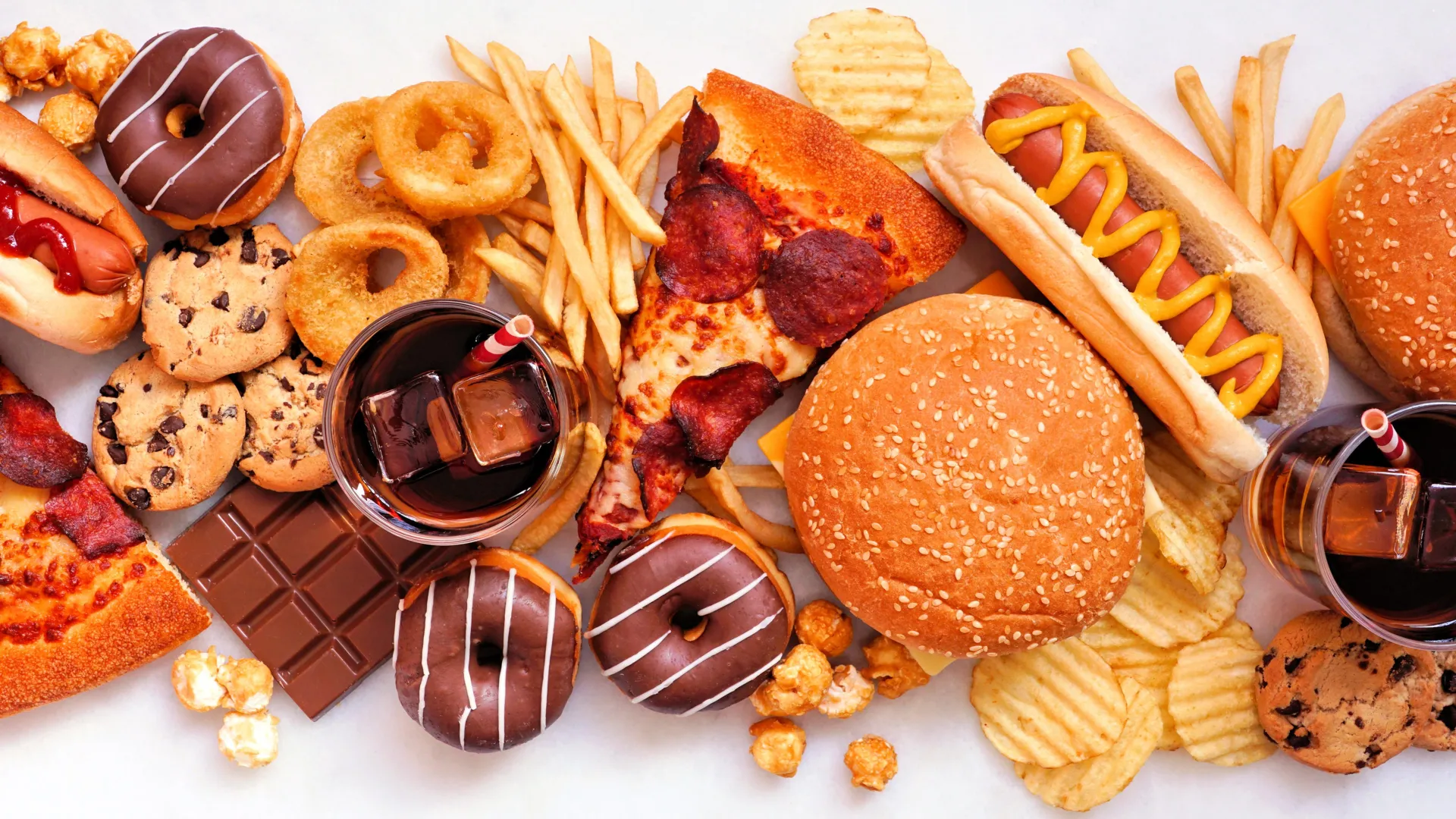
In the modern American diet, the line between food and industrial product has become increasingly blurred. From sugary breakfast cereals to neon-hued snacks and chemically stabilized meats, ultra-processed foods (UPFs) have become the bedrock of the standard Western diet. Now, a startling new study from Florida Atlantic University’s (FAU) Charles E. Schmidt College of Medicine has added a sobering finding to the growing list of health risks associated with these products: a significant increase in the risk of prostate cancer among men.
As UPFs now account for nearly 60% of total caloric intake for U.S. adults—and a staggering 70% for children—the implications of this study extend far beyond individual health choices, potentially signaling a looming public health crisis that experts are beginning to compare to the historical fight against tobacco.
The Anatomy of the Ultra-Processed Diet
To understand the scope of the problem, one must first define what constitutes an ultra-processed food. Unlike minimally processed items, such as frozen vegetables or canned beans, UPFs are formulations manufactured through industrial processes. They typically involve a laundry list of ingredients rarely found in a home kitchen: refined oils, high-fructose corn syrup, hydrolyzed proteins, artificial flavors, emulsifiers, and preservatives.
These additives are engineered for specific purposes: to enhance "craveability," improve shelf stability, and reduce production costs. While these traits are a boon for the food industry’s bottom line, they often result in a nutritional profile stripped of fiber, vitamins, and antioxidants, replaced instead by high concentrations of sugar, sodium, and trans fats.
Previous scientific inquiry has already established links between these dietary patterns and a litany of chronic conditions, including obesity, type 2 diabetes, cardiovascular disease, systemic inflammation, and premature mortality. The biological mechanisms proposed by researchers include the disruption of metabolic processes, the induction of oxidative stress, and the alteration of the gut microbiome—a complex ecosystem of bacteria that plays a critical role in immune health and cancer prevention.
A New Link to Prostate Cancer: Study Methodology
While the association between UPFs and various cancers has been hypothesized for years, evidence specifically tying these foods to prostate cancer—the most commonly diagnosed cancer in American men—has remained thin until now.
The study, recently published in The American Journal of Medicine, provides one of the most comprehensive looks at this relationship to date. Researchers utilized data from the National Health and Nutrition Examination Survey (NHANES), examining a nationally representative cohort of 17,024 U.S. men aged 18 and older between 2003 and 2023.
The NOVA Classification System
To accurately gauge the impact of diet, researchers employed the NOVA system, the gold standard for classifying foods based on the extent and purpose of industrial processing. Participants were required to provide two 24-hour dietary recalls, allowing the team to calculate the precise percentage of daily calories derived from UPFs.
The study population was stratified into four distinct quartiles based on their consumption levels:
- Lowest Quartile: Less than 20% of daily calories from UPFs.
- Highest Quartile: More than 44% of daily calories from UPFs.
Key Findings
The results were stark. When comparing men in the lowest consumption group to those in the three higher intake brackets, the researchers found a 29% increased risk of prostate cancer. When looking specifically at the two highest intake groups, that risk rose to 30%. Even after adjusting for significant confounding variables—such as age, race, ethnicity, smoking status, and poverty levels—the increased risk remained statistically significant, ranging between 24% and 31%.
While the group with the absolute highest consumption of UPFs showed a potential 34% increase in risk, the researchers noted that this specific figure did not reach statistical significance, likely due to the smaller sample size of prostate cancer cases within that specific sub-cohort.
Historical Parallels: Is Big Food the New Big Tobacco?
The lead authors of the study, including Dr. Charles H. Hennekens, do not shy away from the controversial nature of their findings. They suggest that the current landscape surrounding the food industry mirrors the early days of the tobacco debate in the mid-20th century.
For decades, evidence linking smoking to lung cancer was marginalized by an industry prioritizing profit over public health. It took the collective weight of scientific evidence, coupled with aggressive public health policy, to eventually turn the tide on smoking rates. Researchers believe that the current reliance on UPFs may be following an identical, albeit more complex, trajectory.
"These findings add to emerging evidence that UPFs have major adverse health effects and underscore the need for large-scale observational studies and randomized trials to adequately test the hypothesis," said Dr. Hennekens, the First Sir Richard Doll Professor of Medicine and Preventive Medicine at FAU.
The Socioeconomic Hurdle: A Call for Systemic Change
One of the most difficult aspects of addressing UPF consumption is the reality of food access in the United States. Co-author Dr. Timothy De Ver Dye, professor and chair of FAU’s Department of Population Health, emphasizes that reducing the intake of ultra-processed goods is not merely a matter of "willpower" or personal choice.
"Healthcare providers should recognize that many patients face barriers to accessing and affording healthier food options," Dr. Dye noted. "Addressing these challenges will require efforts that extend beyond individual choices to support greater access to nutritious, minimally processed foods."
For millions of Americans living in "food deserts," or those on limited budgets, ultra-processed items are often the only affordable and shelf-stable options available. Consequently, the researchers argue that the solution cannot simply be a directive for patients to "eat better." Instead, it requires a multifaceted approach involving policy changes, food industry regulation, and a fundamental shift in how fresh, nutritious food is subsidized and distributed.
The Global Burden of Prostate Cancer
The stakes of this research are undeniably high. According to the American Cancer Society, the burden of prostate cancer is projected to grow significantly, with estimates suggesting that more than 333,000 men in the U.S. will be diagnosed in 2026, with over 36,000 deaths annually.
On a global scale, the statistics are even more alarming. In 2022, the International Agency for Research on Cancer reported nearly 1.5 million new cases worldwide and nearly 400,000 deaths. As developing nations increasingly adopt Western dietary patterns and increase their reliance on processed food imports, the global health community fears that the incidence of prostate cancer—along with other chronic diseases—will see a rapid, preventable rise.
Implications for Healthcare and Future Research
For the average man, the takeaway from the FAU study is clear but challenging: dietary patterns are a modifiable risk factor. Dr. Hennekens urges healthcare professionals to integrate nutritional counseling into routine care.
"All healthcare professionals should encourage patients to adopt healthy lifestyle practices and evidence-based therapies, while also helping them reduce their consumption of ultra-processed foods," Hennekens stated. "Patients and their healthcare providers should consider this finding as part of broader efforts to promote healthier dietary choices."
However, the researchers stress that this study is just one piece of a much larger puzzle. While the statistical correlation is strong, further research—specifically large-scale, randomized controlled trials—is necessary to definitively establish a causal relationship. Such trials are notoriously difficult in nutritional science, as they require long-term, strictly controlled dietary interventions, but they are essential for moving from observation to clinical consensus.
As the scientific community continues to peel back the layers of how industrial food processing affects human physiology, the FAU study serves as a critical wake-up call. It highlights a systemic issue where the convenience of the modern pantry may be coming at a heavy price to the long-term health of men worldwide. Whether through legislative intervention or a shift in personal dietary habits, the transition away from ultra-processed staples appears to be an increasingly urgent necessity for public health.
Study Contributors:
- Dr. Charles H. Hennekens, Senior Author, FAU College of Medicine.
- Dr. Timothy De Ver Dye, Co-author, FAU Department of Population Health.
- Hunter Scott & John Dunn, Medical Students, FAU.
- Yanna Willett, Doctoral Student, University of Oxford.