







For decades, the medical community has viewed cancer through the lens of late-stage intervention: detection, diagnosis, and the subsequent battle to excise or shrink established tumors. However, a seismic shift is underway in oncology. The Cancer Research Institute (CRI) has officially announced that its prestigious CLIP (Clinical Innovator Program) applications will now pivot toward a singular, ambitious scientific theme: primary and secondary cancer prevention and interception.
This initiative seeks to fund multi-investigator teams capable of bridging the gap between basic mechanistic discovery and clinical application. The objective is to catalyze innovative immune-based strategies that stop cancer before it ever takes hold—or before it has the chance to return.
The "Invisible" Window: Changing How We Define Cancer
Cancer does not emerge in a vacuum; it is the culmination of a long, often silent process. A tumor appearing on a scan is the final chapter of a story that began years, or even decades, earlier. For instance, pancreatic cancer can gestate through genetic alterations for over a decade before clinical symptoms manifest.
Historically, this "pre-diagnostic" window was a black box—impossible to visualize and even harder to treat. Today, that is changing. Advances in genomics, precancer mapping, and immune monitoring have finally brought this critical interval into view.
Much like the management of cardiovascular health—where clinicians treat hypertension and high cholesterol years before a heart attack occurs—oncologists are beginning to see a similar window for cancer. By integrating cutting-edge technologies with a deeper understanding of tumor biology, the medical community is moving toward a future where patients and physicians can monitor "meaningful changes" and intervene while the immune system still holds a competitive advantage.

Three Windows to Act: A Strategic Framework
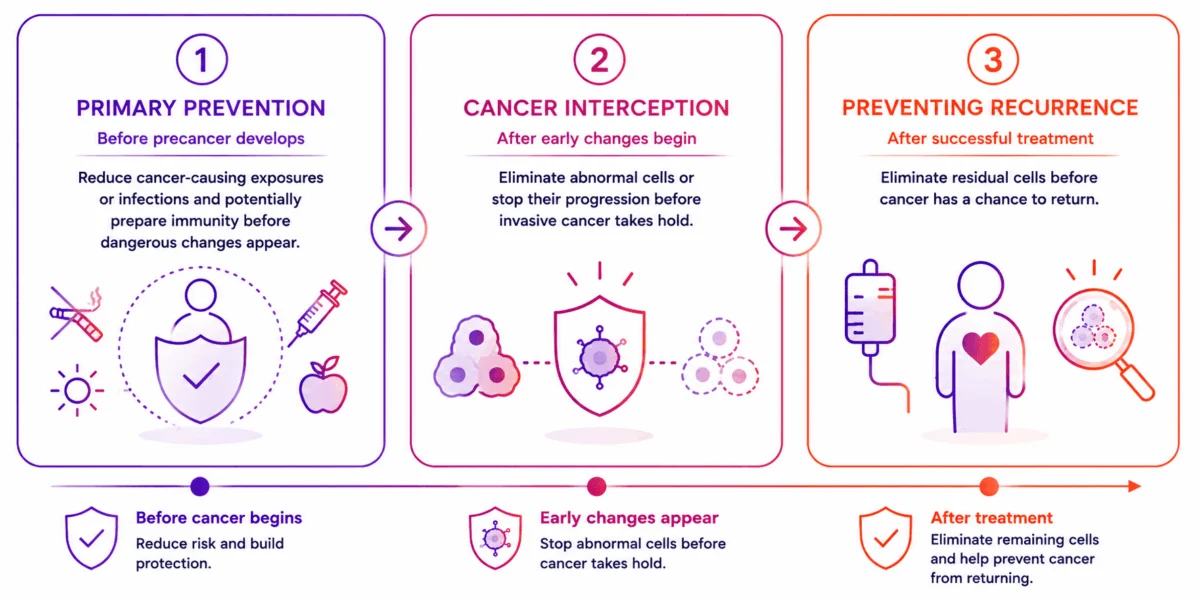
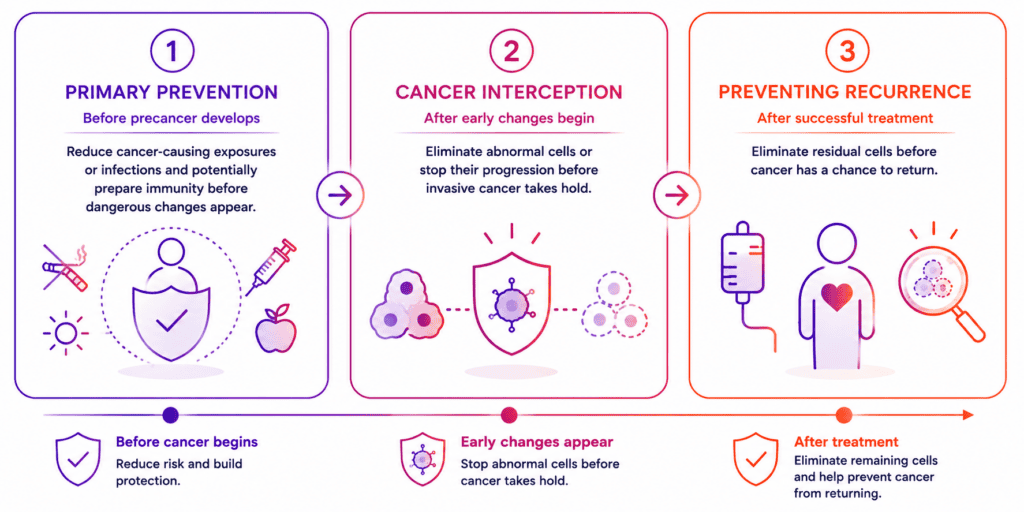
To systematically approach this challenge, the field has categorized intervention into three distinct "windows":
- Primary Prevention: This occurs before any precancerous tissue develops. Strategies here focus on reducing environmental exposures, mitigating viral infections, or "priming" the immune system to recognize and eliminate threats before they take root.
- Cancer Interception: This involves acting after the earliest, most dangerous cellular changes have occurred but before the development of invasive, metastatic disease. The goal is to eradicate abnormal cells while they are still contained.
- Preventing Recurrence: This addresses the post-treatment landscape. Even after successful surgery or chemotherapy, microscopic residual cells often remain. The focus here is on cleaning up these "invisible" remnants to prevent the disease from returning.
A Legacy of Success: The Proof of Principle
The concept of immune-based prevention is not merely theoretical; it has already saved millions of lives. The most successful examples involve virus-induced cancers.
In 1999, the CRI supported the pioneering work of Dr. Ian H. Frazer, whose research into virus-like particles provided the foundation for the HPV vaccine, Gardasil®. Through global initiatives like those spearheaded by Gavi, the Vaccine Alliance, over 86 million girls have been vaccinated, potentially averting 1.4 million cervical cancer deaths. If global coverage reaches 80 percent, we could see more than 50 million cases of cervical cancer prevented over the next century.
Building on this, the field has successfully utilized clinical interventions like the removal of precancerous polyps during colonoscopies or the use of prophylactic medications like aspirin for Lynch syndrome patients. The current challenge is to extend this level of success to non-viral cancers by training the immune system to recognize the unique signatures of precancerous cells.
Promising Signals and Hard Lessons: Lessons from the Clinic
While the goal is clear, the path is fraught with complexity. Recent clinical trials provide both hope and cautionary tales.
The MUC1 Vaccine and Immune Readiness
A trial targeting MUC1—a protein often altered in precancerous colon growths—revealed that while the vaccine was effective for some, it was not a universal panacea. Only 25 percent of recipients mounted a significant immune response. Crucially, those who did not respond already possessed high levels of immune-suppressing cells. This suggests that "interception" is not just about the target; it is about the "immune readiness" of the patient. Future strategies may require a two-step approach: first, reversing local immune suppression, and second, administering the vaccine.
The Nivolumab Experience
Similarly, a study using the immunotherapy drug nivolumab to treat high-risk mouth lesions showed that while the drug shrank lesions in one-third of participants, some still progressed to invasive cancer, and others suffered severe side effects. This underscores a vital principle: for patients who do not yet have invasive cancer, the "cure" cannot be worse than the disease. The risk-benefit ratio for preventative therapies must be significantly tighter than that for late-stage cancer treatments.
The Power of Shared Targets: KRAS and Lynch Syndrome
Recent data on KRAS mutations, which drive over 90 percent of common pancreatic cancers, offer a more optimistic outlook. A vaccine trial targeting six common KRAS mutations generated a robust immune response in 90 percent of high-risk participants, with immune cells remaining detectable for up to two years. Similarly, a trial for Lynch syndrome patients—who share predictable genetic mutation patterns—resulted in a 100 percent immune response rate. These findings prove that we can train the immune system to "see" precancer; the next hurdle is proving that this visibility translates into actual clinical prevention.
Supporting Data: The Roadmap to Progress
The path forward is defined by five interconnected challenges that the CRI intends to address through its new funding cycle:
- Identifying Early Targets: Discovering antigens that are unique to precancerous cells but absent in healthy tissue.
- Refining Animal Models: Developing lab models that accurately mirror the slow, complex transition from healthy tissue to precancer in humans.
- Biomarker Development: Creating tools to identify who is at high risk and whether a preventative intervention is working.
- Safety and Tolerability: Ensuring that long-term preventative treatments do not carry the toxicity profiles of intensive cancer therapies.
- Clinical Trial Infrastructure: Designing trials that can measure "prevention" endpoints, which are inherently more difficult to track than the standard "tumor shrinkage" metrics used in traditional oncology.
These challenges are codependent. A target is useless without a biomarker to track it, and a trial is impossible without a model to predict its success. By prioritizing multi-investigator teams, the CRI is pushing for a holistic approach that links these silos.
Implications for the Future of Healthcare
The implications of this shift are profound. We are moving toward a paradigm where the "cancer center" of the future focuses as much on surveillance and early interception as it does on surgical oncology and chemotherapy.
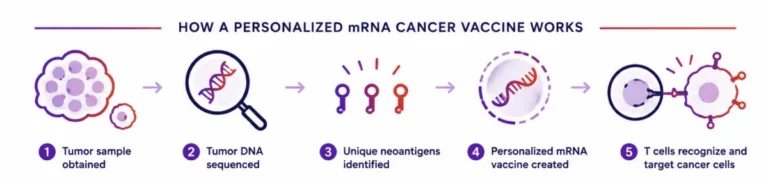
The potential for this is already visible in the arena of recurrence. In August 2026, major breakthroughs involving personalized mRNA vaccines (in combination with checkpoint inhibitors like pembrolizumab) showed that the risk of melanoma returning after surgery could be significantly reduced. This confirms that the immune system is a potent tool for "cleaning up" microscopic disease—a critical step toward the broader goal of systemic cancer prevention.
Conclusion: A Commitment to the Future
CRI’s decision to dedicate its CLIP program to this theme is a call to action for the global scientific community. The "window before cancer" is no longer an abstract concept; it is a tangible frontier. By shifting the focus of oncology from reaction to interception, we have the opportunity to reshape the human experience of cancer.
As the scientific community turns its collective intellect toward these challenges, the ultimate goal remains the same: to stop cancer before it ever takes hold, and to ensure that when it is detected early, it is intercepted with the precision and power of the human immune system. The era of prevention has begun, and with it, the hope of a world where a cancer diagnosis is a manageable event, or better yet, a prevented one.