



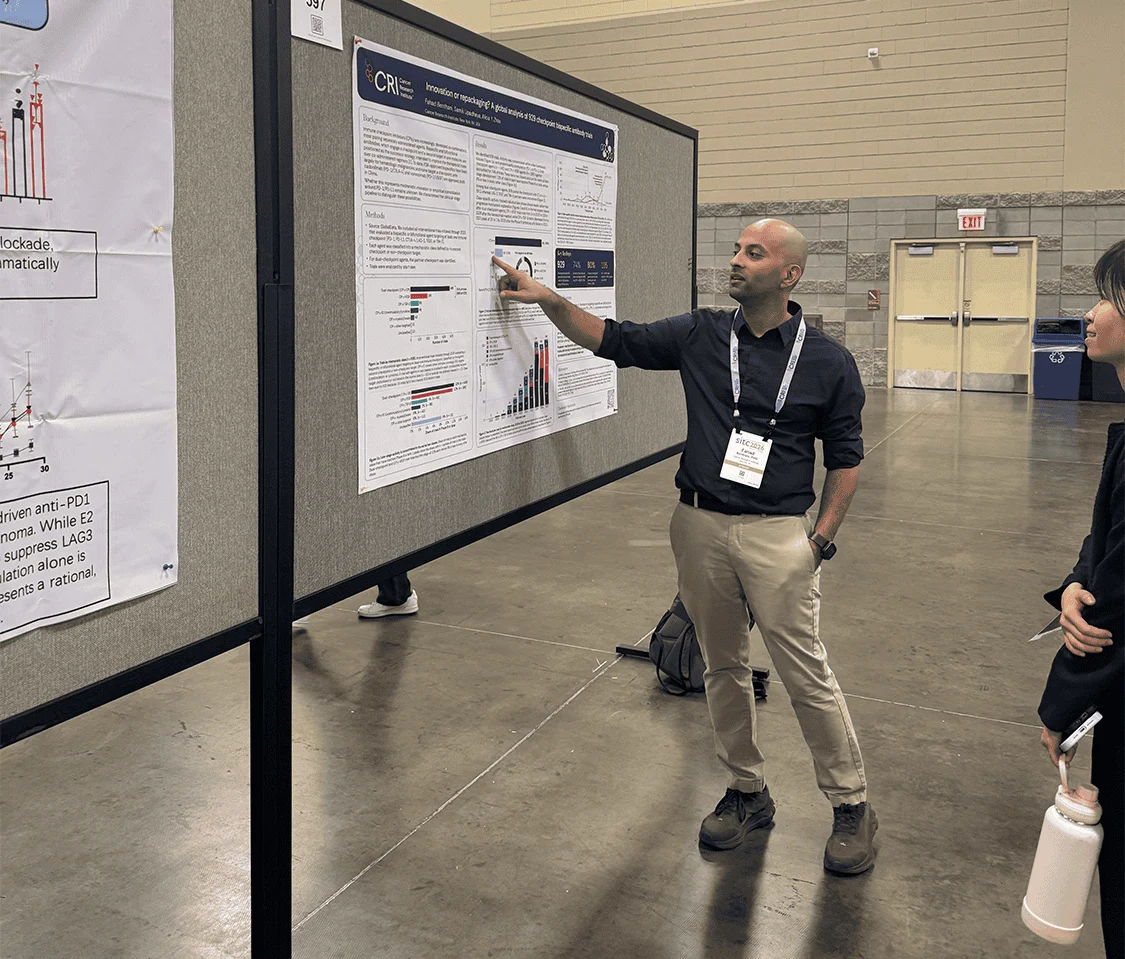
In the rapidly evolving landscape of oncology, the pursuit of more effective cancer immunotherapies remains the primary objective for the global scientific community. This mission—to transform how we treat, manage, and ultimately cure cancer by leveraging the body’s own immune defenses—served as the heartbeat of the 41st Annual Meeting of the Society for Immunotherapy of Cancer (SITC), held from November 4–8, 2026, in Phoenix, Arizona.
The conference brought together thousands of researchers, clinicians, and biotech innovators, united by a singular question: How can we ensure that more patients benefit from the promise of immunotherapy? The event served as a sprawling forum for debate, data sharing, and the strengthening of cross-disciplinary partnerships, with a particular focus on bridging the gap between bench-side discovery and clinical application.
A New Era of Partnership: The Coley Award Lecture
For the Cancer Research Institute (CRI), the 2026 meeting marked a historic milestone: the introduction of a new, permanent annual collaboration with SITC. This partnership established the CRI William B. Coley Award Lecture as a centerpiece of the conference program, providing a prestigious platform to honor the pioneers who have fundamentally reshaped our understanding of immunology.
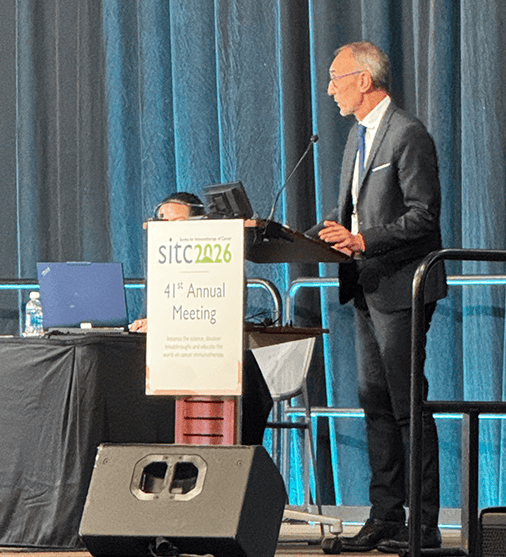
The inaugural honoree, Éric Vivier, DVM, PhD, was recognized for his decades of seminal work on natural killer (NK) cells. Dr. Vivier’s research has been instrumental in shifting the paradigm of cancer treatment, highlighting the critical role of innate immunity. During his lecture, "Harnessing NK Cells in Cancer Therapies," Dr. Vivier detailed the mechanisms by which NK cells recognize and eradicate malignant cells, offering a roadmap for future therapeutic interventions that go beyond traditional T-cell therapies.
"For decades, Eric has helped shape our understanding of innate immunity and how we might harness it to treat cancer," said CRI CEO Alicia Zhou, PhD, during her introductory remarks. "I am thrilled to partner with SITC to bring our flagship lecture to this conference. It is a testament to the fact that we are stronger together when we align our efforts to accelerate discovery."
The Future of Cell Therapy: CRI Conversations
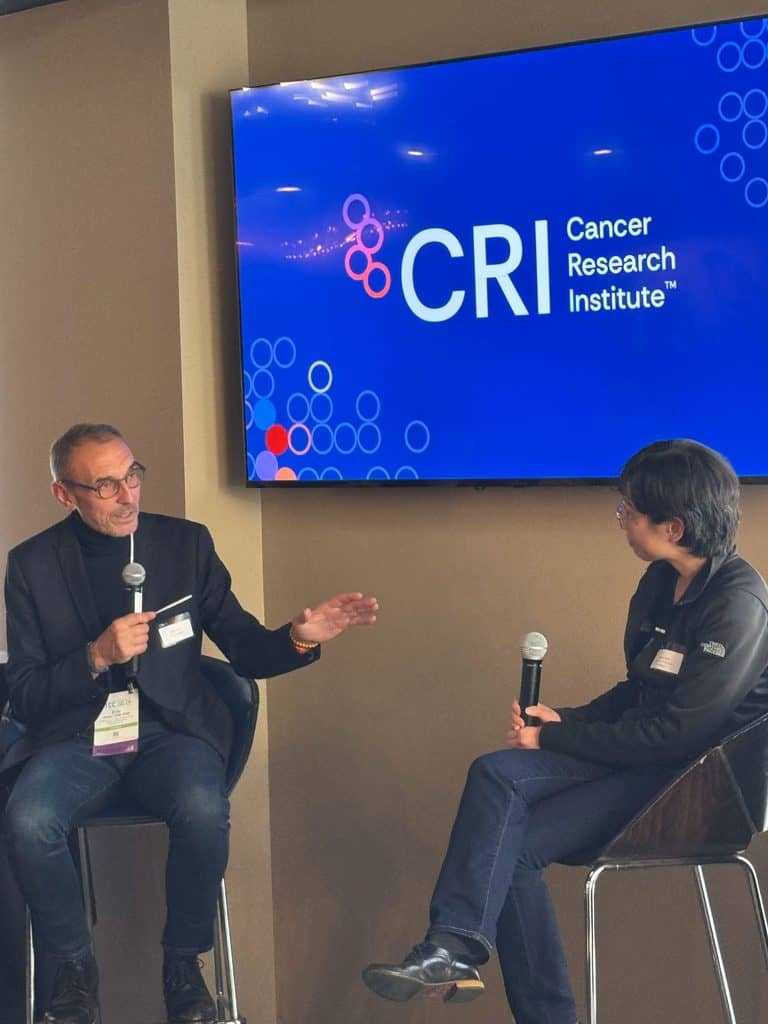
Beyond the formal lectures, the conference hosted a series of "CRI Conversations," designed to foster candid, forward-looking discussions. One standout session featured Dr. Vivier in dialogue with CRI Lloyd J. Old STAR Yvonne Chen, PhD.
The two scientists delved into the synergistic potential of combining NK cells with T-cell therapies. They argued that the future of oncology likely lies in a multifaceted approach—one that considers the complex tumor microenvironment (TME) as much as the immune cells themselves.
A significant portion of the conversation centered on the disruptive influence of artificial intelligence. Dr. Chen shared a compelling anecdote regarding her lab’s use of AI to re-analyze existing datasets. While the AI was capable of generating complex figures and analyses in mere hours—a task that would traditionally take weeks—Dr. Chen emphasized the critical need for human oversight. "The AI produced excellent work, but it also made errors that required rigorous, expert review," she noted.
Dr. Vivier echoed this sentiment, cautioning that AI must remain a tool for efficiency, not a replacement for human creativity and scientific intuition. Both researchers agreed that the next generation of scientists must be trained not just in technical execution, but in the critical judgment required to validate AI-generated findings.
Scientific Frontiers: From Vaccines to Spatial Biology
The breadth of the scientific program at SITC 2026 reflected the current maturation of the field. Keynotes and presentations ranged from the foundational biology of T-cell recognition to the clinical implementation of personalized medicine.
Personalized Vaccines and T-Cell Dynamics
Catherine J. Wu, MD, recipient of the Richard V. Smalley Memorial Award, traced the historical trajectory of cancer vaccines. She highlighted recent Phase 3 melanoma data showing that adding a personalized vaccine to checkpoint immunotherapy significantly reduces the risk of recurrence. Her work serves as a beacon of progress, illustrating that what were once theoretical concepts are now yielding tangible clinical results.
Complementing this, CRI Scientific Advisory Council (SAC) member Ton Schumacher, PhD, delivered a compelling keynote on T-cell recognition. He explored why T-cells, despite having the capability to recognize tumors, often fail to penetrate them effectively, frequently becoming "trapped" at the tumor’s periphery.
The Rise of Spatial Biology
A recurring theme throughout the meeting was the importance of "spatial biology." Researchers, including Dr. Arutha Kulasinghe and Dr. Tina Cascone, presented data suggesting that the physical location and interaction patterns of immune cells within the tumor tissue are just as predictive of treatment success as the mere presence of those cells. Understanding the architecture of the TME is increasingly viewed as the "missing link" in overcoming resistance to current immunotherapies.
The Financial and Structural Challenges of Innovation
While the science was celebratory, the conference did not shy away from the practical hurdles of drug development. During a Q&A session, Dr. Yvonne Chen addressed the elephant in the room: the sustainability of research funding. As investment priorities shift in the public and private sectors, researchers are finding themselves increasingly reliant on a patchwork of government grants, private foundations, and philanthropic support.
"If we believe in the science, we need to, one way or another, find the resources needed to get it into the clinic," Dr. Chen remarked. Her words struck a chord with many in the audience, highlighting the immense persistence required to move an idea from a laboratory notebook to a patient’s bedside.
Voices of the Community: The Role of Targeted Support
The impact of specialized funding was a recurring sentiment among the CRI-supported investigators. Luiz Geraldo, MD, PhD, an inaugural CRI IGNITE Fellow, emphasized the long-term nature of medical research. "The discoveries we make in the lab don’t get to patients tomorrow," he said. "It’s years, sometimes decades, until we see clinical translation. Support for early-career scientists is essential to ensure that progress continues without interruption."
Brian Brown, PhD, a Technology Impact Awardee, shared a retrospective on his own career, noting that CRI provided the "risk capital" for his research when it was in its most nascent stages. "CRI took a chance on us when the technology was unproven. Now, it has grown into an entire field," Dr. Brown said. This testimony underscored the vital role of philanthropic organizations in funding "high-risk, high-reward" science that traditional venture capital might overlook.
Looking Ahead: A Multifaceted Future
As the 41st Annual SITC meeting drew to a close, the consensus was clear: the next generation of immunotherapy will not be defined by a single "magic bullet." Instead, success will depend on a sophisticated integration of technologies.
From the genetic engineering breakthroughs presented by Dr. Sidi Chen and Dr. Justin Eyquem to the metabolic research conducted by Dr. Greg Delgoffe and Dr. Marcel van den Brink, the path forward involves viewing the patient as a holistic system. Whether it is modifying immune cells to survive within the hostile tumor microenvironment, or using diet and metabolic intervention to prime the body for treatment, the field is moving toward a more nuanced, personalized model of care.
Closing the Curtain
The meeting concluded with the lighthearted, yet symbolic, performance of "The CheckPoints"—the SITC house band comprised of the very scientists who lead the field. This tradition, while musical in nature, serves as a poignant reminder of the human element behind the data.
Ultimately, the goal remains unchanged: to provide the scientific community with the curiosity, the resources, and the collaborative environment necessary to unlock the immune system’s full potential. As Dr. Justin Eyquem aptly put it, "CRI gives us full liberty to explore the craziest ideas that no one else would fund. It is often from these disruptive, unconventional ideas that we develop entirely new categories of drugs."
In the wake of Phoenix 2026, the global oncology community returns to their labs with a renewed sense of purpose. By synthesizing deep biological insights, harnessing advanced AI tools with caution, and maintaining the financial resilience required for long-term discovery, the path toward a future where cancer is a manageable—or even curable—condition has never been more clearly illuminated.