











In the landscape of modern family dynamics, a new cohort has emerged—one that finds itself caught in an increasingly precarious economic squeeze. Often referred to as the "Sandwich Generation," these individuals, whom corporate gerontologist Sherri Snelling identifies as "Gen C" (Generation Caregiver), are tasked with the simultaneous responsibility of raising children while providing care for aging parents or grandparents. As life expectancies rise and the costs of long-term care skyrocket, achieving financial wellness has transitioned from a standard retirement goal to a high-stakes, real-time balancing act.
In her book, Me Time Monday, Snelling outlines the "7 Wellness Elements," with financial wellness serving as a critical pillar. For the millions navigating this dual-care reality, the margin for error is razor-thin. Achieving financial resiliency requires not just traditional budgeting, but a sophisticated understanding of "financial gerontology"—a multidisciplinary field that blends longevity science with economic strategy.
The Anatomy of the Caregiver’s Financial Burden
The economic pressures facing Gen C are multifaceted. Unlike previous generations, who often faced a linear progression of life events, the modern sandwich generation is dealing with a compressed timeline. They are frequently managing the mounting costs of higher education for their children while simultaneously funding, managing, or physically providing care for elderly relatives who may be facing chronic health conditions like Alzheimer’s or dementia.
Financial resiliency for this group is currently being tested by three primary factors:

- The "Longevity Gap": As medical advancements extend life expectancy, the duration of care required for older loved ones has increased, often exhausting family savings that were never intended to cover a decade or more of specialized care.
- Inflationary Pressures on Care: The cost of professional home care, assisted living, and nursing home facilities has consistently outpaced general inflation, leaving families to bridge the gap with out-of-pocket expenses.
- Opportunity Costs: Many in the sandwich generation are forced to reduce their working hours, pass up promotions, or exit the workforce entirely to accommodate caregiving duties, which results in a dual blow: a decrease in current household income and a reduction in future Social Security and retirement savings.
Financial Gerontology: Bridging the Gap Between Aging and Assets
Financial gerontology is a rapidly evolving discipline that integrates research on lifespan aging and human development with the practical concerns of finance and business. It moves beyond the traditional "save and invest" model, instead viewing a client’s portfolio through four distinct "lenses": population aging, individual aging, family aging, and generational aging.
By applying the BioPsychoSocial model—which accounts for the biological, psychological, and sociological aspects of human life—financial gerontologists help individuals plan for their "wealthspan" in tandem with their "healthspan."
The Evolution of the Field: A Tribute to Neal Cutler
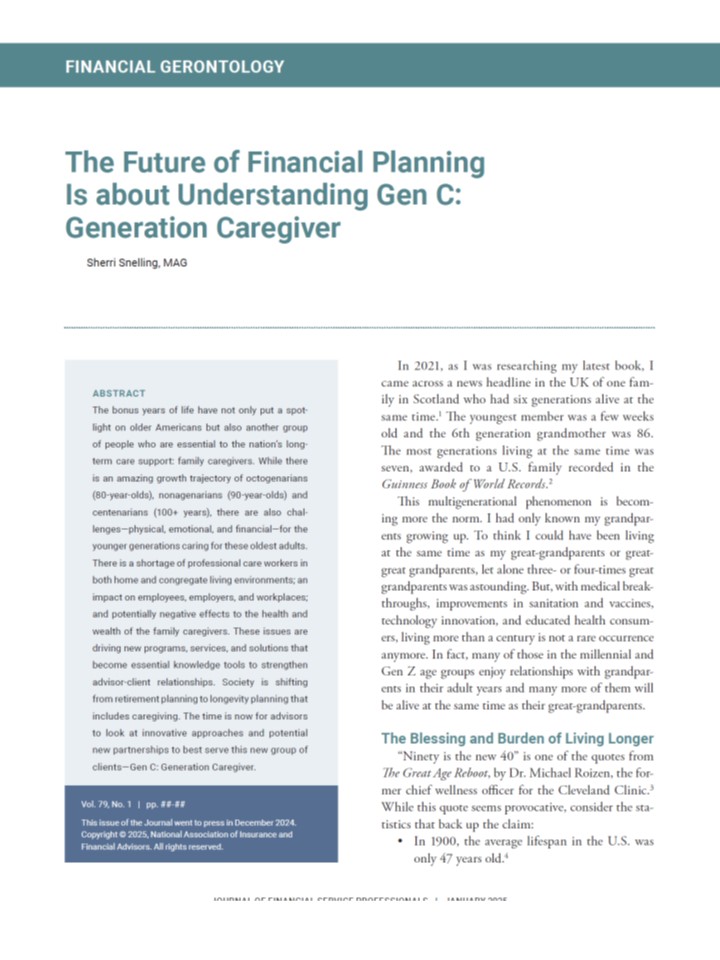
The formalization of financial gerontology owes much to the work of pioneers like the late Dr. Neal Cutler. A former professor at USC and a mentor to many in the field, Dr. Cutler spent his career championing the necessity of viewing financial planning as an extension of the human aging process.
Reflecting on their collaboration, Sherri Snelling recalls: "Neal’s approach was revolutionary because he understood that you cannot separate the economics of a household from the human reality of aging. Whether it was our work with the Motion Picture & Television Fund or our columns for the Journal of Financial Service Professionals, Neal emphasized that financial resiliency is a form of elder protection."
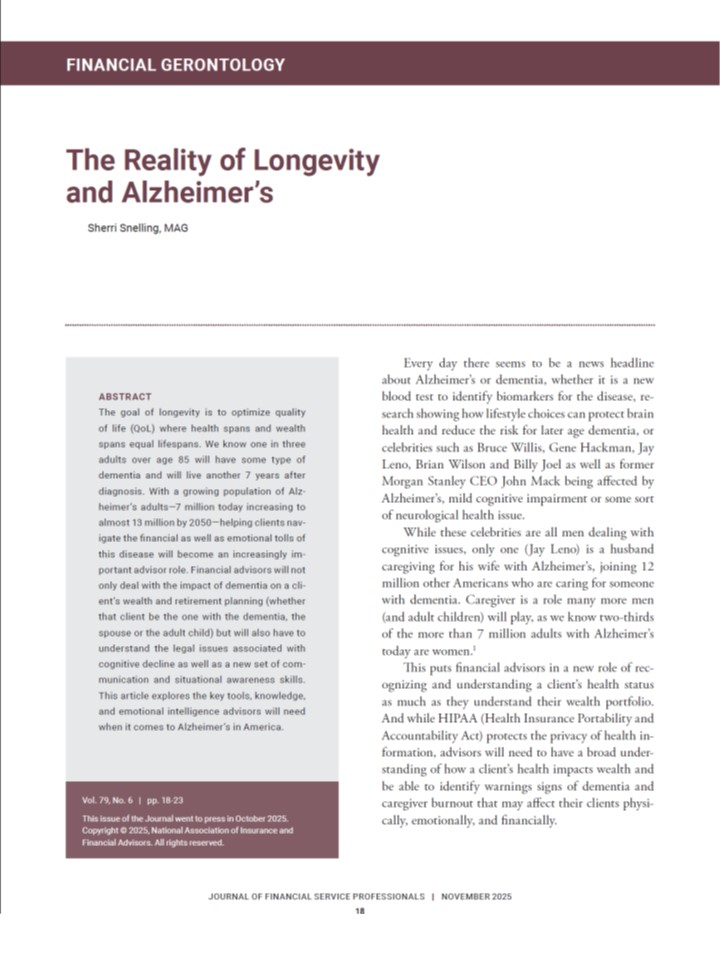
Following Dr. Cutler’s passing in 2025, his legacy continues to influence how wealth managers, attorneys, and healthcare executives approach longevity planning. Today, institutions like the USC Leonard Davis School of Gerontology are setting the gold standard for credentialing in this space, ensuring that those who advise families are equipped with more than just a finance degree—they are equipped with a deep understanding of the human life cycle.
Supporting Data and the Cost of Care
Data from the 2026 Cost of Care Survey and recent reports by the AARP indicate that the financial footprint of caregiving is profound. According to recent surveys, the average caregiver spends a significant percentage of their annual income on out-of-pocket care costs, including medical supplies, home modifications, and transportation.
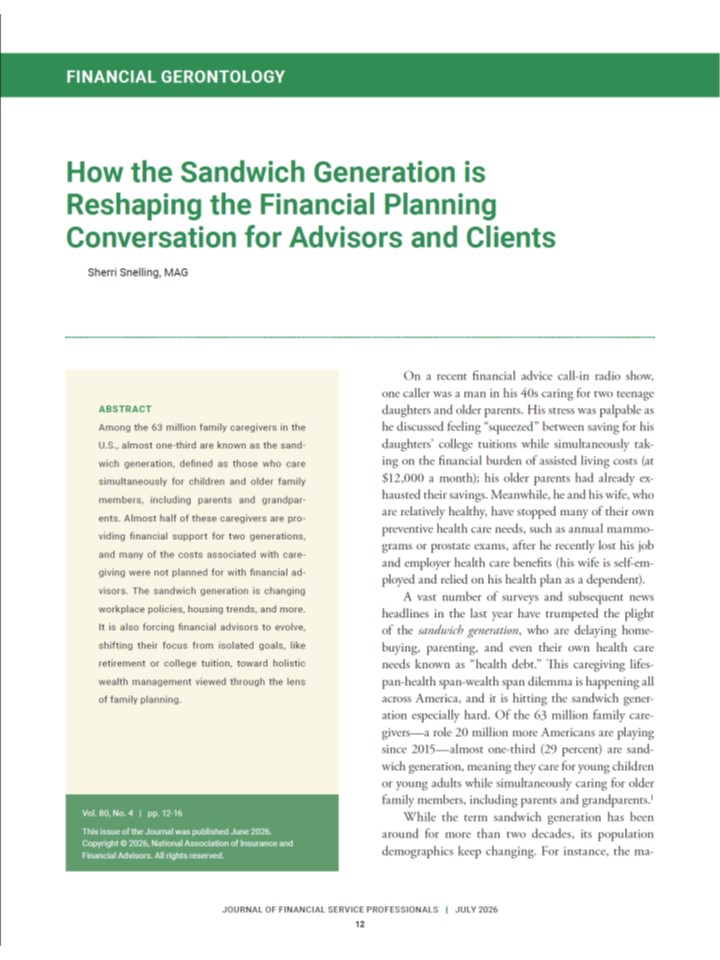
When these costs are compounded by the loss of professional income, the risk of "caregiver poverty"—a phenomenon where the act of providing care leads to the financial ruin of the caregiver—becomes a systemic threat. Experts argue that the current fragmented long-term care system lacks a safety net for those who do not qualify for Medicaid but cannot afford the rising premiums of private long-term care insurance.
Official Perspectives: The Professionalization of Advice
Industry leaders are increasingly recognizing that the "one-size-fits-all" approach to financial planning is failing the sandwich generation. Organizations such as Wells Fargo’s First Clearing Financial Advisor Group have begun incorporating financial gerontology into their training, acknowledging that wealth advisors must act as navigators of the longevity economy.

"Preparing and planning for the care of older loved ones will keep most sandwich generation caregivers out of poverty," says Snelling. "It is never too early or too late to start those long-term-care plans. Working with a credentialed financial gerontologist ensures you get the expert advice you need to navigate your way with financial resiliency."
The shift is moving from a sales-driven model—where advisors focus on investment products—to a solutions-driven model that accounts for the reality of long-term care. This includes:
- Estate and Legal Readiness: Ensuring that durable powers of attorney and healthcare directives are in place before a crisis occurs.
- Intergenerational Wealth Transfer: Coordinating with aging parents to consolidate assets and identify potential government or insurance benefits.
- The "Joyconomy": An approach popularized in Me Time Monday, which encourages caregivers to invest in their own mental and physical health as a means of sustaining their ability to care for others.
Implications for the Future
The implications of this shift are significant. As the "silver tsunami" of the baby boomer generation reaches the later stages of life, the reliance on family caregivers will only intensify. Policymakers and financial institutions must consider:
- Workplace Flexibility: Companies that adopt caregiving-friendly policies—such as paid family leave and flexible scheduling—will be better positioned to retain their most experienced employees, who are often the members of the sandwich generation.
- Universal Education: Financial gerontology should become a standard component of financial literacy education, helping individuals plan for the "longevity risk" just as they plan for market volatility.
- Systemic Integration: The silos between the healthcare, legal, and financial sectors must be dismantled. A caregiver should not have to be an expert in three different fields to ensure their parent receives care without bankrupting their own future.
Conclusion: A Proactive Path Forward
For the sandwich generation, the path to financial wellness is paved with proactive planning. While the burden of care is heavy, it is not insurmountable. By leveraging the principles of financial gerontology, seeking out credentialed advisors, and engaging in early, transparent conversations about long-term care, families can build a shield against the economic volatility of the caregiving journey.
As Sherri Snelling emphasizes in her ongoing work, the goal is not merely to survive the sandwich generation years, but to thrive within them. By building a "Joyconomy"—a personal economy that values time, health, and financial security—caregivers can honor their responsibilities to their parents and children without sacrificing their own future stability.
For those looking to start, the first step is often the most difficult: a formal, honest assessment of the current financial landscape. Whether through podcasts, white papers, or professional consultations, the resources are available to turn the "sandwich" from a state of being squeezed into a structure of strength.

Frequently Asked Questions (FAQs)
Q: What exactly is a "Chief Gerontology Officer"?
A: A Chief Gerontology Officer (or Chief Longevity Officer) is an executive role within an organization designed to address the challenges and opportunities presented by an aging population. This person ensures that products, services, and employee policies are aligned with the realities of human aging and multi-generational family structures.
Q: Is financial gerontology the same as estate planning?
A: No. While estate planning is a subset of the work, financial gerontology is much broader. It encompasses the entire lifespan, looking at health, social support, and financial assets as an integrated system. It focuses on the "how" of aging, not just the "who gets what" of death.
Q: How can I find a financial gerontologist?
A: Currently, there is no single national registry. However, look for financial planners who hold specific certifications from reputable gerontology programs, such as the USC Leonard Davis School of Gerontology, or those who specifically list "longevity planning" or "financial gerontology" as a specialty. Always verify their credentials and ask for their experience in handling long-term care and multi-generational planning.