









As we navigate the golden years, maintaining physical independence becomes the cornerstone of a high quality of life. While many seniors are encouraged to hit the gym or enroll in yoga classes to prevent falls, the most effective tool for improving stability might already be sitting in your dining room.
Balance training is not merely an optional addition to a fitness routine; it is a critical health intervention. According to industry experts, shifting the focus toward accessible, chair-based exercises allows individuals over 65 to build foundational strength, confidence, and coordination without the anxiety—or physical risk—associated with unsupported standing movements.
The Science of Stability: Why Balance Declines
Balance is not a singular skill. It is a complex, neurological, and physiological symphony that requires the seamless cooperation of the vestibular system (the inner ear), the visual system, and the somatosensory system (how our brain perceives our body’s position in space). As we age, these systems can experience subtle degradation, leading to a decline in reaction time and proprioception—the body’s ability to sense its position and movement.
Portia Page, a renowned Balanced Body Educator and Nationally Certified Pilates Teacher (NCPT), emphasizes that balance is a multifaceted capability. "It calls for cooperation and information between the vestibular, visual, and somatosensory systems, in addition to sufficient mobility, strength, coordination, confidence, and reaction time," Page explains. When any one of these components falters, the risk of falls—a leading cause of injury among older adults—increases significantly.
The Psychological Barrier: Overcoming the Fear of Falling
One of the most significant obstacles to effective balance training is the "fear of falling." This psychological burden creates a self-fulfilling prophecy: individuals who fear losing their balance tend to stiffen their muscles, hold their breath, and move with a rigid, unnatural gait. This avoidance behavior leads to deconditioning, which in turn makes them more susceptible to falls.
"One of the biggest advantages of chair-based balance training is that the chair provides security without removing the opportunity to challenge the body," says Page. By utilizing a sturdy chair, the practitioner removes the immediate threat of a catastrophic fall. This allows the nervous system to relax, enabling the body to practice movement patterns that would be too intimidating to attempt in open space.
A Progressive Approach to Functional Fitness
The hallmark of a successful wellness program is progression. Rather than an "all-or-nothing" mentality, chair-based training offers a scaffolded approach. A beginner might start by performing movements fully seated, gradually transitioning to weight-shifting while seated, moving to supported standing exercises, and eventually progressing to independent balance work.
This methodology mirrors the principles of physical therapy, where the goal is to build the internal "infrastructure"—core strength, hip stability, and ankle mobility—necessary for the complex, multi-planar movements of daily life.
The Five Essential Chair Exercises for Better Balance
To help you get started, we have outlined five foundational movements recommended by Portia Page. These exercises are designed to be performed with a sturdy, non-rolling chair.
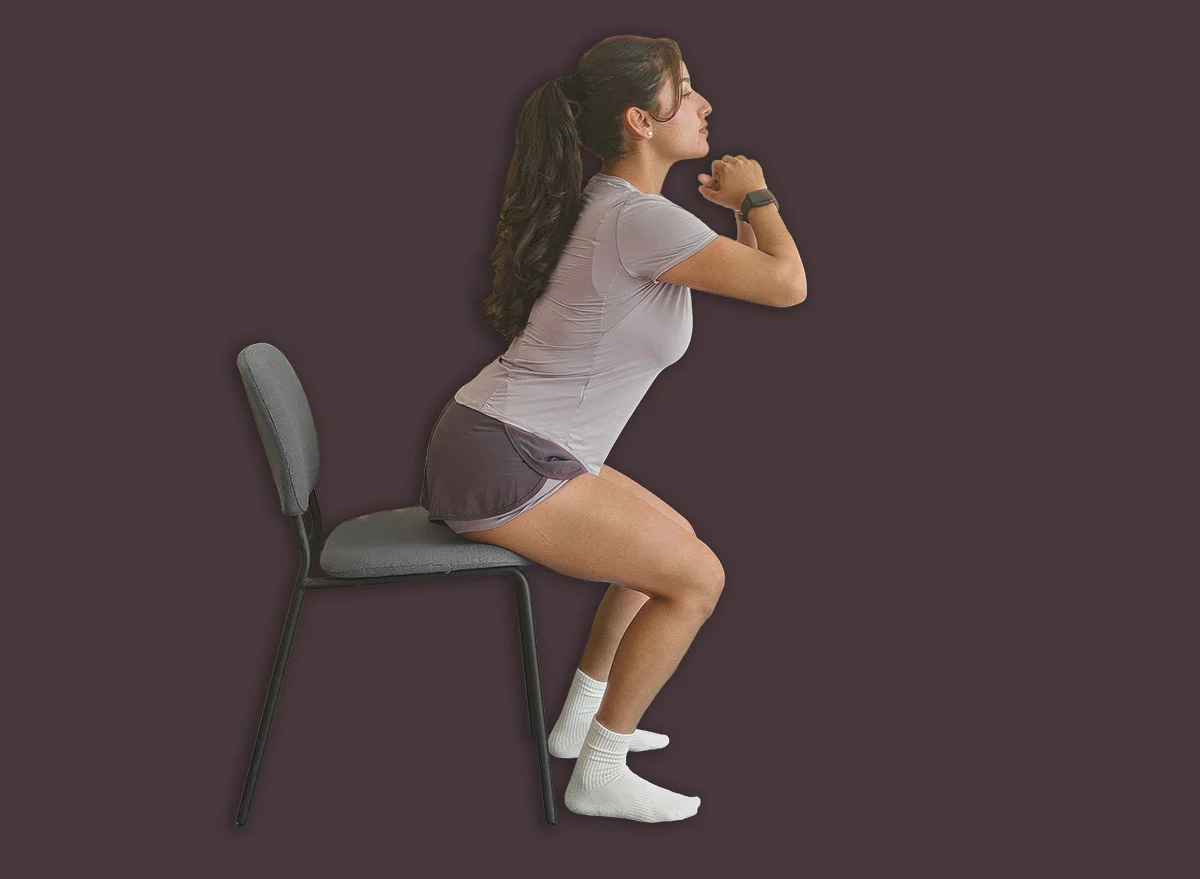
1. Sit-to-Stand: The Foundation of Independence
The sit-to-stand movement is the gold standard for assessing functional independence. It requires a synchronized effort from the hips, glutes, thighs, and core.
- Why it matters: This exercise mimics the most frequent movement in our daily lives—getting out of a chair or bed. Controlling your center of mass during this transition is critical for fall prevention.
- Execution: Sit toward the front of the chair with feet hip-width apart. Engage your core, lean your torso slightly forward, and press through your heels to stand. Ensure your knees track over your toes. Reverse the motion slowly to sit back down.
2. Seated Marching: Building Trunk Stability
Seated marching may look simple, but it is a powerful tool for activating the deep muscles of the core and hips.
- Why it matters: The alternating pattern of marching mimics the mechanics of walking. It forces the body to shift weight from side to side, which is essential for maintaining balance during the gait cycle.
- Execution: Sit tall in your chair. Lift one knee toward the ceiling while maintaining a neutral spine. Alternate legs in a rhythmic motion. Keep your shoulders relaxed and avoid leaning excessively to the side.
3. Seated Heel-to-Toe Raises: Strengthening the Ankles
Often, we focus on large muscle groups like the quadriceps and forget the small, crucial stabilizers in the lower leg.
- Why it matters: The ankles are the "first responders" to balance disturbances. Strengthening the calves and the muscles along the front of the shin allows for the micro-adjustments necessary to stay upright.
- Execution: While seated, lift your heels while keeping your toes planted to engage the calves. Lower them, then lift your toes while keeping your heels planted to engage the shin muscles. This "see-saw" motion improves foot awareness and lower-leg endurance.
4. Seated Weight Shifts and Reaches: Expanding the Limits of Stability
Balance is not about standing perfectly still; it is about the ability to move and regain control.
- Why it matters: By reaching outside of your "base of support" (your center), you teach your nervous system how to react when your center of gravity is challenged. This mimics reaching for a high shelf or leaning to pick up an object from the floor.
- Execution: Sit firmly in the chair. Reach one arm across your body or overhead while shifting your weight slightly onto one hip. Return to the center with control. The focus here is on the transition—moving away from the center and back again.
5. Supported Standing Weight Shift to Single-Leg Balance
This is the "bridge" exercise that transitions the practitioner from the chair to the world of unsupported balance.
- Why it matters: Every step we take is essentially a series of single-leg stands. By practicing this with the safety of a chair back, you build the proprioception required for confident, stable walking.
- Execution: Stand behind your chair, holding the back for support. Shift your weight onto one leg and slowly lift the other foot slightly off the ground. Hold for a few seconds, focusing on keeping your hips level, then return to center. Switch legs.
Implications for Long-Term Health
The implications of integrating these exercises into a daily routine are profound. By addressing the physical components of balance—strength, coordination, and confidence—seniors can significantly reduce their risk of falls.
Beyond the prevention of injury, these exercises foster "functional autonomy." The ability to move through one’s home with ease, to stand up without assistance, and to navigate curbs and uneven surfaces with confidence are the markers of aging with dignity.
"Balance training should be a top priority in your workout routine as you age," Page concludes. "It isn’t about becoming an athlete; it is about reclaiming the confidence to move through the world."
Conclusion
As the demographic of older adults continues to grow, the conversation around fitness must shift from high-intensity training to functional, accessible movement. By embracing chair-based training, you aren’t just performing a set of exercises—you are investing in your long-term health, safety, and independence. Grab a sturdy chair today and take the first step toward a more balanced tomorrow.