










By Investigative Health Desk
September 11, 2026
The United States public health apparatus reached a significant milestone this Friday as the Food and Drug Administration (FDA) officially declared the end of the largest Cyclospora food poisoning outbreak in American history. The announcement signals the conclusion of a harrowing season that saw nearly 20,000 lab-confirmed cases of the parasitic illness, a figure that dwarfs previous historical highs and has prompted a national reckoning regarding food safety oversight and international supply chain transparency.
While federal regulators are confident that the contaminated iceberg lettuce responsible for the core of the outbreak has been successfully cleared from grocery shelves and restaurant distribution centers, the medical community remains cautious. The sheer scale of this year’s surge—16 times higher than the previous year—has left experts searching for definitive answers regarding how such a massive contamination event could occur in an era of supposedly rigorous food safety protocols.
The Scope of the Crisis: A Statistical Anomaly
The statistics surrounding the 2026 Cyclospora outbreak are, by any measure, unprecedented. Since May 1, the Centers for Disease Control and Prevention (CDC) and the FDA have tracked nearly 20,000 lab-confirmed cases of cyclosporiasis. To put this in perspective, the previous record for the worst year in U.S. history was 2019, which saw approximately 4,700 reported illnesses.
The outbreak was defined by a specific, massive cluster of roughly 13,000 cases directly linked to contaminated iceberg lettuce. However, health officials remain perplexed by the thousands of additional cases that, while mirroring the symptoms of the primary outbreak, have not been definitively traced to the same source. This suggests that the parasite may have been present in other produce streams or that the window of contamination was far wider than initially hypothesized.
Michigan emerged as the epicenter of the tragedy, reporting the highest density of cases and, devastatingly, the only two deaths formally attributed to the outbreak. The clinical profile of the illness—marked by severe, watery, and often explosive diarrhea—has led to significant hospitalizations across 21 states, placing an unexpected burden on regional healthcare systems during the summer months.
A Chronology of the Contamination
The unfolding of this crisis followed a rapid, often frantic, timeline:
- Early May 2026: Public health laboratories across the Midwest begin reporting a statistically significant uptick in cases of gastrointestinal distress that do not match standard foodborne pathogens like Salmonella or E. coli.
- Late May 2026: The CDC identifies Cyclospora as the causative agent. Initial epidemiological interviews point toward salad consumption at major restaurant chains.
- June 2026: Investigations zero in on Taco Bell locations, subsequently shifting the focus of the supply chain audit toward Taylor Farms.
- July 2026: Taylor Farms issues a massive, multistate recall of iceberg lettuce grown in central Mexico. The recall impacts thousands of products distributed to giants such as Yum Brands (Taco Bell, Pizza Hut, and KFC).
- August 2026: Federal investigators conduct intensive on-site inspections at growing fields and processing facilities in Mexico, while the number of cases continues to climb into the five-digit range.
- September 11, 2026: The FDA formally declares the outbreak over, noting that all recalled products are out of circulation and that site-specific investigations have concluded.
Understanding the Parasite: How Contamination Occurs
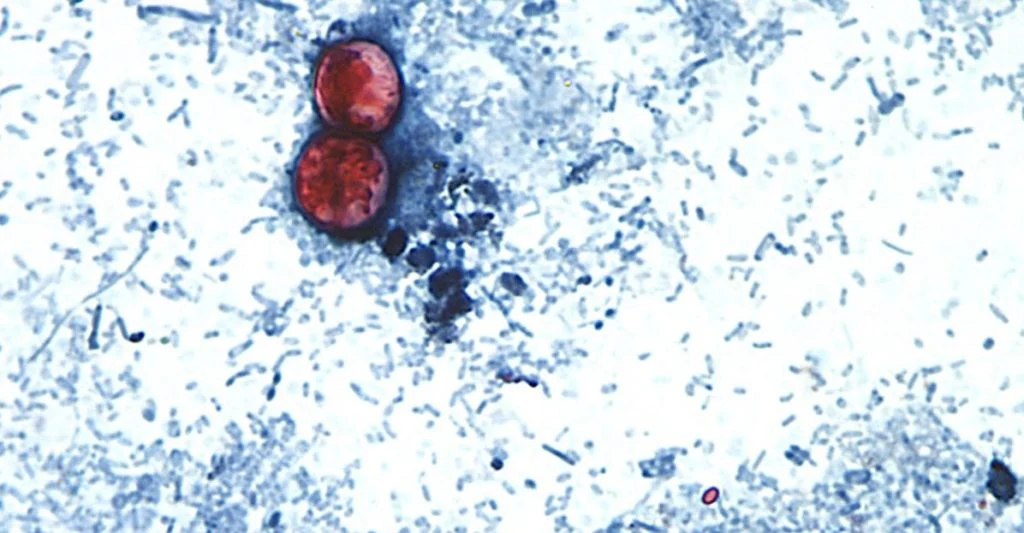
Cyclospora cayetanensis is a microscopic, single-celled parasite that thrives in warm, humid climates. Unlike bacteria that can grow on food, Cyclospora must be ingested to cause infection, typically through the consumption of fresh produce that has come into contact with water or soil tainted by human feces.
"The fundamental issue with Cyclospora is its persistence," explains Ellen Shumaker, director of outreach for the Safe Plates program at North Carolina State University. "This contamination can happen if produce is grown in soil or comes into contact with water that has been contaminated. Once the parasite is in the irrigation supply, it is exceptionally difficult to scrub away, as it is resistant to many common sanitizers used in produce processing."
The mystery of this particular outbreak lies in the "how." Investigators are still struggling to determine how sewage-borne contamination was able to infiltrate such a large-scale agricultural operation. Because Cyclospora is human-specific, the presence of the parasite implies a failure in sanitation systems at the farm level—a point that has drawn sharp criticism from consumer advocacy groups.
Official Responses and Regulatory Scrutiny
The FDA’s response to the 2026 crisis has been under intense fire from both legislators and the public. Throughout the summer, the agency focused its efforts on tracing the contaminated iceberg lettuce back to its origin. By late August, the FDA had completed on-site inspections and sample collections at the Mexican facilities associated with the Taylor Farms recall.
As of this week, those samples are still pending final analysis. The agency’s decision to declare the outbreak "over" while lab results are still being processed has raised questions about the threshold for safety. FDA officials maintain that the recall was effective and that the specific fields identified as potential sources are no longer contributing to the U.S. food supply.
However, the outbreak has reignited a heated debate regarding the FDA’s "Foreign Supplier Verification Program." Reports have indicated that for years, there has been a steady decline in the frequency of FDA foreign inspections. With a significant portion of the U.S. produce supply now sourced from abroad, the 2026 outbreak is being cited by critics as a "canary in the coal mine," signaling that the current regulatory infrastructure is ill-equipped to handle the risks of globalized food production.
The Path Forward: Implications for Food Safety
The 2026 Cyclospora crisis has left the food industry and regulators at a crossroads. Several key implications have emerged that will likely dominate the conversation in the coming months:
1. Increased Demand for Traceability
The fact that thousands of cases remained "unlinked" to the primary source of the outbreak suggests a need for improved traceability. Retailers and restaurant chains are under increasing pressure to adopt blockchain or similar digital tracking technologies that can map the journey of produce from the field to the plate in real-time.
2. Foreign Inspection Reform
Lawmakers are already calling for a budget increase for the FDA’s Office of Global Operations. The consensus among health policy experts is that the "declining inspection" trend is unsustainable. If the U.S. is to maintain the safety of its imported food, inspections must be preemptive rather than reactive.
3. Public Health Education
Because Cyclospora symptoms—explosive diarrhea and fatigue—are often confused with common stomach bugs or "traveler’s diarrhea," many people likely suffered through the illness without ever seeking medical care or being counted in official statistics. Health agencies are beginning to push for better public awareness regarding when to seek testing for parasitic infections, particularly after consuming raw produce.
4. The Vulnerability of Large-Scale Distribution
The involvement of major chains like Yum Brands demonstrates how a single point of failure at a large-scale processor like Taylor Farms can lead to a national health crisis. The consolidation of the food supply chain, while efficient, creates high-consequence points of vulnerability. Future safety protocols may need to focus on decentralizing certain aspects of production or increasing the frequency of testing at regional distribution hubs.
Conclusion: A Lesson Learned?
As the nation moves past the 2026 outbreak, the primary question remains: will this event be the catalyst for meaningful, systemic change, or will it be another historical footnote in the ongoing struggle between global trade efficiency and public health?
The two lives lost in Michigan and the thousands of people who suffered through weeks of illness serve as a stark reminder of the fragile link between the farm and the table. While the FDA has officially turned the page on this outbreak, the scientific and regulatory community remains on high alert. The parasite, by its very nature, is a silent traveler—one that relies on human error to thrive. Ensuring that the errors of 2026 are not repeated will require a level of vigilance, investment, and transparency that the food industry has yet to fully embrace.
For now, consumers are advised to continue washing fresh produce thoroughly, though experts warn that even the most vigorous washing may not be enough to remove a hardy parasite like Cyclospora once it has infiltrated the interior of leafy greens. As the industry looks toward the next growing season, the focus remains on root-cause prevention and the restoration of public trust in the food supply.