











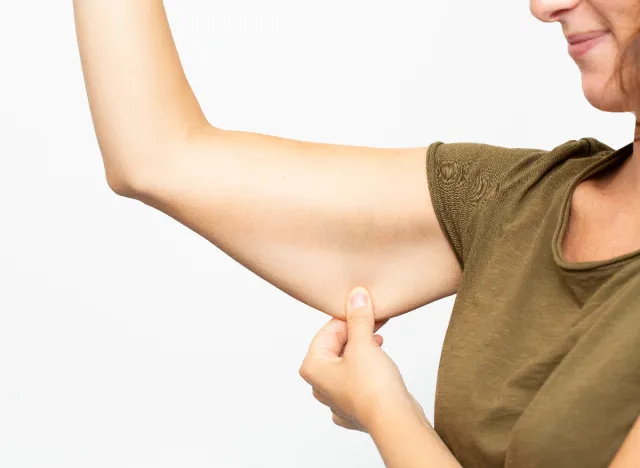
For many women, the transition into their sixties brings a host of physiological changes. Among the most commonly cited aesthetic concerns in personal training sessions is the appearance of “bat wings”—the soft, loose skin and diminished muscle tone that often develops on the back of the upper arms.
As a personal trainer with four decades of experience and co-founder of TRAINFITNESS, one of the UK’s leading personal training education providers, I have spent my career helping clients navigate these anatomical shifts. While there is no “magic bullet” for skin elasticity, there is a clear, scientifically supported path toward firmer, more resilient arms. By utilizing strategic wall-based resistance training, women over 60 can effectively target the triceps, improving the silhouette and strength of their arms in as little as 21 days.
The Anatomy of the Concern: Understanding "Bat Wings"
To address the issue effectively, we must first demystify what is actually occurring in the upper arm. The “bat wing” phenomenon is typically a trifecta of age-related physiological developments:
- Loss of Dermal Elasticity: As we age, the production of collagen and elastin decreases. This natural thinning of the skin leads to a loss of structural support, causing the skin to hang more loosely.
- Subcutaneous Fat Distribution: Hormonal shifts, particularly post-menopause, often lead to a redistribution of body fat. The back of the arm is a common site for this adipose tissue storage.
- Triceps Atrophy: Sarcopenia, or age-related muscle loss, often affects the triceps—the large muscle group at the back of the arm. When this muscle loses volume, it leaves the skin and fat layer without a solid foundation, exacerbating the “saggy” appearance.
It is important to be medically transparent: Exercise cannot spot-reduce fat. If a fitness program promises to burn fat specifically from your arms, it is fundamentally misleading. However, by hypertrophy (growing) the triceps muscle underneath the skin, we can fill out that space, creating a firmer, more toned appearance.

The Case for Wall-Based Resistance Training
Why focus on the wall rather than traditional gym equipment like dumbbells or cable machines? For the demographic of women over 60, the wall offers several distinct physiological advantages:
- Joint-Friendly Mechanics: Traditional floor push-ups place significant stress on the wrists and shoulders, which can be problematic for those with arthritis or past joint injuries. Wall exercises allow for a vertical, weight-bearing stance that is much kinder to the joints.
- Controlled Load: By simply adjusting the distance of your feet from the wall, you can dictate exactly how much of your body weight you are lifting. This makes the exercises infinitely scalable.
- Stability and Form: Wall exercises eliminate the need to balance, allowing the participant to focus entirely on the mind-muscle connection. This ensures the triceps are doing the work, rather than the secondary muscles compensating for poor form.
The 21-Day Protocol: Three Foundational Exercises
This routine is designed to be performed three to four times a week. Consistency is the primary driver of results.
1. The Close-Hand Wall Push-Up
This is the gold standard for targeting the triceps. By placing your hands close together, you shift the mechanical advantage away from the chest (pectorals) and directly onto the triceps.
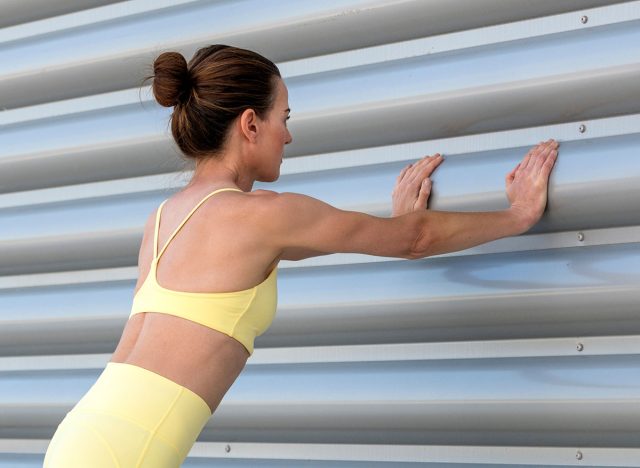
- How to perform: Stand roughly one foot away from the wall. Place your palms on the wall at chest height, but bring your hands closer than shoulder-width—ideally, touching your index fingers and thumbs to form a diamond shape. Keep your elbows tucked in toward your ribs as you lower your chest toward the wall. Push back to the starting position using only your triceps.
- Common Pitfalls: Flaring the elbows outward. Ensure your elbows graze your ribs on the descent to keep the tension on the triceps.
2. Wall Overhead Triceps Extension
This movement isolates the triceps by focusing on the extension of the elbow joint.
- How to perform: Stand facing the wall. Place your forearms vertically against the wall, with your elbows bent and tucked close to your ears. Keeping your elbows fixed in place, push your body away by extending only your forearms and hands against the wall.
- Common Pitfalls: Moving the entire arm instead of just the forearm. Keep the elbows anchored at a fixed point on the wall throughout the duration of the movement.
3. Wall Shoulder Taps
While the first two exercises focus on pushing, the shoulder tap introduces a stability component that forces the triceps and shoulders to engage in a static hold.
- How to perform: Assume a standard wall push-up position with your hands shoulder-width apart. Slowly lift one hand off the wall to touch the opposite shoulder, then return it. Alternate sides while keeping your hips and shoulders perfectly still.
- Common Pitfalls: Rocking the torso. The goal is to keep the core tight and the body perfectly parallel to the wall, preventing any rotation.
Chronology of Progress: What to Expect
Fitness is a cumulative process. Here is a realistic timeline for those beginning this journey:
- Days 1–7 (The Adaptation Phase): You may experience mild muscle soreness (DOMS). This is normal. Focus on mastering the form rather than speed.
- Days 8–14 (The Neuromuscular Phase): You will notice that the exercises feel easier. You may be able to move your feet further from the wall to increase the resistance.
- Days 15–21 (The Toning Phase): You will feel a palpable firmness in the triceps muscle when the arm is flexed. While the skin may not have changed significantly, the arm will look more "filled out" and structural.
Supporting Data and Physiological Implications
The science of muscle growth does not change with age. Research consistently shows that resistance training, even at lower intensities, stimulates protein synthesis in muscle fibers. By engaging the triceps, you are effectively reversing a portion of age-related sarcopenia.
Furthermore, the "implications" of this training go beyond aesthetics. Stronger triceps facilitate everyday movements: pushing heavy doors, getting up from a chair, or reaching for items on high shelves. This is functional longevity.
However, we must address the "rest day" necessity. Muscle fibers suffer micro-tears during exercise; they do not grow during the workout—they grow during the recovery period. By training every other day, you provide the necessary window for repair and strengthening. If you train every single day without rest, you risk inflammation rather than growth.
Professional Guidance: The Path to Long-Term Success
While these three exercises are a powerful starting point, long-term success requires a holistic approach.
- General Activity: To address the fat layer mentioned earlier, you must increase your total daily energy expenditure. Walking, swimming, or light aerobic activities are essential. You cannot “out-exercise” a sedentary lifestyle.
- Nutritional Support: Ensure you are consuming adequate protein. As we age, our bodies become less efficient at synthesizing protein. Aim for high-quality, lean protein sources at every meal to give your muscles the amino acids they need to repair.
- The 8–12 Week Milestone: While you will feel changes in 21 days, visual transformation—specifically the smoothing of the arm profile—is a long-term game. It takes roughly 8 to 12 weeks of consistent training to see significant changes in muscle definition.
Final Thoughts
The "bat wing" concern is a common byproduct of aging, but it is not a permanent sentence. Through the deliberate, controlled application of wall-based resistance training, you can reclaim the strength and tone of your arms. Remember that you are not just exercising to improve how you look in a sleeveless top; you are exercising to ensure your upper body remains capable, resilient, and strong for decades to come.
Stay consistent, respect the recovery process, and remember that every wall push-up is a step toward a more empowered version of yourself.