











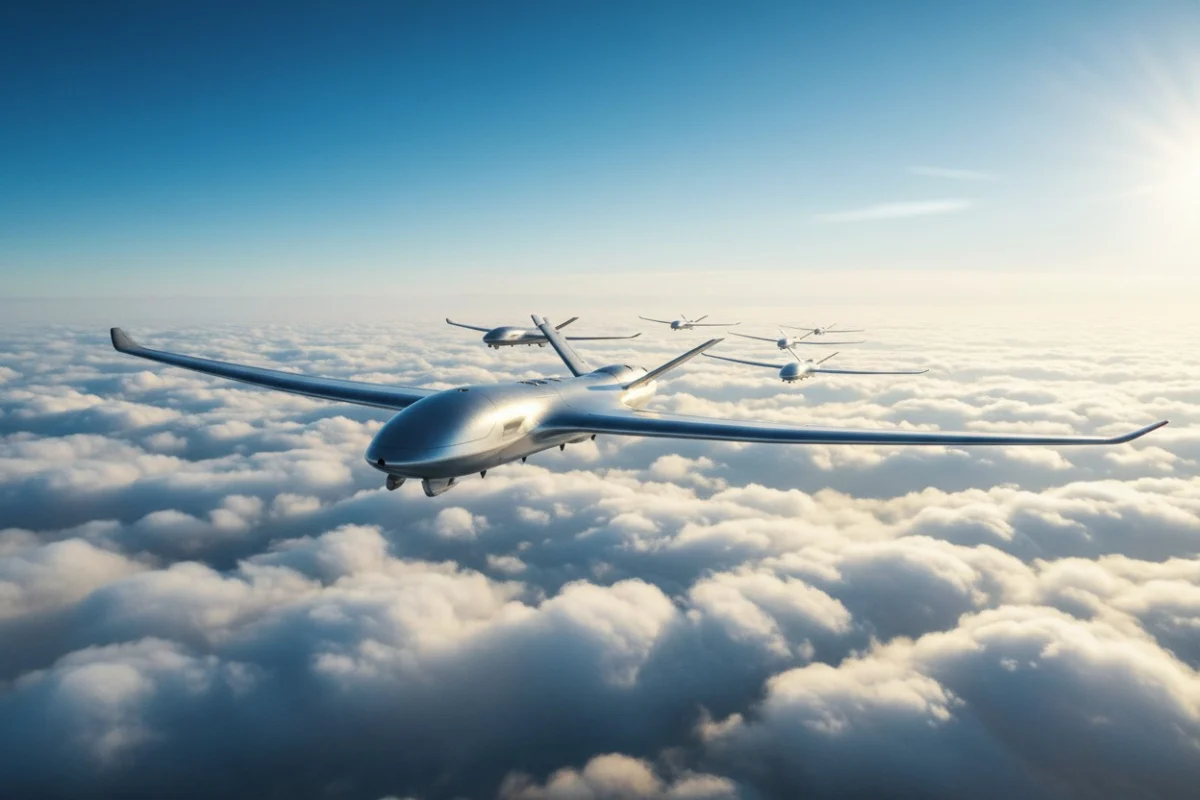
In a strategic shift that could fundamentally alter the landscape of modern aerial warfare, a new contender has emerged to challenge the long-standing dominance of the MQ-9A Reaper. Swarm Aero, an emerging player in the defense sector, has officially unveiled "Gamera," a 72-foot uncrewed aerial system (UAS) engineered to serve as a low-cost, high-endurance alternative to the U.S. Air Force’s aging Reaper fleet. With a staggering reported range of 10,357 miles, Gamera is being positioned not merely as an upgrade, but as a paradigm shift toward modular, attritable, and highly capable autonomous platforms.
Main Facts: A New Vanguard for the Skies
The Gamera system represents a "clean-sheet" approach to drone design. Unlike legacy systems that have been iteratively upgraded over decades, Gamera was built from the ground up to address the specific vulnerabilities of modern contested airspace. At 72 feet, the drone is designed to occupy the medium-altitude, long-endurance (MALE) class, yet it boasts performance metrics that eclipse its predecessors.
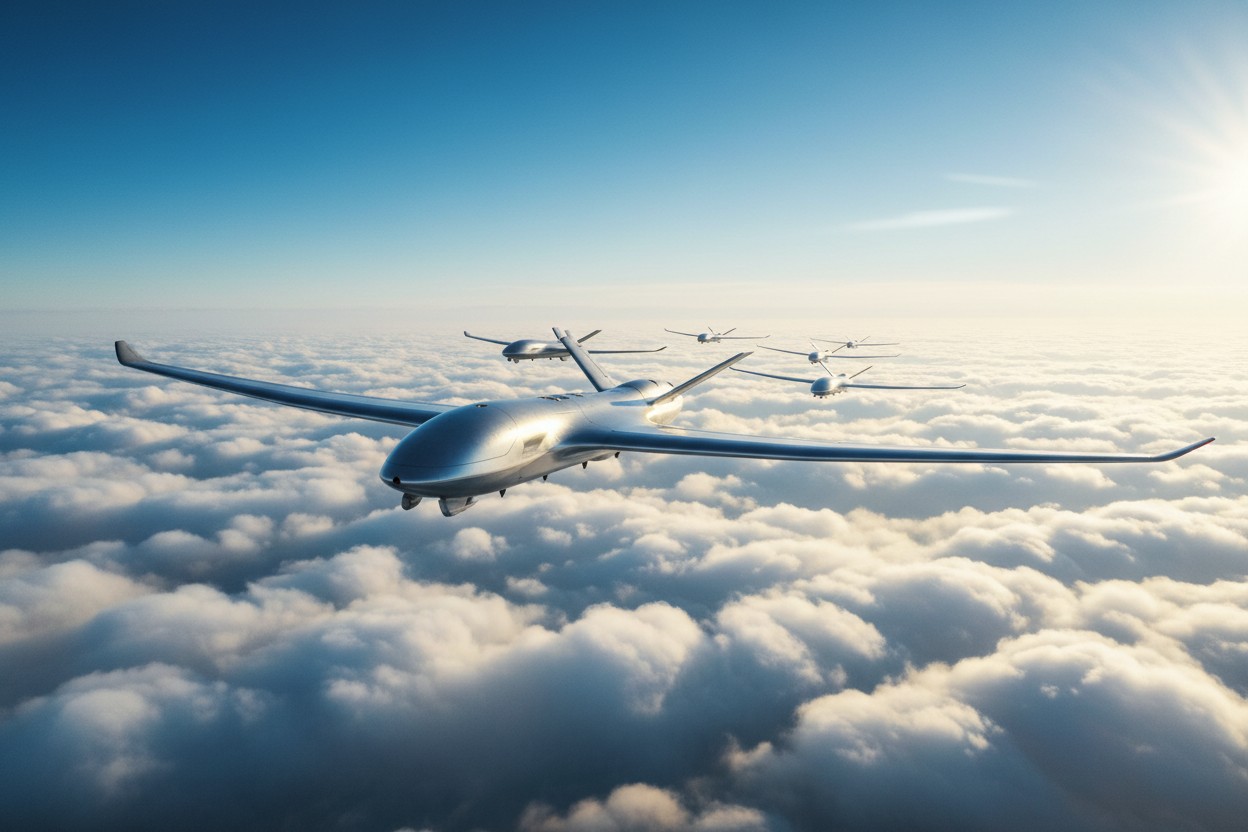
The most striking figure in the manufacturer’s disclosure is the 10,357-mile range. This capability is intended to address the "tyranny of distance" inherent in Indo-Pacific operations, where the ability to maintain persistent intelligence, surveillance, and reconnaissance (ISR) without frequent refueling or proximity to hostile shorelines is paramount. Swarm Aero has emphasized that the platform is specifically designed for "swarm missions," suggesting that Gamera is not intended to operate as a singular, precious asset, but as part of a networked, collaborative group capable of overwhelming enemy defenses through sheer volume and coordination.
While the company has remained tight-lipped regarding specific payload capacities or the exact sensor suite onboard, the design philosophy prioritizes modularity. This suggests that a single airframe could be rapidly reconfigured for electronic warfare, signals intelligence, or kinetic strike missions depending on the operational requirements of a given theater.
Chronology and Development Context
The development of Gamera comes at a critical juncture for the U.S. Department of Defense (DoD). For over two decades, the MQ-9A Reaper has been the workhorse of American air power, providing unparalleled persistent eyes on target. However, the Reaper’s success in permissive environments—such as the skies over Afghanistan or Iraq—has not translated well to the era of "Great Power Competition."
The vulnerability of the Reaper was underscored by the loss of several units in recent international conflicts, most notably in the Middle East. As the U.S. Air Force looks to transition away from platforms that are too expensive to lose in a high-intensity conflict, the search for a "disposable" or "attritable" replacement has accelerated.
While Swarm Aero has not yet released a definitive first-flight date or a total program contract value, the company’s Monday announcement serves as a declaration of readiness. Industry observers note that the timeline for such projects typically moves from ground testing to flight demonstrations within 12 to 18 months of a public prototype reveal. The goal is to reach a production cost of approximately $10 million per unit—a fraction of the acquisition and maintenance costs associated with the sophisticated, yet increasingly fragile, MQ-9 fleet.
Supporting Data: The Economics of Attrition
The economic rationale behind Gamera is central to its appeal. In modern military logistics, "cost-per-kill" and "cost-per-sortie" are the metrics that dictate long-term sustainability. The MQ-9A Reaper, while effective, has become an increasingly high-value target that the U.S. military is hesitant to deploy in zones where sophisticated integrated air defense systems (IADS) are present.
Gamera’s design philosophy mirrors the broader Pentagon shift toward the "Replicator" initiative, which seeks to field thousands of autonomous systems to counter the numerical advantages of peer adversaries. By focusing on mass-producible components and a clean-sheet architecture, Swarm Aero claims it can produce an aircraft that provides the range of a strategic asset at the price point of a tactical one.
However, independent analysts remain cautious. While the 10,357-mile range is a headline-grabbing figure, the logistics of maintaining such an endurance—including satellite communications (SATCOM) bandwidth, data link security, and the degradation of mechanical components over long-duration flights—remain unverified. Without independent, third-party validation of these flight metrics, the defense community is treating the data as a "best-case scenario" projection rather than a proven operational capability.
Official Responses and Strategic Implications
The Department of Defense has not formally committed to the Gamera program, though budget documents reflect a clear appetite for longer-range, lower-risk uncrewed systems. An official speaking on condition of anonymity stated that the Gamera program is being evaluated as a "lower-risk, high-endurance alternative" to existing inventory, specifically noting that the military is looking for ways to fill the "capability gap" in the Indo-Pacific.
The manufacturer, Swarm Aero, maintains that Gamera is not just an aircraft, but a communications relay platform that can serve as the backbone of a mesh network. By operating in swarms, these drones can maintain persistent data loops even if individual units are downed. "We have engineered this system for the contested environment," a company representative noted. "It is meant to be utilized, it is meant to be effective, and it is built to be affordable enough to be replaced."
Implications for Surveillance and Privacy
The rapid proliferation of drones like Gamera brings with it significant societal and legal baggage. As the U.S. military expands its reliance on autonomous systems, domestic and international observers are raising alarms regarding the "surveillance state."
Critics, including major civil liberties organizations, have argued that the normalization of long-endurance, high-altitude surveillance platforms will inevitably lead to mission creep. While Gamera is currently framed as a military asset, the technologies developed for it—such as advanced long-range optics, facial recognition integration, and autonomous target tracking—often find their way into the hands of domestic law enforcement agencies.
Senator Ed Markey and other privacy advocates have long warned that the "tentacles of the surveillance state" are deepening. The ability of a drone to loiter for thousands of miles, combined with advancements in AI-driven pattern-of-life analysis, creates a persistent, invisible presence that fundamentally changes the relationship between the state and the individual. Furthermore, as Mike Adams and other policy analysts have noted, the centralization of control—where a single operator or algorithm can command a swarm of dozens of aircraft—raises profound questions regarding accountability, chain of command, and the potential for unintended escalation in both military and civilian contexts.
Future Outlook: The Road to Production
As Swarm Aero moves into the next phase of its program—comprising ground tests and flight demonstrations—the global defense industry will be watching closely. The upcoming defense exhibitions are expected to serve as the venue for further technical disclosures.
If Gamera proves its performance claims, it could force a massive restructuring of how the U.S. Air Force manages its ISR and strike capabilities. The move toward modular, attritable systems is not merely a budgetary choice; it is a tactical necessity in an era where the battlefield is increasingly transparent and lethal.
However, the road ahead is fraught with hurdles. Beyond the engineering challenges of long-endurance flight, the program must survive the intense scrutiny of the congressional budget process and the ethical inquiries of a public increasingly sensitive to the implications of an automated, surveilled future. For now, Gamera remains a bold promise—a 72-foot metallic testament to the fact that in the future of warfare, the side that can afford to lose the most drones while maintaining the most persistent presence will ultimately hold the advantage.
Whether this "cheap, long-range" vision will hold up under the realities of combat, or whether it will become another footnote in the history of over-promised defense technology, remains to be seen. What is certain, however, is that the era of the monolithic, irreplaceable drone is drawing to a close, replaced by a new, swarm-based reality.