





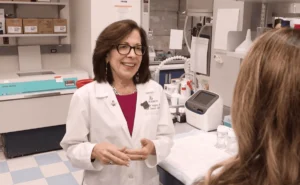

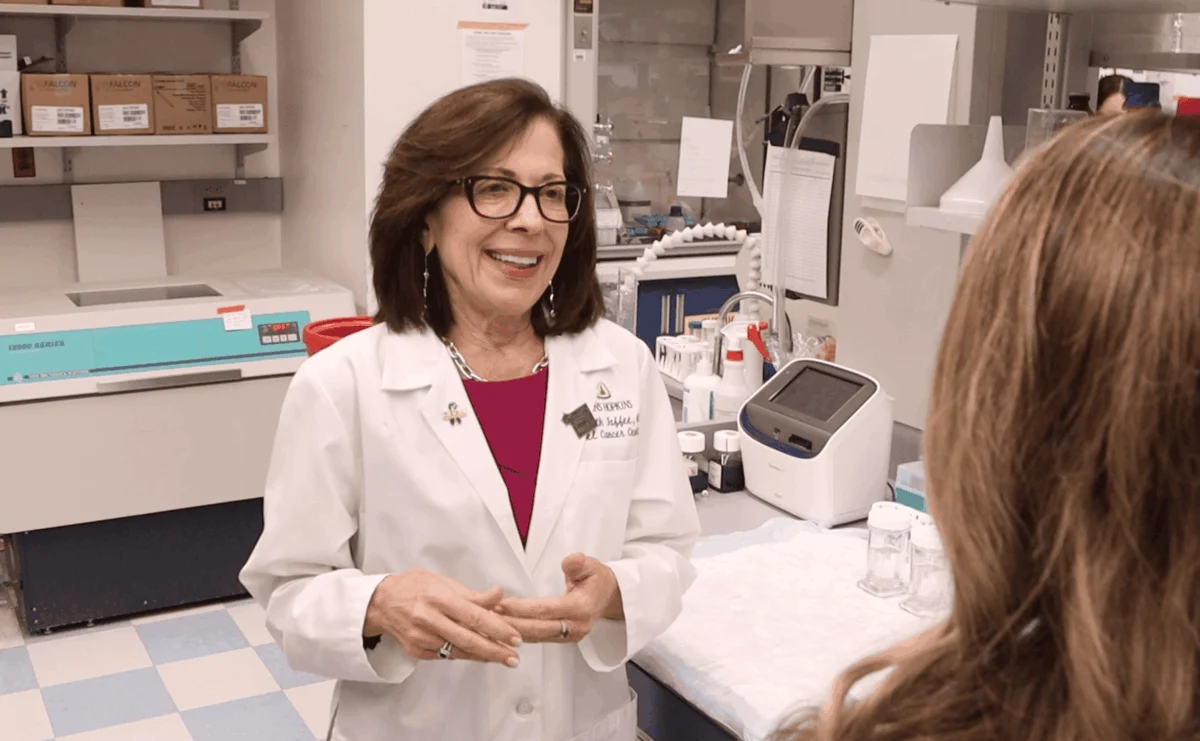
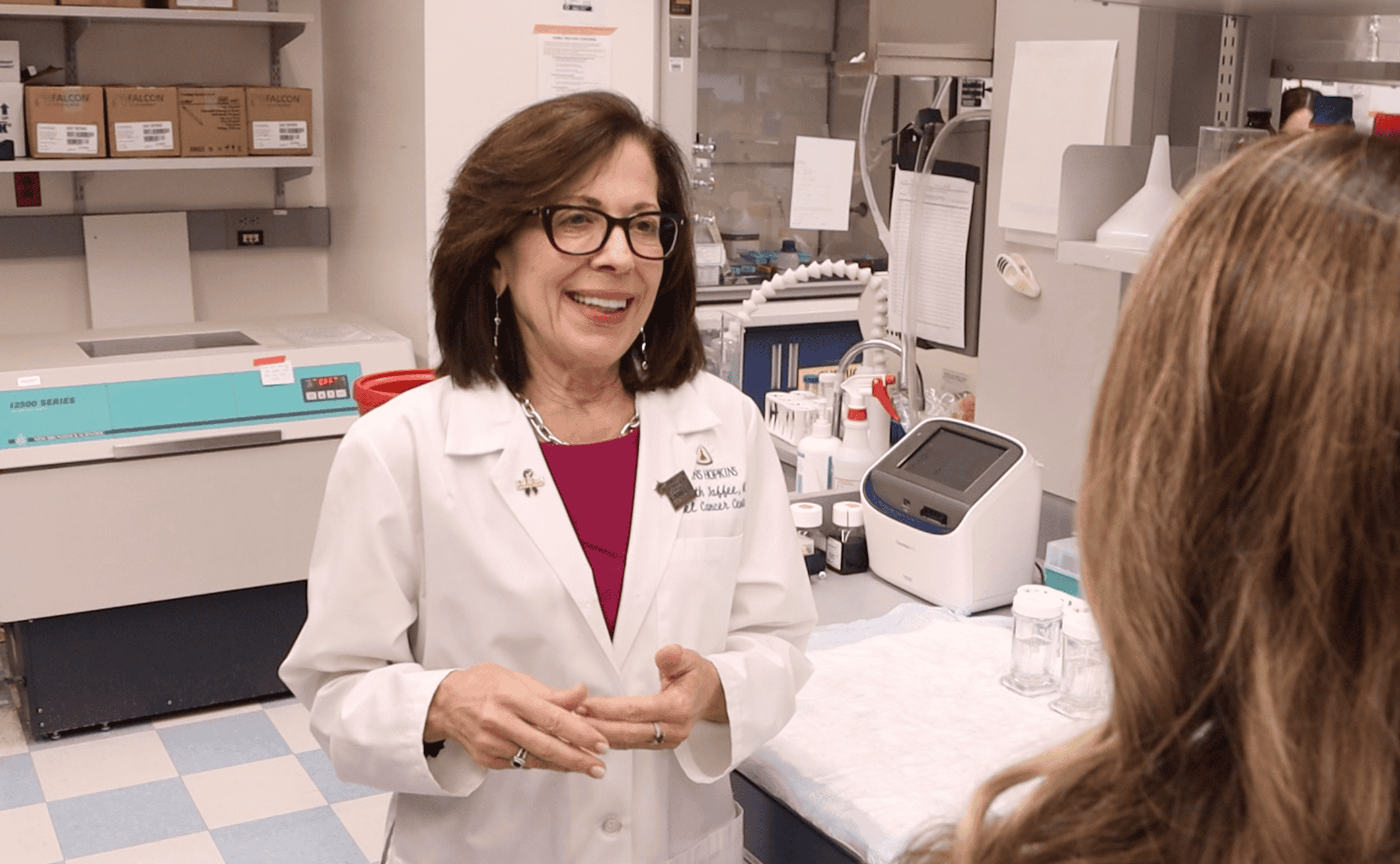
In the landscape of oncology, few diseases carry as heavy a burden as pancreatic cancer. Historically viewed as a "death sentence," the disease has long frustrated the medical community, characterized by rapid progression, late-stage diagnosis, and a formidable biological defense system that renders standard treatments largely ineffective. However, at the forefront of this battlefield stands Dr. Elizabeth Jaffee, a pioneer in cancer immunology whose career has been defined by a singular, persistent question: Can we teach the human immune system to recognize and destroy pancreatic cancer before it consumes the patient?
As the Deputy Director of the Sidney Kimmel Comprehensive Cancer Center at Johns Hopkins and a leading figure in the Bloomberg~Kimmel Institute for Cancer Immunotherapy, Dr. Jaffee has spent nearly four decades shifting the paradigm of cancer treatment. Her work—moving from the early, experimental vaccines of the 1990s to cutting-edge preventive strategies—offers a beacon of hope for thousands of families worldwide.
A Personal Catalyst: The Origins of a Mission
Dr. Jaffee’s commitment to oncology was not merely an academic pursuit; it was forged in the fires of personal tragedy. In 1986, her uncle, a man of only 51, was diagnosed with pancreatic cancer. Within 90 days of his diagnosis, he had passed away, having endured excruciating pain that left an indelible mark on his niece, then a young intern.
Three years later, during her fellowship in medical oncology, Dr. Jaffee encountered a patient with metastatic pancreatic cancer. Despite the best efforts of modern medicine at the time, there was virtually nothing to offer the patient beyond palliative care for pain. This professional helplessness, coupled with her personal history, solidified a life-altering decision: she would dedicate her career to mastering the immune system’s potential to combat this lethal disease.
Chronology of a Scientific Breakthrough
The Early Days: 1997–2000
In the late 1990s, the concept of a "cancer vaccine" was revolutionary—and, to many, highly skeptical. In 1997, Dr. Jaffee began testing a first-generation vaccine on patients whose localized pancreatic cancers had been surgically removed. The statistics were grim: 80% of patients faced recurrence within two years of surgery.
The results of her first six patients were transformative. Five of them showed measurable immune responses. One specific patient, diagnosed at 71, lived for another 20 years, ultimately passing away from heart disease rather than the cancer that had once threatened to end his life. These initial successes provided the proof-of-concept necessary to keep the research moving forward against prevailing scientific skepticism.
The Middle Years: Decoding the Microenvironment
As the millennium turned, Dr. Jaffee’s team pivoted to understanding why pancreatic cancer is so resistant to the immune system. They identified two primary hurdles:
- Low Mutational Burden: Pancreatic tumors often lack the genetic "flags" that help the immune system identify them as foreign.
- The "Fortress" Effect: The tumor is surrounded by a dense, fibrous microenvironment—an immunosuppressive barrier that physically blocks immune cells from infiltrating the tumor.
By identifying these mechanisms, Dr. Jaffee’s team began developing combination therapies that involve targeting KRAS mutations (the primary driver of the cancer) and using immunotherapies to "thaw" the tumor microenvironment, allowing the immune system to break through the defenses.
Modern Milestones: mRNA and Beyond
The current era is marked by the success of the INTerpath-001 study. While this Phase 3 trial focused on melanoma, the success of an mRNA-based vaccine combined with Keytruda (pembrolizumab) has provided the "gold standard" evidence that therapeutic cancer vaccines can, in fact, change clinical outcomes. For Dr. Jaffee, this is the validation she has sought for twenty years, proving that the foundation laid in her early career is now yielding tangible, life-saving technology.
The Science of Defense: Understanding the Tumor Microenvironment
To understand why pancreatic cancer remains such a clinical challenge, one must look at the biological architecture of the tumor. Pancreatic cancer cells do not exist in isolation; they are protected by a complex ecosystem of stromal cells, fibrous tissue, and immunosuppressive molecules.
Dr. Jaffee notes that the greatest progress in the next decade will likely come from "multi-pronged attacks." This involves a tripartite approach:
- Chemotherapy: To reduce the bulk of the tumor.
- Checkpoint Inhibitors: To release the "brakes" on the immune system, allowing T-cells to identify cancer cells.
- Vaccines: To provide the immune system with a specific, targeted "search and destroy" mission.
The Holy Grail: Preventive Vaccines
Perhaps the most ambitious aspect of Dr. Jaffee’s recent work is the shift from treatment to prevention. In a landmark study involving individuals at high risk for pancreatic cancer, her team utilized a second-generation vaccine targeting mutated KRAS. The results were nothing short of historic: the vaccine induced immune responses that remained detectable for up to two years. Even more remarkably, in some participants, small pancreatic cysts—often precursors to cancer—resolved entirely during the study.
However, Dr. Jaffee remains grounded in the realities of the field. "We need to better understand the precancerous microenvironment," she explains. To make a preventive vaccine viable, the medical community must first solve two major logistical problems:
- Early Detection: Developing blood-based biomarkers and high-resolution imaging that can pinpoint which cysts are dangerous and which are benign.
- Risk Stratification: Because pancreatic cancer is rare in the general population, mass vaccination is not feasible. The focus must remain on identifying high-risk genetic and environmental groups who would benefit most.
Implications for the Future of Oncology
The implications of Dr. Jaffee’s work extend far beyond the pancreas. If her team can successfully prime the immune system to recognize early-stage, low-mutation tumors, the same principles could be applied to other "stealth" cancers, such as ovarian or lung cancers.
Furthermore, the integration of mRNA technology—the same platform that revolutionized the global response to COVID-19—into cancer treatment signifies a new era of "personalized" medicine. By sequencing an individual’s tumor, researchers can now design a bespoke vaccine that targets the specific mutations present in that patient’s cancer, turning the patient’s own biology into a weapon against the disease.
The Human Impact: A Message of Hope
During Pancreatic Cancer Awareness Month, Dr. Jaffee’s message is one of cautious, evidence-based optimism. She emphasizes that the scientific community is no longer operating in the dark. With the integration of early detection, genetic profiling, and immunotherapy, the path toward a "preventive" model is clearer than it has ever been.
"I want patients and families to know that progress is real," Dr. Jaffee says. "The scientific momentum is building. We are moving toward a future in which pancreatic cancer is no longer the devastating diagnosis it is today."
Conclusion: A Career Defined by Persistence
Dr. Elizabeth Jaffee’s journey from a grief-stricken intern to a world-renowned oncologist is a testament to the power of persistence in science. Her work reminds us that medical breakthroughs are rarely the result of a single "eureka" moment, but rather the cumulative result of decades of dedication, the willingness to challenge established dogmas, and an unwavering commitment to the patients who serve as both the motivation and the ultimate beneficiaries of scientific progress.
As the medical community watches the next phase of her clinical trials, one thing is clear: the wall that has long protected pancreatic cancer from the human immune system is finally beginning to crumble. Through the combination of human ingenuity and biological precision, the next generation of cancer patients may find that their diagnosis is not a conclusion, but a manageable challenge.