









Reviewed by Brian St. Pierre, MS, RD
In 2017, when semaglutide (Ozempic) first received FDA approval for the treatment of type 2 diabetes, the fitness industry viewed it primarily as a distant curiosity. For many health and fitness coaches, the medication felt like a theoretical threat—a pharmaceutical shortcut that might render their services obsolete. Fast forward to 2026, and the landscape has shifted seismically: over 1 in 10 US adults are now utilizing GLP-1 receptor agonists.
The initial panic among professionals has largely subsided, replaced by a nuanced understanding of the drug’s role in modern healthcare. Most coaches no longer view GLP-1s as an existential threat, but rather as a powerful, albeit complex, tool that requires a specialized support system. The current consensus is clear: the modern coach is not in the "GLP-1 world," but in the "GLP-1 support world."
The Shift: From Threat to Collaboration
The evolution of the coaching industry’s relationship with GLP-1s has been marked by a move toward pragmatism. Kate Solovieva, a Super Coach and Precision Nutrition’s Director of Community, argues that the most effective coaches are redefining their market. "Coaches need to recognize that their market isn’t ‘people on GLP-1s,’ but rather ‘people on GLP-1s who want support,’" Solovieva explains.
This distinction is critical. Trying to coach every individual on a GLP-1 is not only logistically impossible but often counterproductive. Many users are content with the pharmacological results and have no desire for lifestyle intervention. Coaches who fixate on those using the medication as a "band-aid" are often wasting energy on clients who are not ready for the rigors of habit-based behavioral change. Instead, the thriving coach focuses on the subset of the population that is ready, willing, and able to layer foundational health habits onto their medical intervention.
Chronology of a Medical Transformation
The integration of GLP-1s into the public consciousness has followed a predictable trajectory of disruption, skepticism, and eventual adaptation.
- 2017–2020: The "Theoretical" Phase: GLP-1s were largely confined to clinical diabetes management. Fitness professionals paid little mind, assuming the drugs were a niche intervention.
- 2021–2023: The "Mainstream" Phase: As weight loss became a primary off-label indication, supply chains buckled and public discourse exploded. Coaches began reporting an influx of clients who were taking these medications without concurrent exercise or nutritional guidance.
- 2024–2025: The "Side-Effect" Realization: As the initial "honeymoon" period wore off for millions, the reality of muscle mass loss, metabolic adaptation, and severe gastrointestinal side effects became apparent.
- 2026 and Beyond: The "Integrated" Phase: Coaches have begun to develop specific protocols—such as protein-loading and strength-training mandates—to mitigate the risks of long-term GLP-1 use.
Supporting Data: Why Habits Still Matter
While the medication handles the caloric deficit, it does not build the "scaffolding" required for long-term health. Data suggests that up to 40 percent of weight lost through GLP-1s can come from lean mass, with the majority of that loss being muscle tissue. This creates a "skinny-fat" profile that can leave a patient metabolically compromised.
Furthermore, the "rebound effect" is well-documented. Research indicates that individuals who do not change their lifestyle behaviors while on the medication almost universally regain the majority of their weight within 18 months of cessation. Conversely, those who integrate resistance training and consistent protein intake are four times more likely to maintain a 10 percent or higher weight loss after stopping the medication.
The Seven Archetypes of GLP-1 Clients
Coaching readiness is not a fixed state; it is fluid. A client who is initially resistant may later find themselves struggling with side effects and seeking guidance. Coaches must listen dynamically to determine where a client falls within the seven common archetypes:
1. The Honeymooner
This client is seeing rapid weight loss with minimal effort and feels no need for further intervention.
- Coaching Strategy: Avoid the "righting reflex." Do not lecture them on the risks of muscle loss, as this often acts as an antagonist. Celebrate their success and keep the door open for when they inevitably need to address body composition.
2. The Ambivalent Candidate
This individual is considering medication but is paralyzed by the stigma of "taking the easy way out."

- Coaching Strategy: Use the "4 Crazy Questions" exercise. Help them identify the risks of both starting and not starting. Ensure they understand that the decision is medical, not moral.
3. The Ready-to-Quitter
They have the results, but they are suffering from severe nausea and exhaustion.
- Coaching Strategy: Offer neutral education. Remind them that side effects are common and often dose-dependent. Help them track symptoms to share with their doctor, and suggest small, frequent meals as an experiment to improve tolerance.
4. The Muscle-Loss Risk
The scale is moving, but the client is sedentary and under-fueling.
- Coaching Strategy: Use objective data like a DEXA scan. Once the client sees the loss of lean tissue in black and white, they are more likely to prioritize resistance training and protein intake.
5. The Under-Fueler
Appetite suppression is so profound that the client has stopped eating sufficient calories.
- Coaching Strategy: Establish an "eating schedule." Treat food as a medicinal necessity rather than an appetite-driven pleasure. If disordered eating is suspected, refer to a qualified medical professional immediately.
6. The Graduate
The client is ready to wean off the medication.
- Coaching Strategy: This is a high-stakes transition. Focus on reinforcing "ruts"—the deep neural pathways of habit that will support them when the medication’s suppression effect vanishes.
7. The Priced-Out
They were successful, but insurance changes have forced them off the drug.
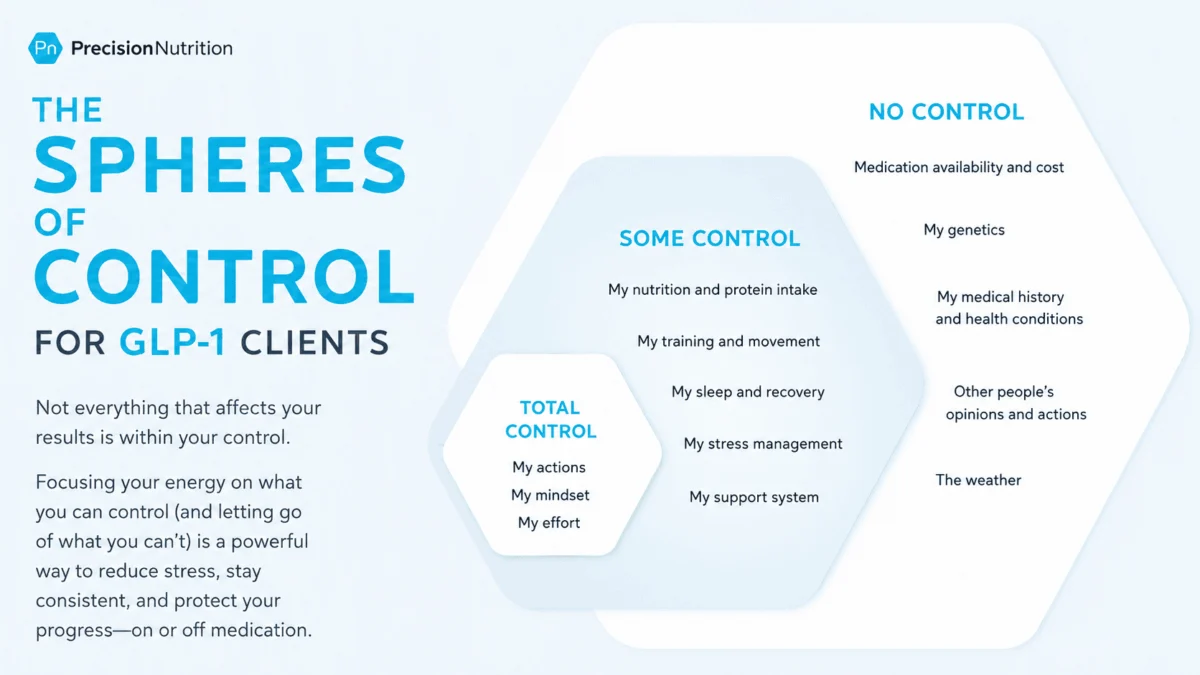
- Coaching Strategy: Validate their anger. Frame this as a systemic failure, not a personal one. Utilize the "Spheres of Control" exercise to refocus their energy on nutrition, sleep, and movement—factors they can still command.
Official Responses and Clinical Implications
Medical associations are increasingly viewing obesity as a chronic, relapsing condition. Consequently, many physicians are moving away from the idea of "cycling" patients off these drugs. However, for those who do come off—either by choice or necessity—the consensus is that the coaching relationship becomes the primary safety net.
The medical community emphasizes that while GLP-1s are highly effective, they are not a replacement for metabolic health. The goal of the modern coach is to ensure that the patient’s body remains resilient enough to function when the pharmaceutical support is removed.
Building the "Ruts" of Health
The ultimate promise a coach can make is not a specific weight-loss number, but the creation of a durable lifestyle. Coach Toni Bauer compares this to the ruts left by wagon wheels on the Oregon Trail: if you reinforce the same behaviors—protein intake, resistance training, and consistent sleep—repeatedly while the medication is active, you are effectively carving a path for the body to follow once the drug is gone.
This "new person" identity—the individual who prioritizes strength and nutrition regardless of the scale—is the hallmark of the successful client. As we move further into the GLP-1 era, the role of the coach will continue to evolve from a simple guide to a specialized facilitator of biological and behavioral integration.
For those looking to enter this space, the opportunity is significant. By mastering the art of the "support world," coaches are not only securing their business models but are providing the essential foundation that medication alone cannot provide. Whether a client stays on the medication for life or chooses to transition away, the "ruts" of healthy habit remain the most reliable insurance policy for long-term vitality.