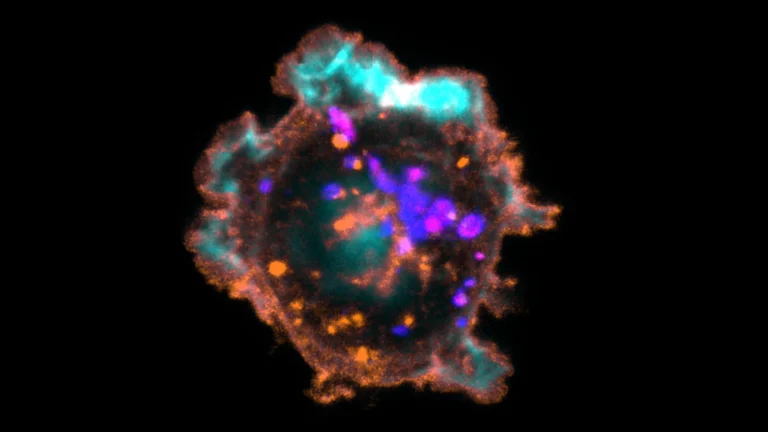












For many in the medical research community, the quest to cure cancer is defined by incremental gains—a percentage point of improved survival here, a slightly more targeted molecule there. For Jennifer Guerriero, PhD, an assistant professor at Brigham and Women’s Hospital in Boston, the quest is far more personal, driven by a childhood curiosity that has evolved into a high-stakes scientific mission.
Dr. Guerriero’s work represents a paradigm shift in oncology. Rather than attempting to "supercharge" the immune system to attack cancer cells directly, she is focusing on the "gatekeepers" that prevent that attack from happening in the first place. With the recent backing of a prestigious Lloyd J. Old STAR (Scientists Taking Risks) award from the Cancer Research Institute (CRI), Dr. Guerriero is moving toward a potential breakthrough that could redefine how we treat solid tumors.
The Genesis of a Scientific Mission
The roots of Dr. Guerriero’s career were planted long before she stepped into a laboratory. Her grandmother was diagnosed with breast cancer the same year Dr. Guerriero was born. Throughout her formative years, she observed the grueling reality of cancer treatment—the side effects, the uncertainty, and the physical toll of the disease.
It was during these formative years that she posed a question that would eventually serve as the compass for her professional life: "Why can’t she just take a pill? Why can’t she take Tylenol and her breast cancer go away?"
This deceptively simple inquiry highlighted a fundamental frustration with the limitations of modern medicine. Today, that childhood question has transformed into a sophisticated research program at Brigham and Women’s Hospital, where Dr. Guerriero is investigating how to dismantle the complex, suppressive environments that tumors build to hide from the human immune system.
The Tumor Microenvironment: A Fortress of Resistance
Immunotherapy has undeniably revolutionized cancer care. By training the body’s own T cells to recognize and destroy malignant cells, doctors have seen miraculous recoveries in patients who previously had no options. However, as Dr. Guerriero points out, these therapies are not universal. A significant portion of patients—particularly those with solid tumors—do not respond.
The culprit, she argues, is often not the T cells themselves, but the environment surrounding the tumor. "Many tumors contain large numbers of immune cells called tumor-associated macrophages, or TAMs," she explains. "Rather than helping the immune system attack cancer, some of these macrophages act as a defensive shield."
These TAMs actively suppress immune responses, creating a physical and chemical barrier that prevents T cells from infiltrating the tumor. They essentially turn the tumor site into a "no-fly zone" for the immune system, contributing to the persistent resistance observed in many immunotherapy clinical trials.
Engineering a New Solution: The CAR-Monocyte Approach
Dr. Guerriero’s laboratory has made a pivotal discovery: a specific subset of these macrophages expresses a molecule called TREM2. Crucially, these TREM2-positive cells are abundant in various solid tumors but are largely absent from healthy tissues, making them a "perfect" target for a therapeutic strike.
To address this, Dr. Guerriero is pioneering a novel engineering approach. She and her team are utilizing monocytes—a type of white blood cell—and modifying them with a chimeric antigen receptor (CAR). While this sounds similar to the well-known CAR T-cell therapy, the strategy is fundamentally different.
Instead of programming cells to hunt down cancer cells, the engineered monocytes are designed to home in on and eliminate the TREM2-positive macrophages. By "clearing the path," Dr. Guerriero believes the T cells will finally be able to enter the tumor, become activated, and fulfill their purpose of eradicating the disease.
Chronology of the Research
- Early Childhood: Witnessing her grandmother’s struggle with breast cancer sparks an enduring interest in medicine and pharmacology.
- Academic Foundation: Dr. Guerriero completes her doctoral training, focusing on the intersection of immune cells and cancer progression.
- The Discovery Phase: Her laboratory identifies TREM2-positive macrophages as key contributors to tumor resistance across multiple solid tumor types.
- Proof-of-Concept: Initial studies in murine (mouse) models demonstrate that eliminating these macrophages leads to significant tumor shrinkage and improved T-cell activation.
- The STAR Milestone: The Cancer Research Institute awards Dr. Guerriero the Lloyd J. Old STAR grant, providing the necessary funding to transition from preliminary data to the development of a clinical-grade product.
Supporting Data: Why This Approach Matters
The data backing Dr. Guerriero’s hypothesis is compelling. In her pre-clinical trials, mice treated with the engineered monocyte therapy showed a statistically significant increase in survival rates compared to control groups.

The mechanism is twofold:
- Direct Depletion: The CAR-monocytes specifically identify and deplete the immunosuppressive macrophages.
- Microenvironment Reprogramming: With the suppressive barrier removed, the tumor microenvironment shifts from "cold" (immune-evasive) to "hot" (immune-active), allowing for the natural recruitment and proliferation of tumor-killing T cells.
These results are essential because they validate the idea that attacking the tumor’s "infrastructure" is as important as attacking the tumor cells themselves.
The Role of the CRI STAR Award
The "STAR" acronym, which stands for Scientists Taking Risks, is an accurate descriptor of the nature of Dr. Guerriero’s work. Developing a first-in-class therapy is an inherently risky endeavor. Traditional funding structures, which often prioritize incremental progress on well-established pathways, rarely provide the capital necessary for such radical departures from the norm.
"I don’t think I could get it funded through traditional mechanisms because this is a first-in-class, brand-new therapy," Dr. Guerriero noted. The STAR award acts as a catalyst, allowing her to scale up her laboratory, hire specialized personnel, and source the expensive materials required for complex cellular engineering.
Beyond the financial support, the award grants her the intellectual freedom to pursue a high-risk, high-reward strategy that could ultimately save thousands of lives. "It is absolutely critical that foundations like CRI step up to fund these projects that have the potential to lead to the next breakthrough," she says.
Broader Implications for Oncology
The implications of Dr. Guerriero’s research extend far beyond breast cancer. Because the TREM2-positive macrophages she targets are found in a wide array of solid tumors, this platform technology could potentially be applied to lung, ovarian, pancreatic, and colorectal cancers.
By creating a modular therapy—one that clears the "gatekeepers" regardless of the underlying tumor mutation—she is looking to solve the problem of immunotherapy resistance at a foundational level. If the engineered monocytes successfully clear the tumor microenvironment in human trials, the medical community could see a surge in the efficacy of existing checkpoint inhibitors and other immunotherapies.
Looking Toward the Future
Dr. Guerriero’s journey—from the child asking why a pill couldn’t fix her grandmother to the lead investigator of a cutting-edge immunotherapy program—is a testament to the power of curiosity paired with institutional support.
As she prepares to move toward clinical-grade product development, the challenges remain significant. Scaling cell-based therapies, ensuring patient safety, and navigating the regulatory pathways for a first-in-class drug are monumental tasks. However, with the momentum of the STAR program and the growing body of evidence supporting her "dismantle the defenses" strategy, there is a palpable sense of optimism.
In a field often constrained by the "tried and true," Dr. Guerriero’s work serves as a reminder that the next major breakthrough in cancer treatment may not come from a better chemotherapy drug, but from a deeper understanding of the environment we are trying to heal. She is not just looking for a new medicine; she is changing the battlefield itself.
For the patients who currently find themselves at a dead end with standard immunotherapies, Dr. Guerriero’s research offers something that is often in short supply: a new, scientifically sound, and fundamentally different way forward.