








For decades, the name Linus Pauling was synonymous with scientific brilliance. As one of the most decorated researchers in history—the only person to win two unshared Nobel Prizes—his work on chemical bonding and the molecular structure of proteins fundamentally reshaped modern chemistry and biology. Yet, in the twilight of his career, Pauling pivoted toward a pursuit that would alienate his peers and invite intense professional scrutiny: the advocacy of massive, high-dose vitamin C intake as a treatment for cancer.
For years, the scientific establishment dismissed Pauling’s claims as the misguided zeal of a genius operating outside his domain. When Pauling succumbed to cancer at the age of 93, his critics used his death as a cautionary tale of the "halo effect"—the cognitive bias where success in one field leads an individual to assume expertise in another. However, half a century later, the narrative is proving far more nuanced. Modern oncology is revisiting the role of vitamin C, discovering that while Pauling may have been wrong about the delivery method and the universality of the cure, he had intuited a biological reality that we are only now beginning to quantify.
The Chronology of a Controversy
The saga began in the early 1970s, when Pauling entered a collaborative partnership with Scottish surgeon Ewan Cameron. Together, they conducted observational studies on patients with advanced, terminal cancers. The protocol was radical for the time: patients were administered very large doses of vitamin C, initially via intravenous (IV) infusion and subsequently through high-dose oral tablets.
The results published by Pauling and Cameron were striking. Compared to control groups receiving standard palliative care, the vitamin C-treated patients reportedly lived longer and exhibited a marked improvement in their subjective sense of well-being. Some participants, the duo suggested, experienced survival rates several times longer than those receiving conventional care.
However, the medical community remained skeptical. To settle the debate, the Mayo Clinic—a bastion of American clinical research—launched two rigorous, randomized, double-blind trials. The findings were devastating to Pauling’s claims: the Mayo Clinic studies found no survival benefit for patients taking oral vitamin C compared to those taking a placebo. The fallout was swift. The oncology community largely filed vitamin C away as an "alternative" curiosity, and Pauling’s late-career crusade was relegated to the status of a scientific folly.
The Missing Link: Oral vs. Intravenous Delivery
The critical oversight that both the Mayo Clinic researchers and their contemporary critics failed to identify was the fundamental difference in pharmacokinetics—how the body processes the substance.
The Mayo Clinic trials utilized oral tablets. The human gut, however, has a physiological "ceiling" for vitamin C absorption. Once a certain threshold is reached, the body’s transporters become saturated, and the excess is excreted via urine. No matter how many tablets a patient consumes, the concentration of vitamin C in the bloodstream remains relatively flat.
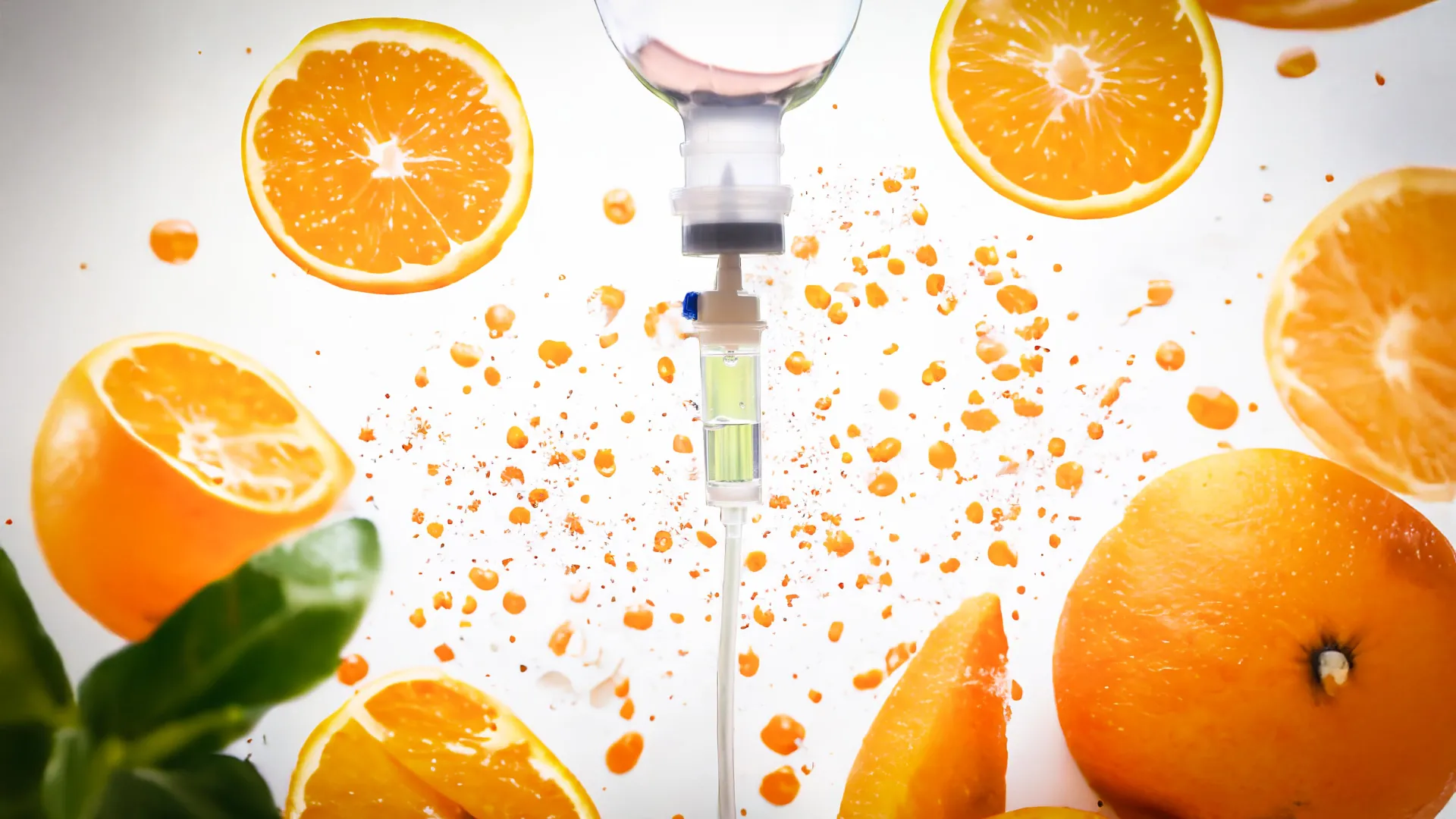
In contrast, intravenous infusion bypasses the digestive system entirely. By delivering vitamin C directly into the bloodstream, clinicians can achieve plasma concentrations tens or even hundreds of times higher than those attainable through oral ingestion. It is only at these pharmacological, "supra-physiological" levels that vitamin C ceases to act as a gentle nutrient and begins to function as a potent biological agent.
Supporting Data: Mechanisms of Action
At the low concentrations typical of a healthy diet or standard supplementation, vitamin C acts as a classic antioxidant, mopping up reactive oxygen species (ROS) and protecting cells from oxidative stress. However, at the extreme levels achieved through IV administration, the substance undergoes a "role flip."
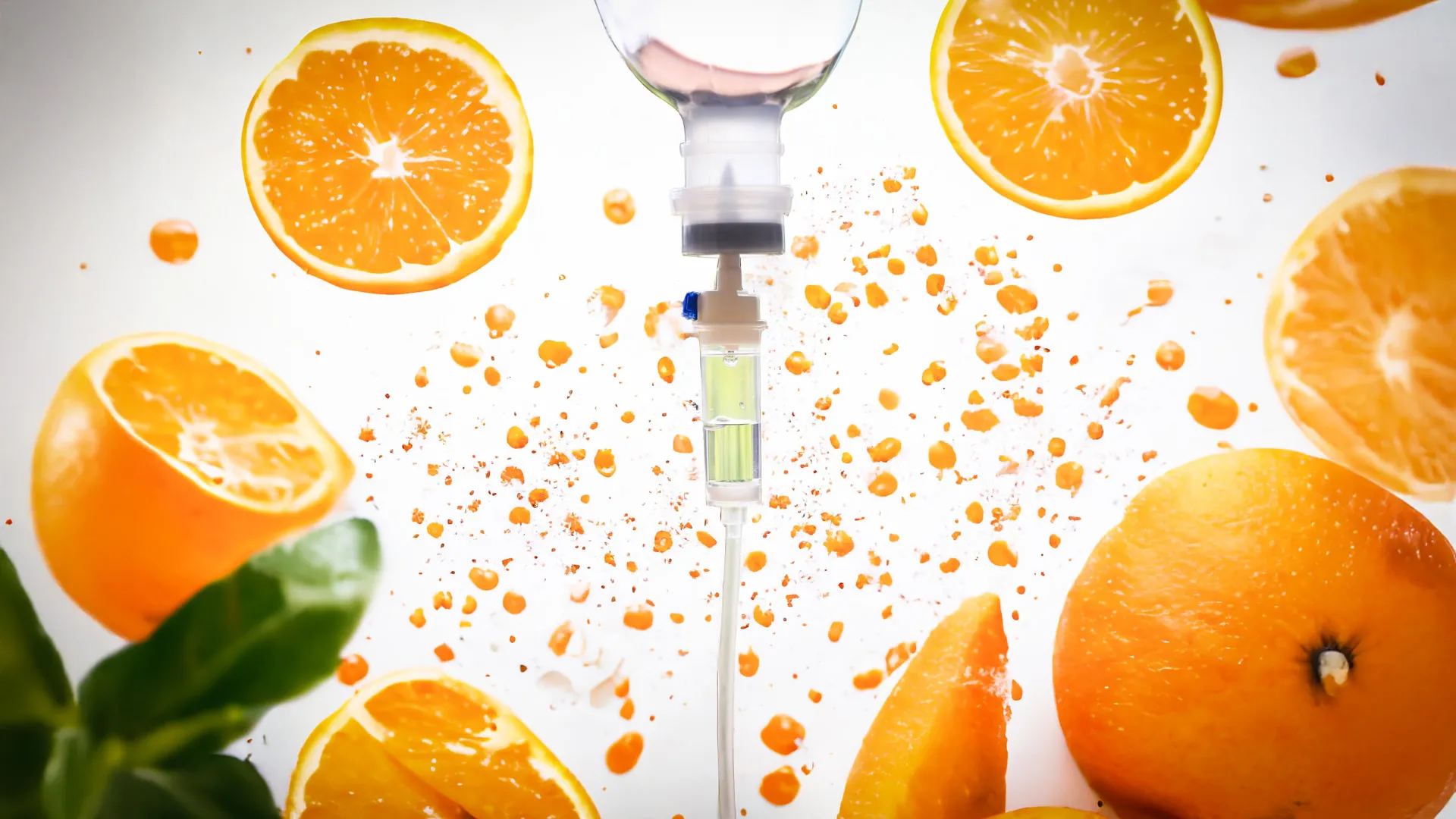
In the presence of high-dose vitamin C, the molecule can promote the formation of hydrogen peroxide within the interstitial fluid surrounding tumor cells. Cancer cells are uniquely vulnerable to this phenomenon. Because they grow rapidly and often reside in environments with poor blood supply, they are inherently under high metabolic stress. Their internal "cleanup" mechanisms, tasked with neutralizing reactive molecules, are often stretched to their limit.
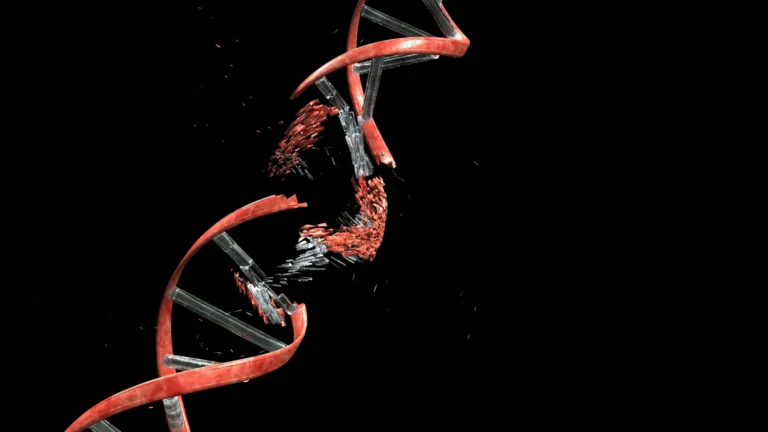
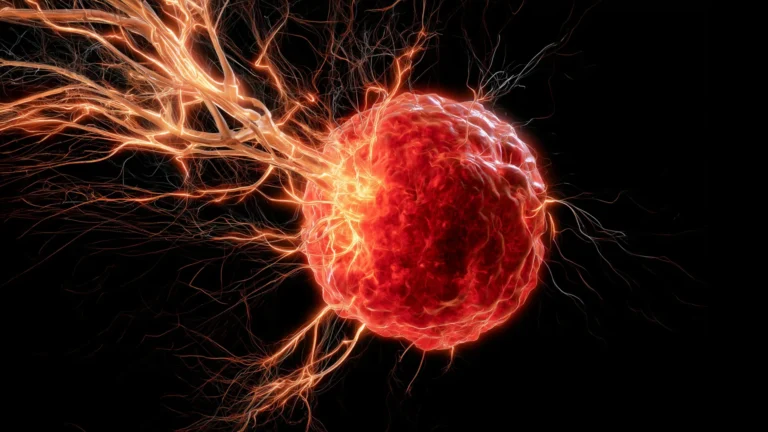
When a sudden, high-intensity pulse of hydrogen peroxide is introduced, these already-stressed cancer cells are overwhelmed. The excess ROS causes irreparable damage to the cancer cell’s DNA and energy-producing mitochondria, ultimately triggering cell death (apoptosis). Crucially, healthy cells—which are not under such extreme metabolic strain and possess more robust antioxidant defenses—tend to survive this onslaught. Thus, at these specific high concentrations, vitamin C functions not as a vitamin, but as a weak, selective chemotherapy agent.
Official Responses and Current Clinical Status
Today, the medical establishment remains cautious. While the laboratory evidence is compelling, human clinical data remains early and inconsistent. Small-scale trials have explored the use of high-dose IV vitamin C in patients with notoriously hard-to-treat malignancies, including pancreatic, ovarian, and glioblastoma brain tumors.
The findings are mixed. While many patients tolerate the infusions well, there is no consensus on its efficacy as a standalone treatment. Some studies suggest that when paired with standard chemotherapy, vitamin C may modestly improve survival or mitigate the side effects of traditional treatments, such as nausea and fatigue. Other trials show no clear survival advantage.
Importantly, medical professionals emphasize that this is not a "wellness" treatment. High-dose IV vitamin C carries risks, particularly for individuals with pre-existing kidney dysfunction or rare metabolic conditions. It is not, and should not be, marketed as a benign supplement to be sold in high-street health stores. The current scientific consensus is that any use of high-dose vitamin C must be strictly limited to supervised clinical trials or controlled hospital settings.
Implications for Future Oncology
Beyond its role in cell death, recent research suggests that vitamin C may influence the "epigenetic" markers of cancer—the instructions that dictate how DNA is read and how cells divide. Lab studies indicate that high levels of vitamin C may force cancer cells to grow less aggressively, potentially sensitizing them to standard therapies. There is even preliminary, speculative evidence that vitamin C might modulate the immune system, helping it better recognize and attack tumors.
The story of Linus Pauling and vitamin C offers a profound lesson on the trajectory of scientific discovery. Science rarely advances in a clean, linear fashion. It is often a process of bold hypotheses, flawed early methodology, reactionary backlash, and—eventually—a quieter, more nuanced re-evaluation.
Pauling was undoubtedly wrong to frame vitamin C as a "miracle cure" or a universal preventative for all illnesses. He failed to distinguish between the physiological effects of dietary intake and pharmacological infusion, and he overestimated the efficacy of oral supplements in the face of established malignancy. Yet, he was not the charlatan his critics once claimed.
He glimpsed a reality that was decades ahead of the technology required to prove it. He suspected that the "dosage" was not merely a quantity, but a threshold that could alter the very biological nature of a substance. Today, as researchers cautiously refine these protocols, we are reminded that even a flawed genius can sometimes point us toward a hidden truth. We are no longer looking for a "cure-all," but we are certainly looking at the role of metabolic intervention in cancer with a newfound respect. The legacy of Linus Pauling, once marred by this controversy, is now being recast as a pioneer who simply asked the right question at the wrong time.