By Judy George, Deputy Managing Editor, MedPage Today
September 21, 2026
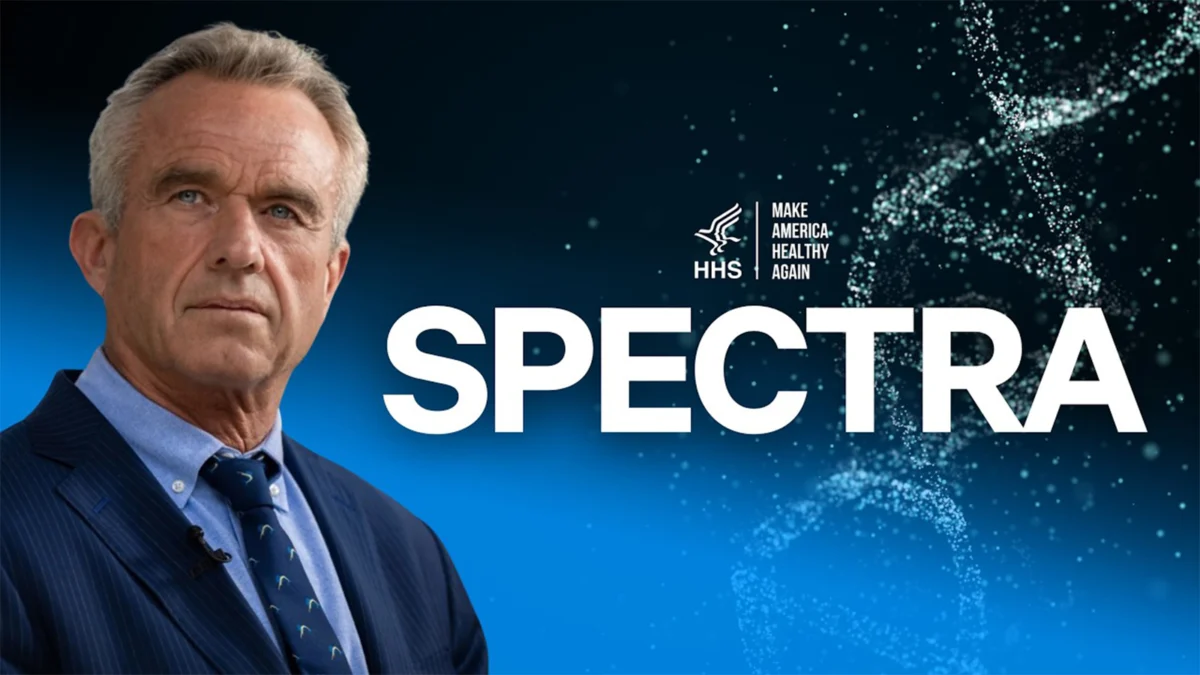
In a significant pivot for federal health policy, the U.S. Department of Health and Human Services (HHS) announced on Thursday the launch of a landmark research initiative aimed at dismantling the "one-size-fits-all" approach to autism spectrum disorder (ASD). Spearheaded by the Advanced Research Projects Agency for Health (ARPA-H), the initiative—titled Systems for Phenotypic Evaluation, Clinical Trajectories, Response, and Agency (SPECTRA)—seeks to integrate the fragmented landscape of biological, clinical, and environmental data to usher in an era of precision medicine for the autism community.
The program arrives at a critical juncture in American public health, as the prevalence of autism continues to climb and the scientific community grapples with the need for earlier, more actionable diagnostic tools.
The Mandate of SPECTRA: Decoding Complexity
At its core, SPECTRA is designed to address the profound heterogeneity of autism. For decades, the diagnostic framework for ASD has relied heavily on behavioral observations, often resulting in delayed interventions and a lack of clarity regarding long-term developmental trajectories.
"Autism is not one-size-fits-all, and our science and care cannot be either," HHS Secretary Robert F. Kennedy Jr. stated during the announcement. "SPECTRA will harness the best of American science and innovation to deliver those answers and turn them into better outcomes for people with autism and their families."
The program’s technical ambitions are vast. ARPA-H is soliciting research proposals that can synthesize disparate datasets—including genetic predispositions, epigenetic markers, microbiome signatures, and environmental exposure histories (the "exposome"). By weaving these variables into sophisticated computational models, the agency hopes to define distinct "subtypes" of autism. This taxonomy would allow clinicians to move beyond a broad label and toward a personalized clinical roadmap that predicts which interventions—whether behavioral, pharmacological, or environmental—will be most effective for a specific individual.
Chronology of Federal Autism Research Efforts
The launch of SPECTRA represents the latest chapter in an aggressive federal push to solve the mysteries of neurodevelopmental conditions. The timeline of recent government engagement reflects an evolving strategy:
- 2025: Following a year of intense internal debate and public scrutiny, HHS solidified its commitment to investigating environmental triggers for developmental disorders. This period saw the launch of an independent scientific advisory board, formed by researchers and advocacy leaders concerned about the politicization of autism research.
- Late 2025: HHS announced the $50 million Autism Data Science Initiative, a collaborative project aimed at leveraging big data to unlock the biological causes of ASD. Thirteen projects were awarded funding to establish a foundation for the more ambitious work now proposed by ARPA-H.
- September 2026: The official rollout of the SPECTRA program marks the transition from data gathering to applied, high-stakes technology development. ARPA-H has signaled that it intends to operate with the agility of a venture capital firm, prioritizing high-risk, high-reward projects that can fundamentally shift clinical practice.
Supporting Data: The Scale of the Challenge
The urgency of the SPECTRA initiative is underscored by data from the Centers for Disease Control and Prevention (CDC). According to the most recent findings, approximately 1 in 31 children aged 8 in the United States is identified with autism spectrum disorder.
Despite this high prevalence, the diagnostic process remains fraught with inefficiencies. Current clinical standards often require the manifestation of clear behavioral differences before a diagnosis can be confirmed. This "wait-and-see" approach frequently leads to missed opportunities for early intervention, which research consistently shows can significantly improve developmental outcomes.
Furthermore, the "biological complexity" mentioned by Russell Shilling, PhD, the program manager for SPECTRA, has long been a hurdle. "Over the past decade, we have become much better at recognizing autism and the substantial differences among people across the spectrum," Shilling noted. "Yet our approaches to assessment and care have not kept pace, and they overlook the behavioral and biological complexity of each person. SPECTRA is designed around that complexity."
Official Perspectives and the Scientific Community
The reception within the scientific community has been one of cautious optimism. For researchers who have long advocated for a more rigorous, tech-forward approach to autism, the influx of ARPA-H funding represents a rare opportunity to bridge the gap between bench science and bedside care.
Helen Tager-Flusberg, PhD, of Boston University and founder of the Coalition of Autism Scientists, expressed support for the program’s focus on technology. "This new ARPA-H initiative is a unique opportunity for the autism research community," Tager-Flusberg told MedPage Today. "It offers major funding to incorporate technology into clinical practices and interventions in innovative ways. As long as the review process is grounded in science and the projects are conducted by experienced researchers, following rigorous best practices, I am optimistic that this could be transformative."
However, the initiative also operates within a complex political climate. Secretary Kennedy has frequently centered his tenure on the investigation of environmental factors in autism—a stance that has drawn criticism from segments of the medical establishment that view his past rhetoric on vaccine safety as scientifically unsubstantiated. By launching SPECTRA, the administration is attempting to anchor its policy agenda in high-level, data-driven research, potentially creating a "scientific firewall" between political rhetoric and the actualized, peer-reviewed output of the program.
Strategic Implications: Four Pillars of Innovation
ARPA-H has delineated four specific technical areas where it seeks immediate innovation:
- Analysis: Developing tools capable of parsing massive, multi-modal datasets to identify hidden biomarkers for autism.
- Modeling: Creating digital twins or predictive models that simulate how a specific individual’s biology might respond to different environmental or therapeutic interventions.
- Precision Intervention: Moving toward adaptive therapies that change alongside the patient as they progress through different life stages.
- Enabling Technologies: Creating the hardware and software infrastructure—such as wearable sensors or rapid diagnostic kits—needed to deploy these high-level insights in real-world clinical settings.
The shift toward these technical areas suggests that ARPA-H is not merely looking for more observational studies. Instead, the agency is looking for "product-ready" solutions—tools that can be integrated into a pediatrician’s office or a community clinic within a condensed timeline.
Implications for the Future of Autism Care
The success of SPECTRA will ultimately be measured by its ability to shorten the timeline between the first signs of developmental divergence and the initiation of effective care. If the program succeeds in defining clear, biologically backed subtypes of autism, it could render the current "one-size-fits-all" diagnostic labels obsolete, replacing them with more granular, actionable profiles.
However, the implementation of such high-tech diagnostics poses new questions regarding equity. If precision care for autism becomes dependent on advanced genomic sequencing or proprietary computational models, how will the health system ensure that these tools reach underserved communities? How will the privacy of the deeply personal biological data required for these models be maintained?
These are questions that the scientific community and the federal government will need to answer in tandem. For now, the launch of SPECTRA represents a significant investment in the belief that the "complexity" of the human brain is not an insurmountable barrier, but a puzzle that can be solved through the application of the right data and the right technology.
As the agency begins to evaluate proposals, the focus will remain on whether these projects can move beyond the laboratory and into the hands of the families who need them most. For the autism community, the hope is that this effort finally brings the speed and precision of 21st-century medicine to the challenge of neurodiversity.
For researchers and institutions interested in the program, solicitation documents and submission deadlines are currently available on the official SPECTRA website.