









By STAT Staff
The landscape of American public health is shifting under a new administration, marked by high-stakes political maneuvering, evolving crises in addiction medicine, and a deepening public skepticism toward traditional scientific institutions. As the White House pivots toward a "Make America Healthy Again" (MAHA) agenda, the ripple effects are being felt from the halls of Congress to the shelves of local gas stations and the waiting rooms of pediatricians.
Main Facts: A Shifting Federal Strategy
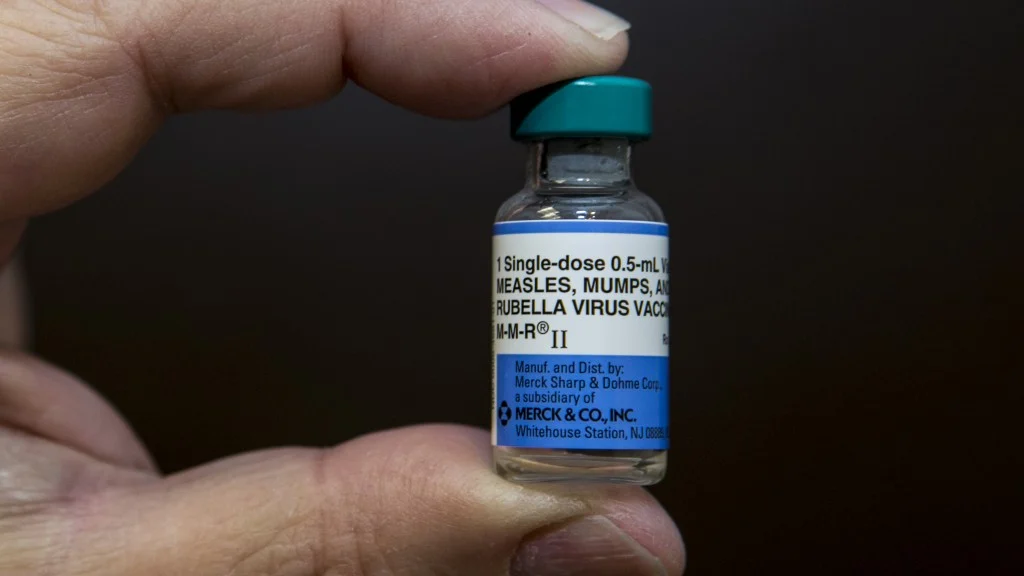
The current federal health policy is defined by a central tension: the promotion of alternative health paradigms championed by Health Secretary Robert F. Kennedy Jr. and a simultaneous executive push to fundamentally alter the pharmaceutical manufacturing landscape. President Trump’s recent Oval Office pronouncements—specifically regarding the decoupling of multi-valent vaccines—represent a direct challenge to established immunization protocols.
Parallel to these high-level policy shifts, the ground-level reality of addiction is changing. The emergence of highly potent, synthetic-adjacent forms of kratom—a substance traditionally sold as a mild herbal supplement—has introduced a new front in the nation’s substance abuse crisis. As clinics report an influx of patients struggling with withdrawal symptoms comparable to those of illicit opioids, medical professionals are sounding the alarm on a drug supply that remains largely unregulated at the federal level.
Chronology: The Timeline of Policy and Crisis
- Last Month: President Trump signs an executive order advocating for a reduction in the pediatric vaccine schedule and proposing that combined injections, such as the MMR (measles, mumps, and rubella) vaccine, be split into individual doses to minimize systemic load.
- Early September: Secretary Robert F. Kennedy Jr. intensifies his "Make America Healthy Again" campaign, traveling to battleground states to support Republican candidates, framing his mission as a populist crusade against chronic disease.
- Friday, Sept. 21: President Trump announces a further escalation of his vaccine policy, suggesting that drug companies should reduce the antigen concentration in individual shots, essentially requiring children to receive as many as five injections to cover what is currently delivered in one.
- Current Week: Medical professionals, including recovery center operators, report a surge in patients seeking treatment for kratom withdrawal, noting that the drug is now being engineered to act more aggressively on opioid receptors.
Official Responses and the Political Calculus
The political strategy behind the administration’s health agenda is, in part, an effort to consolidate a base of voters disillusioned with the status quo. In Iowa, for instance, the presence of Secretary Kennedy at campaign stops for gubernatorial candidate Zach Lahn underscores the administration’s belief that the MAHA agenda is a potent electoral tool.
"RFK Jr.’s story is one that I have long admired," Lahn stated during a recent event, highlighting how the Secretary’s narrative regarding chronic disease and pharmaceutical skepticism resonates with voters who feel alienated by mainstream healthcare. For the administration, this isn’t just about health; it is about political survival. By framing the upcoming midterm elections as a referendum on his mission, Kennedy is attempting to convert the MAHA movement into a reliable GOP voting bloc.
However, the medical establishment remains starkly opposed to the President’s vaccine demands. The claim, repeated by the President in the Oval Office, that splitting vaccines will result in a "massive reduction in autism" is a debunked theory that has caused immense friction between the White House and the scientific community. As CMS Administrator Dr. Mehmet Oz prepares to announce further administrative changes, health officials are bracing for a period of profound uncertainty regarding public immunization standards.
Supporting Data: The Gaps in Clinical Knowledge
Beyond the headlines of political theater, a more granular issue exists in the world of clinical research. A group of researchers from Brown University has highlighted a systemic failure in the transparency of drug trials: the inability for pregnant and lactating people to readily identify suitable studies.
The primary database for medical research in the United States, ClinicalTrials.gov, currently lacks a standardized mechanism for researchers to flag whether a study is open to or safe for pregnant participants. This lack of data creates a "blind spot" in medicine, where drugs are frequently prescribed to pregnant patients without sufficient evidence of their impact on fetal development or lactation.
The professors argue that a simple "checkbox" addition to the eligibility criteria on ClinicalTrials.gov would be a low-cost, high-impact intervention. While they acknowledge that this would not solve the overarching issue of data scarcity in maternal health, it represents a necessary step toward building a more inclusive and evidence-based clinical infrastructure.
The Kratom Withdrawal Crisis
The emergence of "gas station drugs" that mimic the effects of traditional opioids represents a dangerous evolution in the addiction landscape. Myles Jen Kin, who operates two inpatient recovery centers, describes a "withdrawal crisis" that has taken many providers by surprise.
"We’re basically treating it as if it’s fentanyl or oxycodone or heroin," Jen Kin said. The danger lies in the lack of consistency. Because kratom is often sold as a powder or extract without standardized regulation, the potency varies wildly. Patients who believe they are purchasing a mood-enhancer are often unknowingly consuming substances that have been modified to interact directly with the brain’s opioid receptors. The resulting withdrawal symptoms are severe, leaving clinics to grapple with a new, rapidly growing patient population that does not fit the typical profile of opioid users.
Implications: Trust, Alienation, and the Future of Science
Perhaps the most profound development in this cycle is the candid reassessment of how the scientific community communicates with the public. STAT reporter Nick Florko, in a deeply personal essay, argues that the growing chasm between the public and health officials is not merely a failure of scientific literacy, but a failure of empathy.
Florko, who suffers from chronic health conditions including high blood pressure and ADHD, notes that his own journey through the healthcare system has often been one of frustration and confusion. When individuals feel ignored or unheard by the "medical establishment," they naturally gravitate toward figures who validate their pain, even if those figures promote scientifically questionable claims.
"The more illuminating question isn’t whether people trust scientists," Florko writes, "but rather what happens when scientific knowledge collides with emotions like fear, confusion, and frustration."
As the nation moves toward the November elections, the implications of this collision are clear:
- Policy Instability: The administration’s focus on vaccine protocols threatens to disrupt long-standing public health immunization schedules, potentially leading to lower uptake of essential preventatives.
- Addiction Infrastructure: Without federal regulation of substances like potent kratom, the burden of care will continue to fall on the shoulders of local recovery centers, which are already nearing capacity.
- The "Trust" Deficit: The ongoing effort to bridge the gap between scientific experts and a skeptical public will likely define the success or failure of future public health initiatives. If the scientific community continues to view skepticism as a purely intellectual failure rather than an emotional response to systemic alienation, they will likely continue to lose ground to populist health movements.
Ultimately, the challenges facing the U.S. health system are multifaceted. Whether it is the desperate search for an explanation for chronic illness, the dangers of unregulated street drugs, or the political weaponization of vaccine safety, the common thread is a profound need for transparency and connection. As STAT continues to cover these developments, the focus will remain on the intersection of data, policy, and the lived human experience.
For those interested in further reading, we recommend "Legacy" by Uche Blackstock, "Healing" by Theresa Brown, and the updated "The Emperor of All Maladies." Additionally, for a poignant look at the cultural hurdles of the American medical system, "The Spirit Catches You and You Fall Down" remains an essential text.