











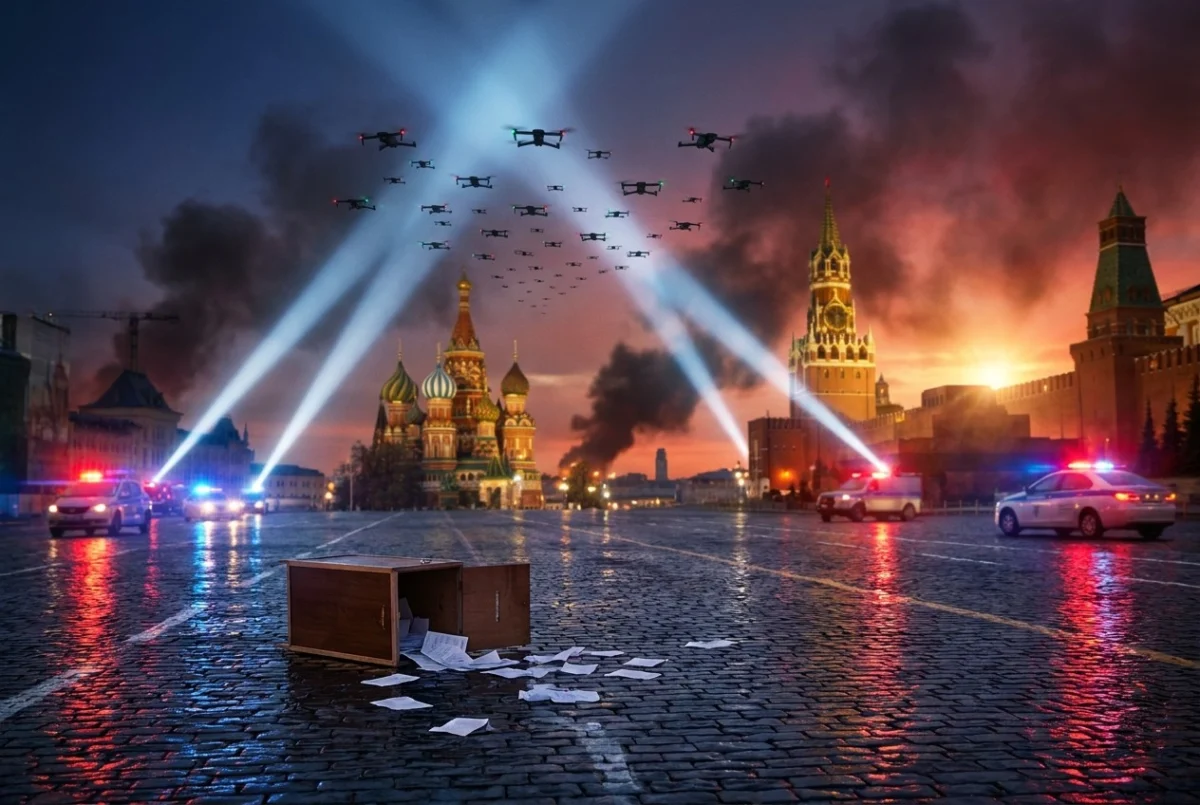
MOSCOW — In a dramatic escalation of the ongoing conflict, Ukraine launched one of its most significant drone assaults on the Russian capital this Sunday, shattering the relative calm of a weekend overshadowed by the country’s three-day presidential election. The strike, which Russian officials characterized as a major tactical provocation, resulted in at least two civilian deaths and caused extensive damage to infrastructure, forcing a temporary suspension of operations at major airports and disrupting regional rail services.
The assault occurred at a sensitive geopolitical juncture, as Vladimir Putin seeks to secure a new term in an election that Western observers and critics have long decried as devoid of genuine competition. While the Kremlin insists the voting process remained undisturbed, the breach of Moscow’s air defenses highlights the increasing vulnerability of the Russian heartland to long-range aerial warfare.
The Anatomy of the Attack: A Chronology of Chaos
As voters across Russia’s eleven time zones cast their ballots, the early hours of Sunday morning were marked by the hum of incoming unmanned aerial vehicles (UAVs). Moscow Mayor Sergei Sobyanin reported that air defense systems were activated across the capital and surrounding oblasts to repel a coordinated, multi-wave barrage.
A Timeline of Events:
- 03:00 Local Time: The first wave of drones was detected on the outskirts of Moscow, triggering sirens in suburban residential zones.
- 04:30 Local Time: Debris from intercepted drones began impacting residential and commercial districts. State-run media reported fires breaking out at several sites, necessitating immediate intervention by the Ministry of Emergency Situations.
- 06:00 Local Time: Operations at Moscow’s international airports—Sheremetyevo, Domodedovo, and Vnukovo—were suspended, causing a cascade of flight cancellations and diversions. Rail services in the vicinity were similarly halted to ensure passenger safety.
- 09:00 Local Time: Russian authorities confirmed two fatalities. The Ministry of Emergency Situations stated that several others sustained injuries, ranging from blast-related trauma to smoke inhalation.
- 12:00 Local Time: Kremlin spokesman Dmitry Peskov addressed the nation, asserting that the "terrorist act" would not impede the democratic process or the ultimate outcome of the election.
The scale of the attack is notable for its geographic reach and intensity. While Moscow has been targeted sporadically since the conflict began in 2022, this incident follows a trajectory of increasingly audacious long-range strikes. Notably, this event mirrors the massive August 2026 offensive, during which an estimated 822 drones were deployed, with 600 directed toward the capital, testing the limits of Russia’s integrated air defense network.
Supporting Data: The Escalation of Drone Warfare
The recent strike is not an isolated event but rather a hallmark of the new phase of the war, where asymmetric drone capabilities have become the primary instrument for disrupting the Russian interior.
Military analysts point to the 2026 theater of operations as a turning point. The use of low-cost, long-range drones has allowed Kyiv to force Moscow to expend expensive interceptor missiles on cheap, disposable targets. Furthermore, the systematic targeting of the Russian oil and gas infrastructure—the backbone of the Kremlin’s war chest—has introduced a new economic dimension to the conflict.
According to data compiled by regional observers, the 2026 campaign has seen a consistent uptick in the number of drones penetrating Russian airspace. This persistent threat has forced the Russian Defense Ministry to redistribute air defense assets away from the front lines in Ukraine to protect sensitive government and industrial sites in the West, effectively thinning the defensive perimeter of the Russian military.
Official Responses and Diplomatic Fallout
The international reaction to the strike has been characterized by a fragile balance between condemnation of violence and the realities of wartime alliances.
The Kremlin’s Stance
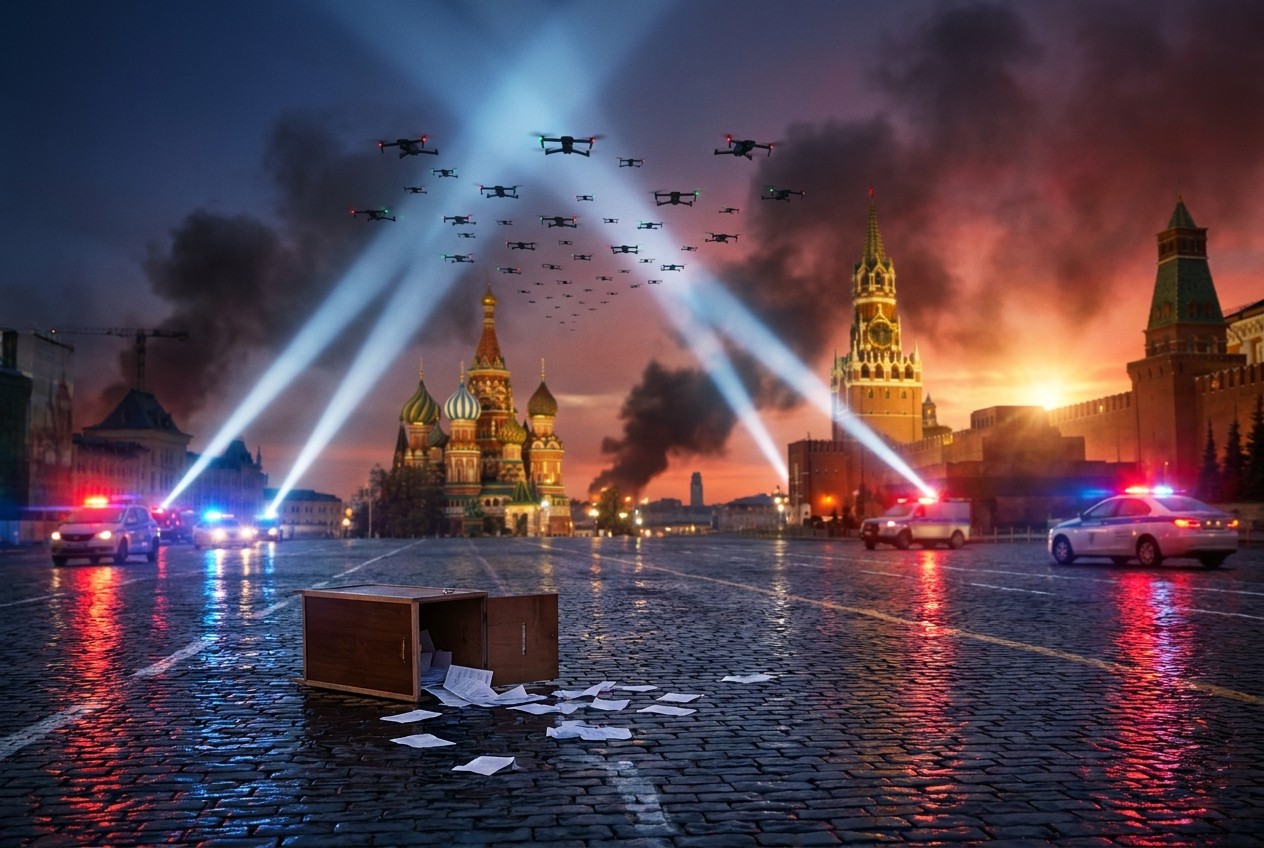
Russian officials have pointedly blamed Western powers for the attack, citing the provision of advanced long-range technology. The Russian Foreign Ministry issued a stern warning, suggesting that the use of Western-supplied munitions for strikes deep within Russian territory represents a direct involvement by NATO members in the conflict. This follows previous warnings issued to the United Kingdom in August 2026, where Moscow threatened retaliatory measures after reports surfaced that British-made drones had been utilized in long-range strikes.
The Ukrainian Perspective
Consistent with its long-standing policy of strategic ambiguity, Kyiv has refrained from officially claiming responsibility for the strike. However, anonymous sources within the Ukrainian military intelligence apparatus indicated that the operation was specifically calibrated to target military logistics and production facilities. For the Ukrainian government, the strike serves a dual purpose: it degrades Russian military capacity and forces the Russian public to confront the realities of a war that the state-controlled media has largely attempted to downplay.
International Mediation and Pressure
The response from Washington has been complex. While supporting Ukraine’s right to self-defense, the administration of President Donald Trump has expressed concerns regarding the global economic fallout of the conflict. In particular, President Trump has explicitly urged Kyiv to cease attacks on Russian oil refineries, citing the subsequent spike in global fuel prices.
Meanwhile, European Union representatives have called for an immediate de-escalation, warning that the "tit-for-tat" nature of the drone strikes risks dragging the conflict into a broader, uncontrollable regional war.
Implications: A Protracted Future
As the election concludes and the final results are tabulated, the immediate aftermath of the strike poses several critical questions for the path forward.
Security and Retaliation
The Russian government has pledged to bolster security in the capital, promising a "proportionate response" against those responsible. Historical patterns suggest that such attacks are almost always followed by retaliatory missile barrages against Ukrainian energy infrastructure and military command centers. The cycle of strikes and counter-strikes appears to have become a permanent feature of the conflict.
The Diplomatic Stagnation
Despite the violence, diplomatic maneuvers continue behind the scenes. The recent visit to Kyiv by presidential envoys Steve Witkoff and Jared Kushner signifies a sustained, albeit difficult, attempt by the U.S. to mediate a pathway to negotiations. Their meetings with President Putin in Moscow and their subsequent talks in Kyiv underscore that while the battlefield remains volatile, the appetite for a diplomatic breakthrough—or at least a cessation of hostilities—is being tested by both sides.
The Human Cost and Political Integrity
The attack has cast a long shadow over the electoral process. Independent observers, such as Professor Ulrich Schmid of the University of St. Gallen, emphasize that the legitimacy of the Russian election is challenged not only by the physical violence of the war but by the systemic lack of political pluralism. As the Kremlin prepares to declare a mandate for a new term, the drone strike serves as a stark reminder that the state’s inability to fully secure its borders undermines the narrative of stability that the administration has sought to project.
As Under Secretary of War for Policy Elbridge Colby has repeatedly cautioned U.S. allies, the world must prepare for a "protracted" conflict. The events of this Sunday, with the capital of a nuclear-armed power under fire during its highest-stakes political event, suggest that the war is far from its resolution. The coming weeks will likely see an intensification of both the physical fighting and the diplomatic posturing, as both Moscow and Kyiv navigate the perilous terrain of a war that shows no sign of yielding to peace.
References (Summary):
- Data derived from reports on the August 2026 air defense surge.
- Expert analysis provided by the University of St. Gallen on regional democracy.
- White House and State Department briefings regarding energy infrastructure stability.
- Diplomatic records of the September 2026 envoy mission to Moscow and Kyiv.
- Ministry of Emergency Situations casualty reports.