










Written by Erin O’Neil, LCSW
The 2023 Barbie movie became a cultural phenomenon, dominating the global box office and sparking vibrant, pink-hued conversations in every corner of the internet. While audiences were captivated by the film’s stunning aesthetic, infectious soundtrack, and lighthearted character dynamics, the movie served as a Trojan horse for a much deeper, more somber critique of contemporary society. Beneath the plastic veneer of Barbie Land lies a piercing commentary on the structural harms caused by rigid, often contradictory, gender role expectations.
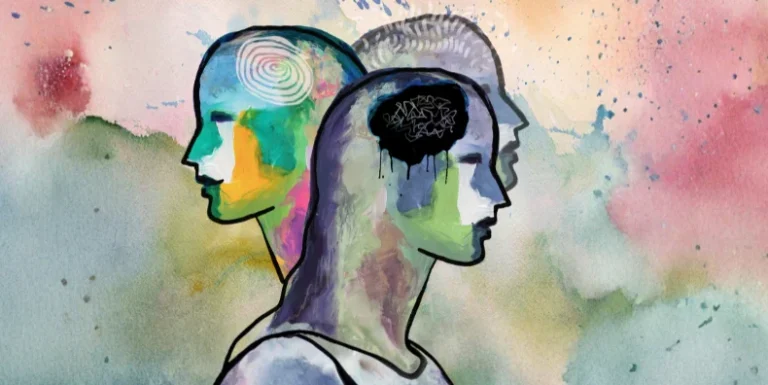
As we watch the titular character navigate a jarring identity crisis, it becomes impossible to ignore the parallel struggle facing our teenagers today. For young adolescent girls, the pressures depicted on screen are not just satirical tropes; they are the lived realities of an entire generation struggling to define their identities under the weight of "role overload."
The Anatomy of the Impossible Standard
The centerpiece of the film’s social commentary is a now-iconic monologue delivered by America Ferrera’s character, Gloria. In it, she captures the essence of the modern female experience: "It is literally impossible to be a woman."
This sentiment articulates the Gender Role Strain Paradigm, a concept pioneered by Joseph Pleck in the 1980s. The theory posits that individuals experience "Gender Role Discrepancy Strain" when they feel a constant, suffocating pressure to adhere to societal expectations that are fundamentally at odds with their authentic selves.
For women, this manifests as a series of constant contradictions: "You have to be thin, but not too thin… You have to have money, but you can’t ask for money because that’s crass… You’re supposed to love being a mother but don’t talk about your kids all the damn time." When these expectations remain unmet, the resulting sense of failure triggers an identity crisis. This conflict between personal experience and societal demand is a primary driver of declining mental health, correlating with higher rates of anxiety, depressive episodes, self-harm, and suicidality.
Chronology of a Crisis: From Childhood to College
The developmental stage of adolescence is, according to psychologist Erik Erikson, defined by the tension between "Role Identity" and "Role Confusion." It is a period where the central task is to solidify a core sense of self that remains resilient through life’s inevitable transitions.
Historically, this stage allows for healthy experimentation—trying on different interests, social circles, and personality traits. However, for the modern teen girl, this experimentation is being suffocated.
The Developmental Timeline:
- Pre-Adolescence: Girls are socialized to balance multiple spheres: high academic performance, physical fitness, social media curatorship, and interpersonal kindness.
- Early Adolescence (Ages 13–15): The pressure to be "Superhuman" begins to eclipse the ability to explore. Girls report feeling the need to be assertive yet reserved, fearless yet responsible.
- Late Adolescence (Ages 16–18): "Role overload" peaks. As girls approach graduation, the sheer volume of roles they are expected to occupy leads to chronic self-criticism and a profound loss of confidence.
- Early Adulthood (Ages 18–22): The transition to college or the workforce often results in a continuation of these pressures, manifesting as unprecedented levels of burnout and loneliness, as reported by institutions like UCLA.
Supporting Data: The Rising Tide of Mental Health Struggles
The consequences of this "Superhuman" mandate are not merely anecdotal; they are reflected in cold, hard data. A 2017 Pew Research Center survey revealed that 96 percent of teenagers identify anxiety and depression as significant problems within their peer groups.
The most alarming statistics, however, are gender-specific. According to a 2023 report from the Centers for Disease Control and Prevention (CDC), the mental health of teenage girls has reached a critical tipping point. In 2021, 57 percent of teen girls in the United States reported feeling persistently sad or hopeless—a rate double that of their male peers. Perhaps most harrowing is the finding that one-third of girls surveyed reported considering suicide, marking a 60 percent increase from just a decade prior.

This phenomenon does not end at the high school diploma. Research into the collegiate experience shows that female students consistently report higher rates of emotional stress and, in some cases, higher consideration of dropping out compared to their predecessors. The "invisible work"—the cognitive and emotional labor of managing relationships, family logistics, and future planning—often falls disproportionately on women, leading to a state of chronic burnout that begins in the classroom and follows them into the boardroom and the home.
Expert Perspectives: The Myth of the "Superhuman"
Rachel Simmons, author of Enough As She Is, provides vital insight into why this pressure is so destructive. In her research, she highlights that high school girls—even those who are high-achieving, athletic, and academically gifted—exhibit the lowest levels of self-compassion of any youth demographic.
"They feel the pressure to be ‘Superhuman,’" Simmons notes. When a girl’s self-worth is tethered entirely to her output—her grades, her social media likes, her athletic achievements—the capacity for self-compassion evaporates. Instead of viewing herself as a human being with inherent value, she views herself as a project that is never quite finished.
Mental health professionals are increasingly observing that this "role overload" is a barrier to the therapeutic process. When a client arrives in a clinical setting, they are often so busy performing the roles required of them by society that they lack the psychological space to identify what they actually want, feel, or need.
The Implications for Future Generations
The implications of this cultural environment are profound. If we continue to teach young girls that they must be everything to everyone, we are essentially training them for a life of perpetual dissatisfaction.
Key Implications:
- Erosion of Identity: Without the space to experiment, girls are adopting "borrowed" identities that are designed to please external observers rather than foster internal fulfillment.
- Burnout Cycles: The transition from the "Superhuman" student to the "Superhuman" employee/mother creates a cycle of burnout that is increasingly difficult to break without significant systemic change.
- Increased Clinical Burden: The mental health system is seeing a surge in demand for services that address not just trauma, but the specific symptoms of societal alienation and role-related stress.
Path Forward: Creating Spaces to "Simply Be"
If society is slow to shift, the responsibility falls on caregivers, educators, and mental healthcare providers to create "safe zones" where teens can exist without the mandate of performance.
As clinicians, the focus must shift toward modeling a life that rejects the "Superhuman" myth. We must provide environments where the criteria for success are not tied to accolades, but to authenticity. This means:
- Prioritizing Rest: Normalizing the act of saying "no" to extracurriculars or social commitments to protect mental health.
- Validating Complexity: Encouraging teens to express feelings of confusion or failure without immediately rushing to "fix" the problem or offer a performance-based solution.
- Challenging the Narrative: Explicitly discussing the contradictions of gender roles in the home and the classroom to demystify the pressure they feel.
America Ferrera’s character summarized the struggle perfectly: "We have to always be extraordinary, but somehow we’re also always doing it wrong." This is the message our teenage girls receive daily. To combat it, we must provide them with the permission to be ordinary, to be imperfect, and most importantly, to be themselves. By carving out these spaces, we can help the next generation move beyond the impossible standards of today and develop into confident, self-assured adults who define their own worth.
About the Author: Erin O’Neil, LCSW, is a clinician specializing in the treatment of addiction and post-traumatic stress. She utilizes trauma-informed modalities, including EMDR and Somatic Experiencing, to help clients navigate the complexities of identity and healing in a high-pressure world.