










As we cross the threshold of 55, the definition of "fitness" shifts. It is no longer merely about the aesthetics of muscle mass or the ability to endure a high-intensity interval session. Instead, longevity-focused training centers on functional independence: the ability to move through the world with grace, stability, and resilient strength.
Maintaining physical capability after 55 is often dictated by one’s ability to remain upright, manage external loads, and navigate three-dimensional space. While gym machines offer a safe environment for hypertrophy, they often fail to translate to the "real-world" demands of daily life. To truly gauge your body’s current state of readiness, you must look toward standing, weight-bearing exercises.
This article explores three fundamental movements—the dumbbell lateral lunge, the dumbbell push press, and the suitcase carry—that serve as a benchmark for functional aging. By mastering these, you aren’t just training for a mirror; you are training for life.
The Core Philosophy: Why Standing Movements Matter
When you exercise on a machine, your stabilization work is often done for you. The machine dictates the path of motion, removing the need for your core to engage in multi-planar stabilization. In contrast, standing exercises force your feet to stay connected to the floor while your kinetic chain—from your ankles to your shoulders—works in harmony to control a load.
This demand for coordination is the secret weapon of longevity. As we age, the first things to decline are often balance, coordination, and the ability to stabilize under load. By choosing exercises that require you to manage your center of gravity while moving, you are directly combatting the sedentary stagnation that leads to stiffness and mobility loss. The goal here is not to chase a "max-effort" ego lift, but to achieve movement mastery: the ability to control a challenging load with perfect form, session after session.
1. The Dumbbell Lateral Lunge: Unlocking Hip Mobility
Most human movement occurs in the sagittal plane—moving forward and backward. However, life rarely happens in a straight line. Reaching for a grocery item, stepping around a puddle, or reacting to a sudden shift in terrain requires lateral stability.
The Mechanism of Action
The lateral lunge forces your hips to accept load in a way that traditional squats cannot. By stepping to the side, you stretch the adductors of the stationary leg while the glutes and quads of the moving leg work to stabilize your descent. This movement is the ultimate litmus test for hip health. If you can move into a deep lateral lunge and return to center without losing your balance or collapsing your torso, your hip mobility is in excellent standing.

Execution and Standards
- The Technique: Stand tall, feet together. Step out to the side with one leg, keeping the trailing leg straight. As you land, push your hips back, ensuring the working foot stays planted and the knee tracks over the toes. Drive through the heel to return to the starting position.
- Mastery Standard: Eight controlled repetitions per side. Your heel should remain glued to the floor, and your chest should remain upright throughout the range of motion.
- Form Tip: The "travel" of the hips is crucial. Think about pushing your butt backward, not just bending your knee.
2. The Dumbbell Push Press: Building Explosive Strength
As we age, we often lose our "fast-twitch" muscle fibers, which are responsible for power and reaction speed. The dumbbell push press is an exceptional tool for maintaining that explosive capacity.
Why It’s Vital for the 55+ Athlete
The push press bridges the gap between lower-body power and upper-body strength. By using a "dip and drive" technique, you teach your body how to transfer force from the floor, through your core, and into your arms. This improves bone density in the shoulders and legs while enhancing core stability. If the sequence feels disjointed, it is a sign that your power transfer system—the kinetic chain—could use some refinement.
Execution and Standards
- The Technique: Start with dumbbells at your shoulders. Perform a short, shallow dip with your knees, then explosively drive upward, using the momentum from your legs to press the weights overhead.
- Mastery Standard: Eight clean, rhythmic reps with a challenging load. Your feet should remain planted, and you must achieve full overhead lockout with a neutral spine.
- Form Tip: Keep the dip short. If you find yourself squatting, you’ve turned a power movement into a leg workout. Keep it crisp and vertical.
3. The Suitcase Carry: The Gold Standard for Trunk Control
If you could only pick one exercise to ensure physical independence in your 80s, the suitcase carry should be at the top of the list. It is the ultimate test of unilateral core stability and grip strength.
The Real-World Application
The suitcase carry is deceptively simple: walk while holding a heavy weight in one hand. Because the weight pulls you toward one side, your obliques and deep stabilizers must fire to keep your spine straight. This is exactly what your body does when you carry a heavy suitcase, a bag of mulch, or a grandchild. If you cannot maintain a steady gait while holding a load, you are at a higher risk of trips, falls, and lower back strain.
Execution and Standards
- The Technique: Grab a heavy dumbbell. Stand as tall as possible, pulling your shoulder blades back. Walk with a steady, deliberate pace. Do not let the weight tilt your body toward the side of the load.
- Mastery Standard: A 30-to-45-second carry per side with a challenging weight. If your stride shortens or you begin to lean like the Leaning Tower of Pisa, the weight is too heavy.
- Form Tip: Imagine you are walking along a tightrope. Keep the weight slightly away from your thigh to ensure your core is doing the work, not your hip bone.
Chronology of Progress: How to Implement This Protocol
You do not need to overhaul your entire life to see results. Mastery is a process of incremental growth.
- Phase 1 (Weeks 1-4): Focus strictly on the "Bodyweight" and "Lightweight" variations. Use a mirror to monitor your form. Your goal is to establish the motor pattern without fatigue.
- Phase 2 (Weeks 5-8): Introduce moderate weight. The focus here is on the Mastery Standard reps. If you cannot hit the reps with perfect form, stop. Quality is the only metric that matters.
- Phase 3 (Weeks 9+): Once you achieve the Mastery Standards, integrate these movements into your regular training rotation 2-3 times per week.
Supporting Data and Scientific Context
The literature on aging and physical performance is clear: inactivity leads to a decline in neuromuscular control. A study published in the Journal of Gerontology highlights that sarcopenia (age-related muscle loss) is exacerbated by the loss of stability and mobility in the lower body.
Furthermore, research in the National Library of Medicine suggests that unilateral training (working one side at a time, as seen in the suitcase carry and lateral lunge) is superior for older adults because it exposes "asymmetries." If your left side is significantly weaker than your right, it creates an imbalance that, if left uncorrected, leads to injury. By using these three movements, you are not just building muscle; you are proactively correcting the imbalances that lead to chronic pain.

Implications for Long-Term Health
What does it mean to "master" these moves? It means that your biological age is likely performing well ahead of your chronological age.
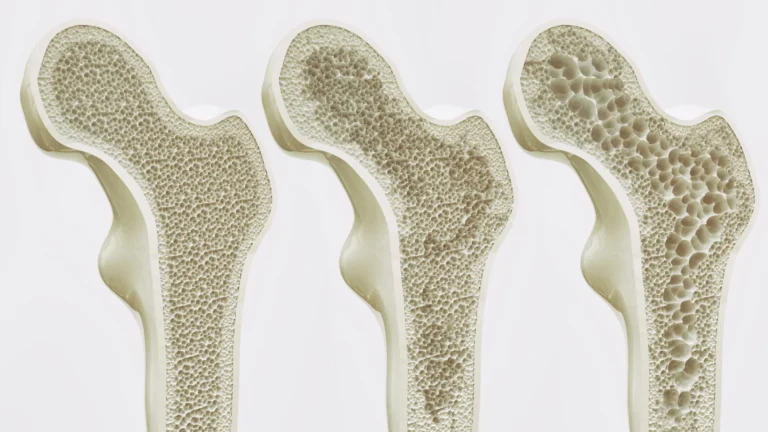
When you can handle these loads, you are training your nervous system to be reactive and resilient. You are building the bone density required to prevent fractures, the grip strength associated with better longevity outcomes, and the core stability that protects your spine.
However, it is vital to listen to your body. If one movement feels particularly difficult, it is not a sign to quit—it is a sign that you have found a "weak link" in your kinetic chain. Treat that movement as your priority. Use it as a diagnostic tool. If the lateral lunge is hard, your hips are tight; if the push press is hard, your thoracic mobility is likely the culprit.
Conclusion: The Path Forward
You are not "too old" to build strength, and you are never too old to refine your movement patterns. The 55-plus demographic is uniquely positioned to benefit from these exercises, as they offer the highest "return on investment" for daily functionality.
By incorporating the lateral lunge, the push press, and the suitcase carry into your routine, you are taking ownership of your physical future. You are ensuring that when you are 75, you will still be able to lift your own bags, move with confidence, and—most importantly—remain the master of your own movement. Stay consistent, keep the standards high, and let your strength be the foundation of your quality of life.