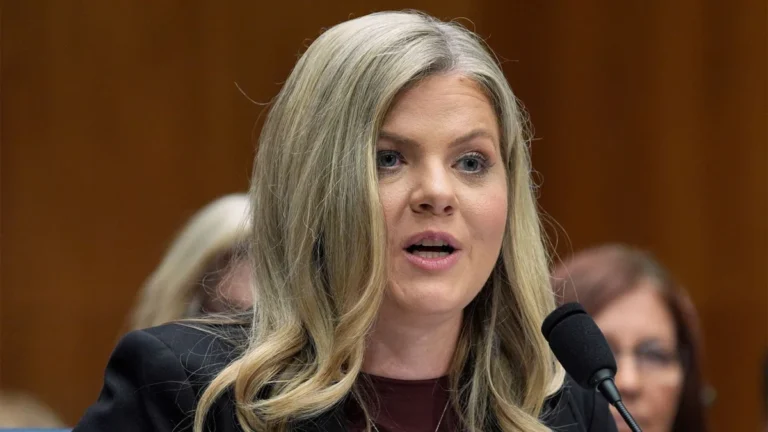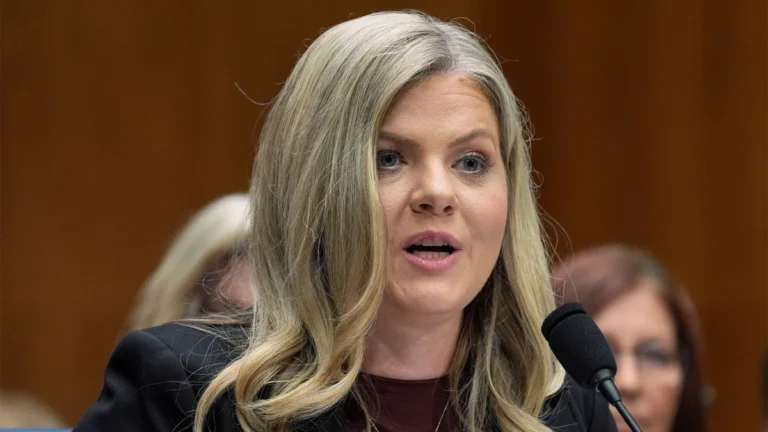










WASHINGTON — The confirmation hearing for Dr. Heidi Overton, President Trump’s nominee to serve as the Commissioner of the Food and Drug Administration (FDA), unfolded this week as a masterclass in political strategic ambiguity. Before the Senate committee charged with vetting her suitability for one of the most powerful public health posts in the world, the rural New Mexico physician faced a grueling two-hour gauntlet. Senators pressed her on the most contentious fault lines in American medicine: the safety of childhood vaccines, the geopolitical influence of China on the pharmaceutical supply chain, and the future of abortion access in a post-regulatory landscape.
Overton, a preventive medicine specialist with deep ties to the previous Trump administration, navigated the hearing with a disciplined, albeit frustratingly opaque, adherence to bureaucratic neutrality. For those seeking clarity on how she might steer the agency under the guidance of Health and Human Services Secretary Robert F. Kennedy Jr., the hearing provided little in the way of firm commitments.
The Main Facts: A Portrait of Caution
Dr. Heidi Overton arrives at the nomination stage with a unique profile. As a physician who has practiced in rural New Mexico, she brings a perspective often absent from the high-level corridors of the FDA—one grounded in the realities of community health. However, her time serving in the White House during both of President Trump’s terms has cast her as a political insider, raising concerns among critics about her independence from the executive branch’s policy agenda.
The core tension of the hearing centered on the FDA’s role as an independent scientific arbiter versus its status as an executive agency subject to the political whims of the administration. When faced with questions regarding the potential re-evaluation of childhood vaccine safety standards or the regulatory status of mifepristone, Overton consistently retreated to the safety of existing agency guidelines. She framed her approach as one of respect for current legal precedents and established scientific consensus, a tactic that successfully avoided immediate political landmines but drew sharp rebukes from both sides of the aisle.
Chronology of the Hearing
The hearing began with opening statements that set a somber, high-stakes tone. Chairman of the committee opened the floor by emphasizing the FDA’s role in maintaining public trust—a trust that has been eroded by years of politicization.
- Hour 1: The Regulatory Philosophy. Overton spent the first hour outlining her commitment to "evidence-based decision-making." She spoke of her experiences in rural New Mexico, noting that the FDA’s approval process is the bedrock upon which patient trust is built. However, when pressed on whether she would uphold the FDA’s current approval of mifepristone, she declined to offer a personal opinion, stating only that she would follow the law as it stands.
- Hour 1:30: The Vaccine Debate. As the conversation turned to childhood immunization, senators probed whether she would support an audit or a pause in existing vaccine schedules, a position championed by Secretary Kennedy. Overton maintained that the current schedule is supported by robust data but remained silent on whether she would authorize a review process that could lead to policy changes.
- Hour 2: The Final Push. In the concluding half-hour, Sen. Chris Murphy (D-Conn.) voiced the frustration felt by many in the room. "You’ve done a pretty good job of avoiding answering questions so far," Murphy remarked, highlighting the disconnect between the committee’s demand for transparency and the nominee’s strategic silence.
Supporting Data and The Regulatory Landscape
To understand the significance of Overton’s nomination, one must look at the data currently surrounding the FDA’s mandate. The agency oversees products accounting for roughly 20 cents of every dollar spent by American consumers. Its influence on global pharmaceutical supply chains—particularly the reliance on active pharmaceutical ingredients (APIs) manufactured in China—has become a matter of national security.
Pharmaceutical Dependency
Recent reports indicate that China accounts for a significant percentage of the global supply of critical drugs and antibiotics. During the hearing, Overton acknowledged that diversifying the supply chain is a priority, yet she stopped short of outlining a specific regulatory framework to reduce reliance on Chinese manufacturing, citing the complexity of global trade and the risk of immediate drug shortages if a sudden decoupling were forced.
Vaccine Hesitancy
The FDA’s role in vaccine approval is currently under intense scrutiny. Recent polling data indicates that public confidence in institutional health messaging has plummeted since 2020. Overton’s challenge is to bridge this gap. Her supporters argue that her rural background allows her to communicate more effectively with skeptical populations, while her detractors argue that her refusal to push back against anti-vaccine rhetoric within the administration’s inner circle could further degrade public trust.
Official Responses and Political Reactions
The reaction to Overton’s performance has been sharply divided along party lines, with a layer of skepticism from moderates.

Republican Support: Proponents of the nomination argue that Overton’s refusal to "take the bait" is a sign of a disciplined leader who understands that an FDA Commissioner must not be a partisan activist. "She is a professional who respects the process," said one Republican aide familiar with the nomination strategy. "She isn’t going to let herself be painted into a corner by grandstanding senators."
Democratic Opposition: Conversely, Democratic members of the committee expressed alarm at her lack of concrete commitments. "The FDA is not a place for ‘no comment’ when it comes to the reproductive rights of women or the fundamental safety of our children," noted a ranking member after the hearing. The concern is that if confirmed, Overton will serve as a vessel for the ideological goals of the White House and Secretary Kennedy, effectively bypassing the rigorous, data-driven guardrails that have historically defined the agency.
Implications: A New Era for the FDA?
The implications of a confirmed Heidi Overton reach far beyond the Beltway. If she is installed as Commissioner, the FDA will likely undergo a significant cultural shift.
The Influence of Robert F. Kennedy Jr.
The most significant variable in the Overton equation is her relationship with HHS Secretary Robert F. Kennedy Jr. Kennedy has been vocal about his desire to "clean house" at the FDA, specifically regarding the "capture" of the agency by pharmaceutical interests. If Overton is confirmed, the industry will be watching closely to see if she acts as a firewall against extreme policy changes or as a facilitator for the Secretary’s agenda.
The Legal and Scientific Fallout
If the FDA attempts to unilaterally alter the approval of drugs like mifepristone or significantly alter vaccine safety oversight, the agency will almost certainly face immediate litigation. The legal battleground would test the limits of executive power over independent regulatory bodies. Overton’s performance during the hearing suggests she is preparing for a tenure defined by legal caution, likely leaning on the career staff at the FDA to justify decisions that might otherwise be seen as politically motivated.
The Global Perspective
From an international standpoint, the stability of the FDA is paramount. Global drug development relies on the FDA’s standards being the "gold standard." Any perception that the agency is wavering in its scientific rigor could cause a ripple effect in global markets. Pharmaceutical companies are currently in a "wait and see" mode, holding back on major investments until the leadership at the FDA is finalized.
Conclusion: The Path Forward
As the committee prepares for its final vote, the choice before them is binary, even if the nominee’s answers were not. They must decide whether Dr. Heidi Overton possesses the independence necessary to steer the FDA through a period of extreme political polarization.
Her performance during the two-hour hearing was a masterclass in risk management, but it left a vacuum of information that the Senate must now fill with its own judgment. Whether she is a silent guardian of the status quo or a quiet implementer of a radical new agenda remains the central mystery of this confirmation.
As the committee moves toward the final vote, the public and the life sciences industry alike are left to ponder: Can an FDA Commissioner who refuses to answer the questions of the present successfully navigate the crises of the future? The answer to that question will determine the trajectory of American public health for the remainder of the decade.