










The U.S. government has officially unveiled the 2025–2030 Dietary Guidelines for Americans (DGAs), a landmark document intended to serve as the blueprint for federal nutrition programs, school lunches, and clinical health standards. Framed by the ambitious, consumer-facing tagline "Eat Real Food," the latest iteration promises to curb the nation’s reliance on ultra-processed products and curb the creeping tide of added sugars.
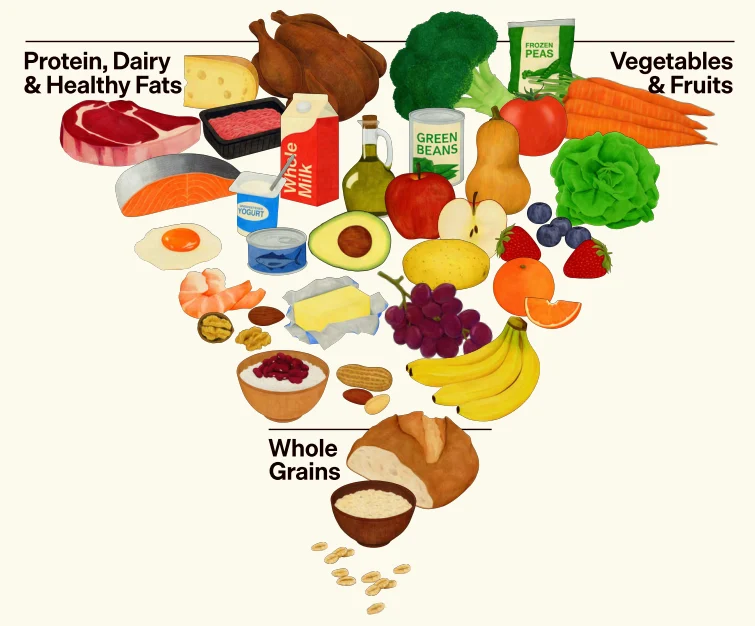
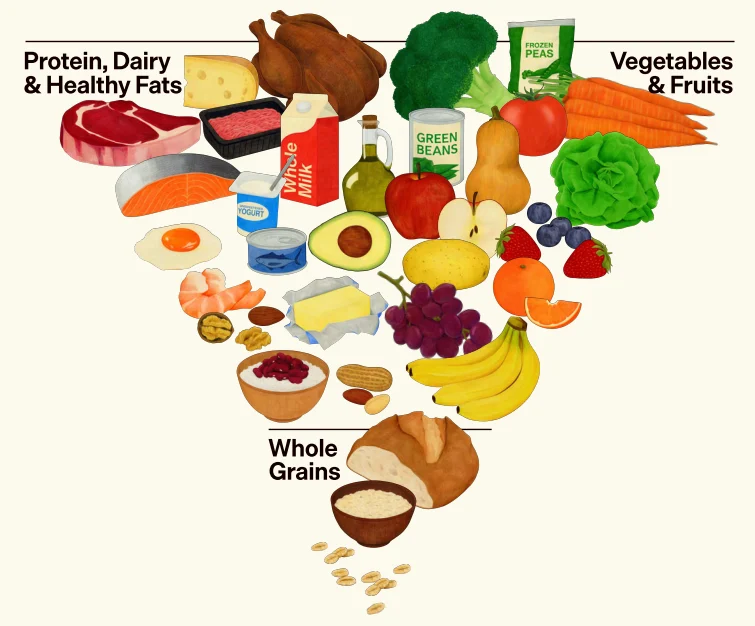
However, despite these progressive intentions, the rollout has been marred by controversy. A new, "inverted" food pyramid graphic—the cornerstone of the report’s visual communication—has sparked a firestorm of criticism from the scientific community. While the written text maintains traditional limits on saturated fat, the visual hierarchy of the pyramid places heavy emphasis on red meat, butter, and full-fat dairy, creating a disconnect that experts fear will confuse the public and undermine long-term cardiovascular health.
The Evolution of Federal Nutrition: A Chronology
To understand the current tension, one must look at the process behind the guidelines. Traditionally, the DGAs are the result of a rigorous, two-year evidence-based review conducted by an independent Dietary Guidelines Advisory Committee (DGAC). This group of experts evaluates the state of nutrition science, insulated from political and industry pressures, and produces a comprehensive scientific report.
For the 2025–2030 cycle, this standard protocol was notably disrupted. After the independent committee submitted its findings, the current administration opted to reject significant portions of the report. In its place, a supplemental scientific analysis was conducted by a separate panel selected through a private federal contracting process.
Critics, including Dr. Deirdre Tobias, who served on the original advisory committee, have expressed profound concern regarding this shift. "There is no transparency in the methodology and rigor that was employed," Dr. Tobias noted in a recent interview. The deviation from the standard, replicable, and transparent process that the Department of Health and Human Services (HHS) has historically upheld has raised alarms. Compounding these concerns are reports, such as those from STAT News, highlighting that several members of the secondary review panel held disclosed financial ties to the beef and dairy industries—a detail many argue explains the surprising prominence of these commodities in the new, government-endorsed food pyramid.
Unpacking the "New Food Pyramid" and Saturated Fat
The most jarring element of the new guidelines is the visual representation of a healthy diet. The pyramid, flipped on its head, appears to prioritize nutrient-dense animal proteins and fats. For the average American, the message conveyed by the graphic—which highlights steak, cheese, and butter—seems at odds with the textual guidance, which explicitly mandates that saturated fat intake should remain below 10% of total daily calories.
The Mathematics of Saturated Fat
When one crunches the numbers, the guidelines become mathematically difficult to reconcile. For a standard 2,000-calorie diet, the 10% limit allows for approximately 22 grams of saturated fat. The DGAs suggest three servings of dairy per day. If a consumer chooses the full-fat options implied by the pyramid—such as one cup of whole milk (5g), three-quarters of a cup of full-fat Greek yogurt (6g), and one ounce of cheddar cheese (6g)—they have already consumed 17 grams of saturated fat.
Adding a single tablespoon of butter (7g) or beef tallow (6g)—both of which are suggested as cooking fats in the guidelines—pushes the consumer to 23 or 24 grams, exceeding the limit before accounting for any other protein sources throughout the day. This "saturated fat math" creates a significant barrier to compliance, as the visual cues encourage habits that the technical text forbids.
Tackling the "Highly Processed" Pandemic
One of the more commendable shifts in the 2025–2030 edition is the formal acknowledgement of "highly processed" foods. While nutrition science has long struggled with a precise definition of "processing"—given that even freezing or pasteurizing are forms of processing—the DGAs take a firm stance against the ultra-processed items that dominate the modern American diet.
The guidelines explicitly discourage the consumption of sugar-sweetened beverages, ready-to-eat packaged snacks, and refined carbohydrates like white bread. Instead, they promote a shift toward fiber-rich, whole grains. Yet, as Dr. Frank Hu, chair of the Department of Nutrition at the Harvard T.H. Chan School of Public Health, points out, there is a lack of practical implementation advice. "The guidelines move in the right direction by reinforcing the importance of reducing added sugars and cutting back on refined grains," Dr. Hu states, "but the mixed messages regarding animal fats may lead to confusion."
The Protein Paradox
The new guidelines have also increased the recommended protein intake to 1.2–1.6 grams per kilogram of body weight, a 50–100% increase over previous minimums. While protein is essential for muscle maintenance and metabolic health, the lack of distinction between protein sources is a glaring oversight.
Not all protein is created equal. The "protein package"—the accompanying fiber, healthy fats, sodium, and micronutrients—matters as much as the protein content itself. Plant-based proteins and fish are consistently linked to lower rates of cardiovascular disease, while high intake of red meat is associated with increased inflammatory markers and heart disease risk. By failing to differentiate between a bowl of lentils and a fatty ribeye, the guidelines miss a critical opportunity to improve the "average" American diet.
The Omission of Sustainability
A significant critique of the 2025–2030 DGAs is their total disregard for environmental impact. In an era where the climate crisis and food systems are inextricably linked, the guidelines remain focused solely on individual health outcomes. By ignoring the environmental footprint of heavy meat and dairy consumption, the report fails to align with global efforts toward sustainable dietary patterns, such as the EAT-Lancet Commission recommendations. This omission is viewed by many as a missed opportunity to address the socioeconomic and environmental factors that underpin modern nutrition.
Implications for Public Health
The history of the Dietary Guidelines is, unfortunately, a history of non-compliance. Research from the CDC consistently shows that the average American does not follow these federal recommendations. With the introduction of confusing, potentially contradictory, and visually misleading information, experts worry that the disconnect will only widen.
What Should Consumers Do?
In the absence of clear, consistent, and science-driven federal messaging, health professionals are urging consumers to look beyond the pyramid. Organizations such as the Harvard T.H. Chan School of Public Health continue to advocate for their Healthy Eating Plate, which offers a more balanced, evidence-based approach:
- Prioritize Plants: Vegetables and fruits should occupy the largest portion of your plate.
- Choose Healthy Fats: Opt for liquid plant oils like olive and canola over animal fats like butter and lard.
- Mind the Source: When choosing protein, lean toward fish, poultry, beans, and nuts.
- Limit Added Sugars: Be wary of hidden sugars in beverages and processed snacks, aiming for as close to zero added sugar as possible.
Final Reflections
The 2025–2030 Dietary Guidelines for Americans represent a strange duality. On one hand, they correctly identify the existential threats of sugar and ultra-processed food. On the other, they succumb to industry-aligned messaging that confuses the role of saturated fats and ignores the nuance of protein quality.
Ultimately, if the goal of these guidelines is to improve the health of the American population, they must be clear, evidence-based, and free from the influence of powerful food lobbies. Until such transparency is guaranteed in the drafting process, the public remains the primary casualty of this dietary tug-of-war. For now, the best defense against the confusion is to rely on independent, peer-reviewed science and to consult with registered dietitians who prioritize long-term wellness over current industry trends.