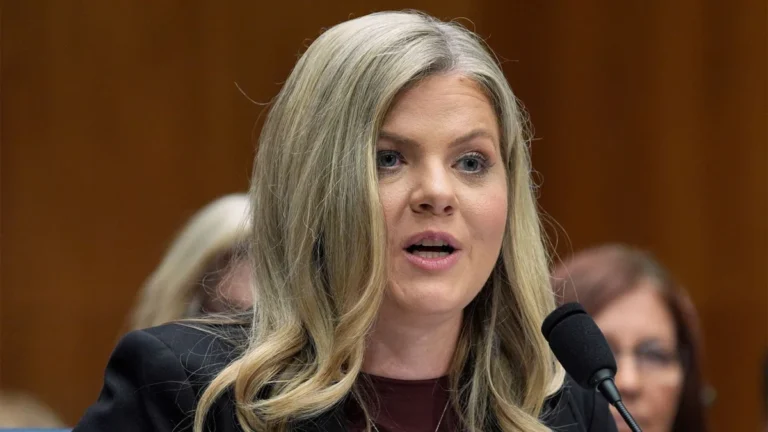










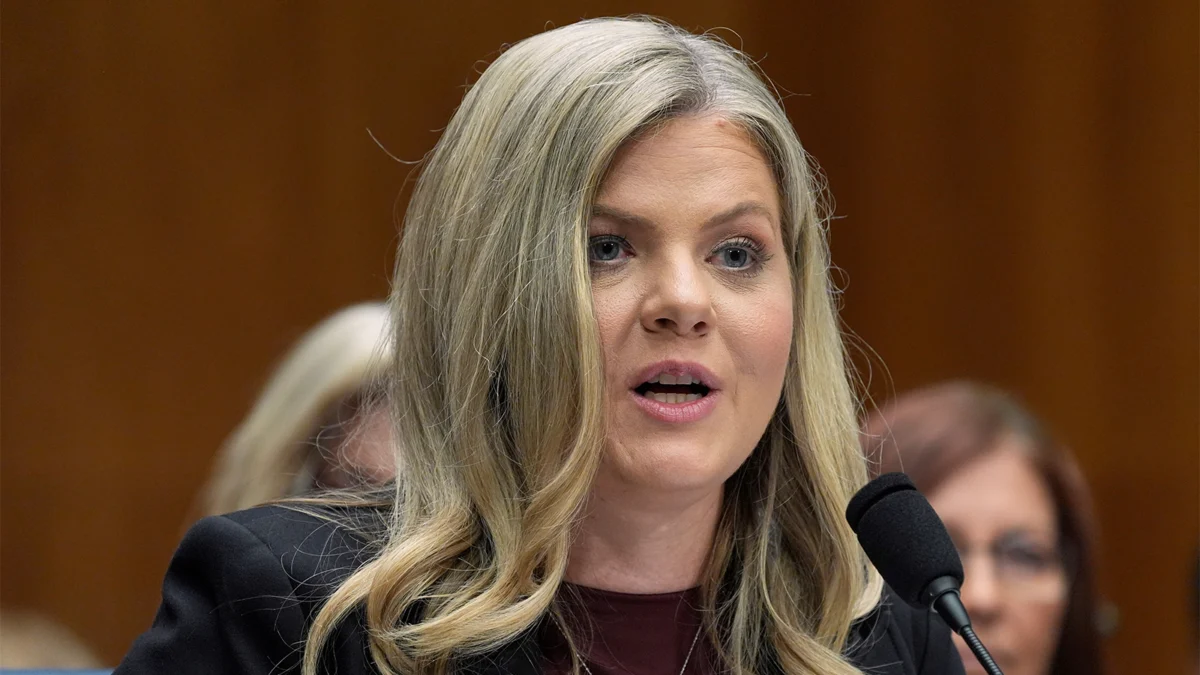
The nomination of Dr. Heidi Overton to lead the U.S. Food and Drug Administration (FDA) has ignited a fierce debate in the Senate, centering on the tension between institutional scientific integrity and the political agenda of the Trump administration. As a physician and current White House adviser, Overton finds herself in the crosshairs of a Senate Health, Education, Labor, and Pensions (HELP) Committee that is increasingly wary of the executive branch’s recent forays into public health policy.
During a high-stakes confirmation hearing on Thursday, Overton attempted to navigate a precarious path: affirming the scientific consensus on vaccine safety while maintaining loyalty to a president who has repeatedly questioned long-standing immunization protocols. Her testimony underscored the broader instability currently plaguing the FDA, an agency reeling from the resignation of her predecessor, Dr. Marty Makary, and a significant exodus of its workforce.
The Core Conflict: Science vs. Political Pressure
At the heart of the controversy is the administration’s aggressive push to reshape childhood immunization schedules. Last month, President Trump issued an executive order calling for the decoupling and spacing out of long-established childhood vaccines—a move that medical professionals warn lacks clinical justification and threatens to erode herd immunity.
The scrutiny intensified when Chairman Sen. Bill Cassidy (R-La.), a physician himself, pressed Overton to unequivocally reject the President’s recent rhetoric. During an Oval Office event, Trump characterized the combined measles, mumps, and rubella (MMR) vaccine as "quite lethal"—a claim widely debunked by the medical community.
"Right now, every vaccine that is on the market has been determined to be safe and effective," Overton stated during the hearing, explicitly including the MMR vaccine in her defense. However, when pressed by Cassidy on whether the President was factually incorrect, Overton demurred, refusing to explicitly denounce the administration’s position.
This reticence left members of the committee unconvinced. Cassidy, who has previously secured—and subsequently seen broken—guarantees from other administration officials like Health Secretary Robert F. Kennedy Jr., expressed deep skepticism. "Kennedy gave me guarantees, and he did not keep them," Cassidy noted. "If the president asks you to do something that goes against those guarantees you give us today, what will you do?"
Overton’s response—that she would "follow the statutory requirements" and provide the President with her "best advice"—did little to soothe concerns among lawmakers who fear the FDA is being systematically depoliticized.
Chronology: A Trajectory of Controversy
The path to this hearing has been paved with political friction:
- 2000: The FDA grants approval to mifepristone, the primary drug used in medication abortions, marking the beginning of decades of rigorous safety monitoring and incremental access expansion.
- Early 2024: As an adviser at the America First Policy Institute, Overton publicly criticizes the FDA’s allowance of mail-order mifepristone, labeling the practice "chemical abortion on demand" and "dangerous to women."
- May 2024: FDA Commissioner Dr. Marty Makary resigns following a tenure marked by internal dysfunction, morale crises, and significant staff attrition.
- Late 2024: The administration orders a sweeping safety review of mifepristone, bowing to pressure from anti-abortion advocacy groups.
- Present Day: Dr. Heidi Overton is nominated as the next FDA Commissioner, inheriting an agency that has seen a 20% decline in staff since the start of the current administration.
The Regulatory Tightrope: Mifepristone and Vaping
Beyond vaccines, Overton’s potential tenure is clouded by two major regulatory flashpoints: the safety status of the abortion drug mifepristone and the proliferation of flavored e-cigarettes.
The Mifepristone Dilemma
Overton’s previous writings have positioned her as a critic of current FDA policy regarding reproductive health. When asked by Sen. Patty Murray (D-Wash.) whether she would allow her personal ideological views to influence the ongoing safety review of mifepristone, Overton attempted to walk a fine line. She maintained that the drug has "met the safety and efficacy determinations of the FDA" but refused to commit to maintaining current access levels, citing a desire not to "prejudge" the current, administration-mandated safety review.
For Senate Democrats, this is a red flag. "The FDA has said this is safe," Murray countered. "We need someone in FDA to make sure this is done by science, not by the shifting political winds of the White House."
The Vaping Pivot
The hearing also touched upon the FDA’s recent decision to permit the sale of new flavored electronic cigarettes. Historically, the FDA restricted sweet-flavored vaping products, citing their high appeal to minors. Overton defended the recent reversal, arguing that FDA scientists concluded these products meet the "appropriate for the protection of public health" standard by serving as harm-reduction tools for adult smokers.
Sen. Susan Collins (R-Maine), a moderate voice on the committee, expressed concern over the potential long-term public health implications, particularly for adolescent nicotine addiction. The debate reflects a larger, unresolved struggle within the agency over how to balance consumer choice with the mandate to protect public health from predatory marketing.
Implications for Agency Stability
The FDA is a behemoth, overseeing the safety of the nation’s food, drug, and medical device supply chains with a workforce of 16,000. Critics argue that Overton, like her predecessor Makary, lacks the deep, long-term administrative experience required to manage such a complex bureaucracy, especially at a time when institutional knowledge is hemorrhaging.
Since the inauguration of the current administration, the FDA has seen roughly one-fifth of its workforce depart. This "brain drain"—fueled by layoffs, retirements, and resignations—has left the agency under-resourced and struggling to maintain the rigorous standards expected of a federal regulator.
Furthermore, Overton’s financial disclosure forms present a unique profile. Unlike many previous nominees who were required to divest from significant healthcare or pharmaceutical portfolios, Overton reported no such investments. While this eliminates potential conflicts of interest, it also highlights her relative lack of industry-insider experience, a factor that leaves both her supporters and detractors wondering if she is prepared for the immense pressure of the job.
Looking Forward: The Path to Confirmation
For Overton, the road to confirmation is narrow. She requires a majority vote from the 21-member HELP Committee, followed by a full Senate confirmation. The support of moderate Republicans like Collins and Murkowski, who have historically defended reproductive rights and public health standards, remains uncertain.
If confirmed, Overton will step into a role that has become increasingly defined by its contradictions. She must appease a White House intent on dismantling regulatory barriers while simultaneously assuring a skeptical scientific community that the FDA’s bedrock principles—evidence-based medicine, transparency, and independence—remain intact.
As Sen. Cassidy remarked in his concluding comments, the committee’s primary concern is not just the nominee’s technical qualifications, but her capacity for "radical honesty." Whether Overton can demonstrate the independence necessary to stand up to the executive branch when scientific evidence dictates otherwise remains the defining question of her nomination.
As the committee weighs its decision, the health of the American public rests on the hope that the FDA will remain a bastion of science, rather than a theater for political performance. The silence from Overton on the President’s false claims regarding vaccine lethality serves as a stark reminder: in the current Washington climate, the line between professional duty and political loyalty is thinner than ever.