








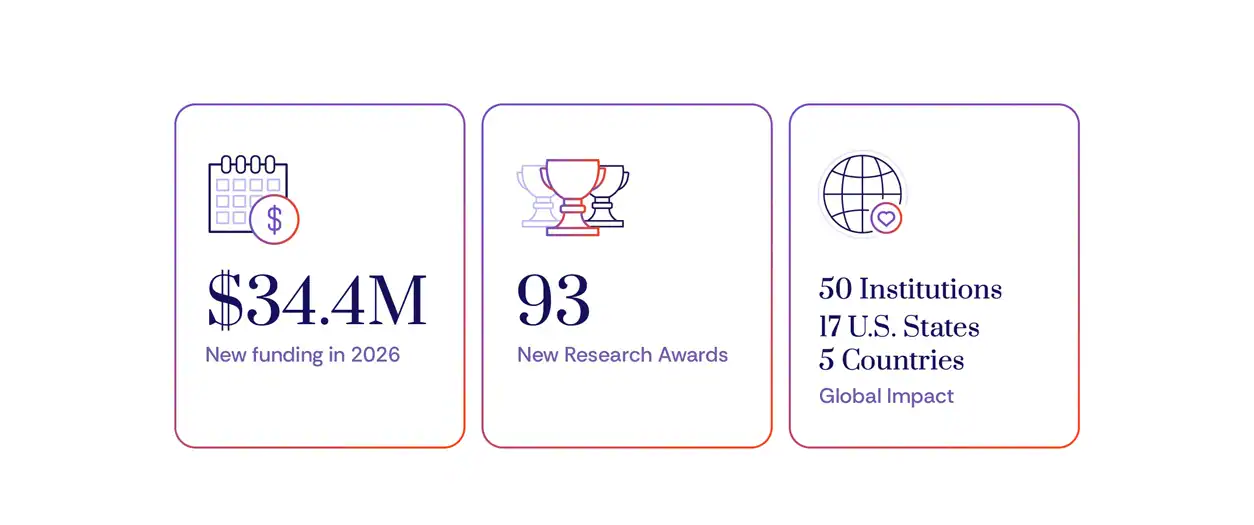
In an era defined by fiscal volatility and shrinking public research budgets, the Cancer Research Institute (CRI) has taken a defiant stand: when the world grows uncertain, science must accelerate. During the 2025–2026 fiscal year, a period marked by widespread funding challenges for laboratories across the globe, the CRI solidified its role as a bedrock of medical innovation by committing $34.4 million in new research funding—the largest grantmaking cycle in the organization’s seven-decade history.
This historic investment, distributed across 93 individual awards, represents more than just a capital injection. It is a strategic intervention designed to protect the "scientific pipeline," ensuring that the most promising minds in cancer immunotherapy are not sidelined by the vagaries of economic downturns or institutional austerity.
The Strategic Landscape: A Record-Breaking Fiscal Year
The statistics from the 2025–26 fiscal year serve as a testament to the CRI’s resilience. With $34.4 million deployed, the institute has expanded its footprint significantly, supporting scientists at 50 prestigious institutions spanning 17 U.S. states and five countries.
However, CRI leadership emphasizes that the true impact of these figures lies in their distribution. Rather than spreading resources thinly, the funding is targeted at critical inflection points in a researcher’s career. By focusing on the transition from mentored postdoctoral training to independent laboratory leadership, the CRI is addressing the "valley of death"—that perilous period where brilliant, high-risk ideas often wither for lack of sustained financial backing.
Chronology of Commitment: Seven Decades of Scientific Stewardship
To understand the weight of this year’s milestone, one must look at the trajectory of the CRI. Founded over 70 years ago, the organization was built on a radical premise: that the human immune system could be harnessed to cure cancer.
- The Early Decades: CRI focused on foundational immunology, often supporting high-risk work that mainstream funding bodies deemed too speculative.
- The Breakthrough Era: By supporting the early researchers who eventually unlocked the mechanisms of checkpoint blockade, the CRI helped move immunotherapy from the periphery of cancer treatment to the center of clinical care.
- The Modern Pivot (2025–2026): Confronted by a global climate of research contraction, the CRI pivoted to a "sustain and scale" model. This involved not only maintaining existing labs but launching new mechanisms—most notably the IGNITE Award—to ensure that the next generation of researchers would not be lost to the field.
Supporting Data: The Anatomy of an Investment
The $34.4 million allocation is not a monolith; it is a meticulously structured ecosystem of support. The CRI’s investment strategy is segmented into three primary pillars:
- The Foundation (Postdoctoral Fellowships): These awards serve as the entry point, providing young scientists with the resources to pursue high-risk, high-reward inquiries during their formative years.
- The Bridge (IGNITE Awards): Inspiring Growth and Nurturing Independence Through Excellence (IGNITE) is the institute’s newest weapon against research stagnation. It targets early-career scientists who have finished their fellowships but lack the track record to secure massive federal grants.
- The Vanguard (Lloyd J. Old STAR Awards): Named for the father of modern cancer immunotherapy, these awards provide established investigators with the long-term, "no-strings-attached" flexibility required to pursue potentially transformative, long-horizon breakthroughs.
This "continuum of support" ensures that a scientist supported by the CRI at age 28 can theoretically continue to receive the strategic guidance and funding necessary to lead a major laboratory by age 40.
Case Study: Dr. Simone Park and the Future of Memory T Cells
The human element of this fiscal commitment is perhaps best illustrated by Dr. Simone Park, a researcher at the University of Pennsylvania and an inaugural recipient of the IGNITE Award.
Dr. Park’s work focuses on "tissue-resident memory T cells." These specialized cells are essentially the immune system’s sentinels; they take up permanent residence in tissues, waiting to identify and destroy cancer cells before they can form tumors or cause a recurrence.
"The transition to independence is the most vulnerable phase of a scientist’s life," says Dr. Park. "You are expected to define an original field of investigation, build a team, and secure funding simultaneously. Without the IGNITE Award, the ability to explore the durability of these T cells—and how to ‘train’ them to provide lasting protection—would have been significantly delayed."
Dr. Park’s journey from a CRI postdoctoral fellow to an independent investigator represents the "continuum of support" in action. By identifying talent early and providing the resources to scale, the CRI is ensuring that researchers like Dr. Park remain focused on the biology of the disease rather than the bureaucracy of funding.
Implications: Beyond the Lab Bench
The influence of the CRI extends well beyond the experimental data generated in the labs it funds. The organization has intentionally built a broader ecosystem designed to translate complex biological findings into clinical reality. This includes:
- Clinical Study Advancement: Directly accelerating the movement of promising therapies from the petri dish to the patient’s bedside.
- Data Democratization: Developing shared computational resources and data sets that allow researchers to collaborate across borders, reducing the "silo effect" that has historically slowed cancer research.
- Patient Empowerment: By providing trusted, high-level information to patients and caregivers, the CRI ensures that the latest advancements in immunotherapy are accessible to those who need them most.
The Macro View: What Progress Requires
The implications of the CRI’s 2025–26 strategy are clear: the organization is signaling to the global scientific community that it refuses to let short-term economic headwinds dictate the pace of medical discovery.
As the 2026 Annual Impact Report outlines, this is a record of "promises kept." The institute has made a moral and professional commitment to three distinct stakeholders:
- The Scientists: Providing the stability needed to take the risks that lead to breakthroughs.
- The Patients: Offering the hope of new, more durable treatment modalities.
- The Supporters: Demonstrating that charitable contributions are being leveraged with maximum efficiency to produce tangible, life-saving outcomes.
Conclusion: A Vision for the Future
As the scientific landscape continues to evolve, the variables change—funding fluctuates, political priorities shift, and the biology of cancer proves increasingly complex. Yet, the CRI maintains that the fundamental requirements for progress remain constant: exceptional people, bold ideas, and the institutional courage to provide sustained support.

The record-setting investment of the past year is not an endpoint. It is a baseline. By fostering a culture that prizes scientific independence and high-impact exploration, the Cancer Research Institute is positioning itself at the vanguard of the next generation of oncology.
The work ahead is, by definition, monumental. It involves mapping the intricacies of the immune system and teaching it to overcome the most resilient cancers. But as the CRI’s recent activity suggests, the organization is not merely reacting to the challenges of today; it is building the architecture for the breakthroughs of tomorrow.
They are, as they state, "just getting started." The $34.4 million deployed in the last year is not just a figure on a ledger—it is a down payment on a future where cancer is no longer a terminal diagnosis, but a manageable, or even curable, condition. In a world of uncertainty, the Cancer Research Institute has chosen to provide the one thing that truly matters: the ability to move forward.