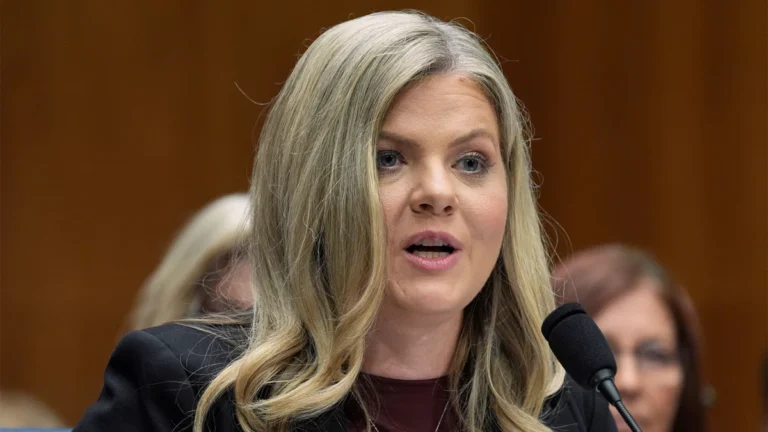










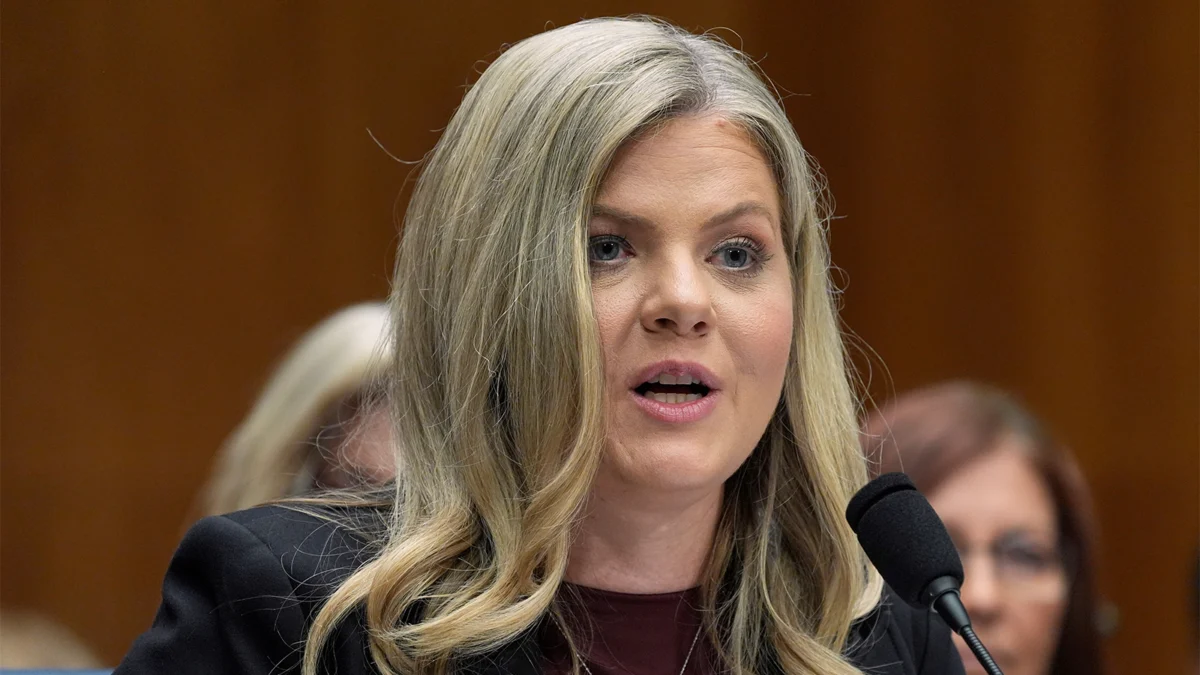
In a high-stakes confirmation hearing that underscored the deepening divide between scientific consensus and the political agenda of the Trump administration, Dr. Heidi Overton faced a grueling interrogation by the Senate Health, Education, Labor, and Pensions (HELP) Committee this Thursday. As President Trump’s nominee to helm the Food and Drug Administration (FDA), Overton, a physician and current White House advisor, found herself walking a political tightrope: attempting to reassure skeptical lawmakers of her commitment to empirical science while simultaneously navigating the administration’s aggressive push to reshape public health policy.
The hearing served as a microcosm of the current tensions within the federal government, where the traditional, evidence-based mission of the FDA increasingly clashes with the populist skepticism emanating from the Oval Office.
The Core Conflict: Science vs. Political Mandate
The primary point of contention centered on childhood immunization, a cornerstone of public health that has become a flashpoint for the current administration. Overton, who served as an architect of recent Trump health initiatives, was forced to defend the safety of long-established vaccines despite having stood beside the President last month when he made the demonstrably false claim that the combined measles, mumps, and rubella (MMR) vaccine could be "quite lethal."
Senate Health Committee Chairman Sen. Bill Cassidy (R-La.), a physician himself, spearheaded the effort to pin Overton down. Throughout the hearing, Cassidy demanded that she reject the President’s rhetoric and affirm the foundational safety profile of FDA-approved immunizations.
"Right now, every vaccine that is on the market has been determined to be safe and effective," Overton testified. When pressed further on whether the President’s statements regarding the MMR vaccine were factually incorrect, however, Overton conspicuously declined to offer a direct rebuke, choosing instead to emphasize her role as a future commissioner bound by "statutory requirements" rather than personal political commentary.
A Chronology of Institutional Friction
The atmosphere in the hearing room was thick with the residue of recent administrative volatility. The FDA has undergone a period of intense turbulence, characterized by a staggering 20% turnover rate—including layoffs, early retirements, and resignations—since President Trump assumed office.
The Makary Legacy
Overton’s nomination follows the resignation of her mentor, Dr. Marty Makary, who stepped down in May after a tenure defined by persistent internal dysfunction and high-profile scientific disputes. The agency’s internal morale has plummeted, according to reports from within the department, as staff grapple with what many describe as a "politicized environment."
The Kennedy Precedent
The skepticism expressed by committee members, particularly Chairman Cassidy, is rooted in a sense of betrayal. Cassidy noted that he had received similar assurances from Health Secretary Robert F. Kennedy Jr. during his own confirmation process, only to witness Kennedy subsequently facilitate policies that undermined those very commitments.
"Kennedy gave me guarantees, and he did not keep them," Cassidy stated firmly. "If the president asks you to do something that goes against those guarantees you give us today, what will you do?"
Overton’s response—that she would provide the President with her "best advice" while adhering to the law—failed to fully mollify the committee, leaving the timeline for a formal vote on her nomination in doubt.
Supporting Data: The Hurdles Ahead
If confirmed, Overton will inherit an agency currently juggling several explosive policy reviews, each of which carries significant political and public health weight.
The Mifepristone Review
Perhaps the most contentious issue is the safety review of mifepristone, the primary drug used for medical abortions. While the FDA has maintained since 2000 that the drug is safe and effective—a position that has led to increased access, including mail-order prescriptions—the current administration has ordered a new, restrictive review.
Overton previously argued in her capacity at the America First Policy Institute that the FDA’s decision to allow the mailing of the drug was "dangerous to women." During the hearing, however, she adopted a more cautious tone, noting that the drug "has met the safety and efficacy determinations of the FDA" to date and stating that she did not wish to "prejudge" the ongoing review.
The E-Cigarette Controversy
The committee also interrogated Overton on the recent influx of flavored electronic cigarettes into the market. Previous administrations, including the first Trump term, had successfully restricted sweet vaping flavors to curb youth addiction. Overton defended the recent reversals, citing that FDA scientists had concluded these specific products met the "appropriate for the protection of public health" standard by serving as harm-reduction tools for adult smokers.
Official Responses and Political Implications
The hearing revealed a fragile political landscape. For moderate Republicans like Senators Susan Collins (Maine) and Lisa Murkowski (Alaska), Overton’s stance on reproductive health and vaping regulations will be decisive factors.
Senator Patty Murray (D-Wash.) highlighted the necessity of an FDA commissioner who acts as a firewall against political interference. "The FDA has said this is safe," Murray said, referring to mifepristone. "We need someone in FDA to make sure this is done by science."
Meanwhile, the committee’s Republican contingent remains divided. While some support the administration’s goal of deregulation, others are increasingly concerned that the FDA’s credibility—and by extension, the public’s trust in medical products—is being eroded.
Institutional Implications: The Bureaucratic Challenge
Overton’s lack of experience in managing a large bureaucracy remains a significant talking point among policy analysts. The FDA operates with a massive workforce of 16,000 employees dispersed across international and domestic locations. Managing this workforce requires a high degree of administrative acumen, particularly as the agency faces a mandate to slash regulations while simultaneously managing complex safety reviews.
Unlike many of her predecessors, Overton’s financial disclosures indicate a lack of direct ties to the healthcare or pharmaceutical industries. While she reported student loans totaling between $50,000 and $100,000, she has no significant investment portfolio in regulated companies, a departure from previous nominees who were required to divest substantial assets to avoid conflicts of interest.
The Path Forward
To secure the position, Overton must win a majority of votes from the 21-member HELP committee, followed by a successful floor vote in the full Senate. Her confirmation would signal a major test for the FDA’s independence. Will the agency continue to function as a science-led regulatory body, or will it be fully absorbed into the administration’s populist ideological framework?
As the hearing concluded, it became clear that Overton’s challenge is not merely professional, but existential for the agency. She must convince a divided Congress that she can protect the integrity of the FDA’s scientific processes, even as she serves a President who has shown little hesitation in questioning the very foundations of those processes.
For now, the FDA remains in a state of suspended animation—waiting for a leader who can navigate the competing demands of the White House, a skeptical Congress, and a public that relies on the agency for the most basic assurances of safety. Whether Dr. Heidi Overton can provide that stability remains the central question of her candidacy.