








This week in Las Vegas, the Olympia Fitness & Performance Weekend—the undisputed "Super Bowl" of the bodybuilding world—is making history. Amidst the high-stakes drama of the Mr. Olympia Open and the high-flying athleticism of the Fitness division, a new category will take center stage: the Fit Model Olympia.
For the traditionalist bodybuilding fan, the announcement might feel like one division too many. Yet, to understand the Olympia is to understand an entity in constant motion. Since Larry Scott hoisted the first Sandow trophy in 1965, the sport has expanded from a single men’s bodybuilding category into a massive ecosystem of 12 distinct divisions. With the addition of Fit Model, the IFBB Pro League is attempting something rarely seen in the history of physique sports: a deliberate, structural "reset" of the aesthetic ideal.
The Chronology: From Amateur Concept to Pro Stage
The journey of the Fit Model division has been a calculated rollout by the NPC and the IFBB Pro League. Recognizing a gap in the competitive landscape, the National Physique Committee (NPC) introduced Fit Model at the amateur level in 2025. It was designed to cater to a specific demographic: women who possess the discipline of an athlete and the aesthetic of a fitness cover model, but who have no desire to pursue the extreme conditioning required for the Bikini or Figure divisions.
Following the success of the amateur circuit, the IFBB Pro League fast-tracked the division, introducing professional contests in 2026. Now, less than two years after its inception, the division has earned its place at the pinnacle of the sport. As the 2026 Olympia unfolds from September 24–27 in Las Vegas, Fit Model is officially recognized as a core part of the Olympia qualification system, signaling that the league views this not as a fleeting experiment, but as a permanent pillar of the professional roster.
The Aesthetic Mandate: Defining the "Less is More" Physique
What makes Fit Model unique—and potentially controversial—is its explicit, rigid judging criteria. In a sport that historically rewards the "more is more" philosophy, Fit Model is the first to codify a "less is more" rulebook.
The judging guidelines for the division are remarkably granular:
- Muscularity: Competitors should exhibit enough muscle tone to shape the female frame, but strictly less than their counterparts in the Bikini division.
- Target Areas: The rules mandate less development in the legs, glutes, arms, and delts. While the deltoids may show a hint of roundness, "capped" shoulders are penalized.
- Conditioning: This is perhaps the most radical shift. There should be no visible glute-ham tie-in and no hamstring separation. The midsection is expected to be fit and healthy, but devoid of the extreme abdominal detailing (the "blocky" or "shredded" look) seen in higher-muscle categories.
To illustrate this ideal, the IFBB Pro League has pointed to a specific benchmark: the 2015 physique of three-time Bikini Olympia champion Ashley Kaltwasser. By holding up a past version of a legendary athlete as the blueprint, the league is effectively asking the judges to turn back the clock on the "conditioning creep" that has redefined every other division.
Supporting Data: The Cycle of Division Inflation
To understand why Fit Model is such a gamble, one must look at the historical trajectory of the sport. The history of physique competition is a repetitive cycle of growth.
When the Bikini division was first introduced, it was intended to showcase a "soft," healthy, and approachable aesthetic. Over the last decade, however, the Bikini division has undergone a "muscularity creep." The champions of today are significantly more muscular and more conditioned than the pioneers of the division. The same phenomenon has occurred in Figure, Women’s Physique, and Men’s Physique.
Even the creation of the "Classic Physique" category—designed to provide an aesthetic alternative to the massive, mass-monster Open Bodybuilding category—has fallen victim to this cycle. Today’s top-tier Classic competitors are so large and conditioned that they would likely dominate a bodybuilding lineup from the 1980s.
This leads to a recurring pattern:
- Introduction: A new, "softer" division is created to attract a new demographic.
- Growth: Judges reward athletes who bring slightly more muscle and harder conditioning.
- Standard Shift: The "new" standard becomes the baseline.
- The Need for a Reset: The division becomes too extreme for the general public, leading the federation to launch a new, "softer" category.
Fit Model is the latest attempt to break this cycle. By strictly forbidding the conditioning traits that define modern Bikini and Figure, the IFBB is trying to capture a market segment that loves the gym lifestyle but rejects the "diet-until-you-see-bone" mentality.
Official Responses and Industry Implications
The introduction of Fit Model has sparked intense debate among industry insiders. Proponents argue that it opens the door to a massive population of fitness-conscious women who have previously felt alienated by the sport.
"The goal is to expand the tent," says one industry analyst. "There is a massive group of women who train for health, balance, and aesthetic appeal. If they can compete in an environment that celebrates that balance without requiring them to push their body into contest-prep extremes, the sport grows."
However, the implications for the judging panel are significant. For the first time, judges are being asked to penalize "harder" athletes. This is a difficult task in a subjective sport where "more" has historically been synonymous with "better."
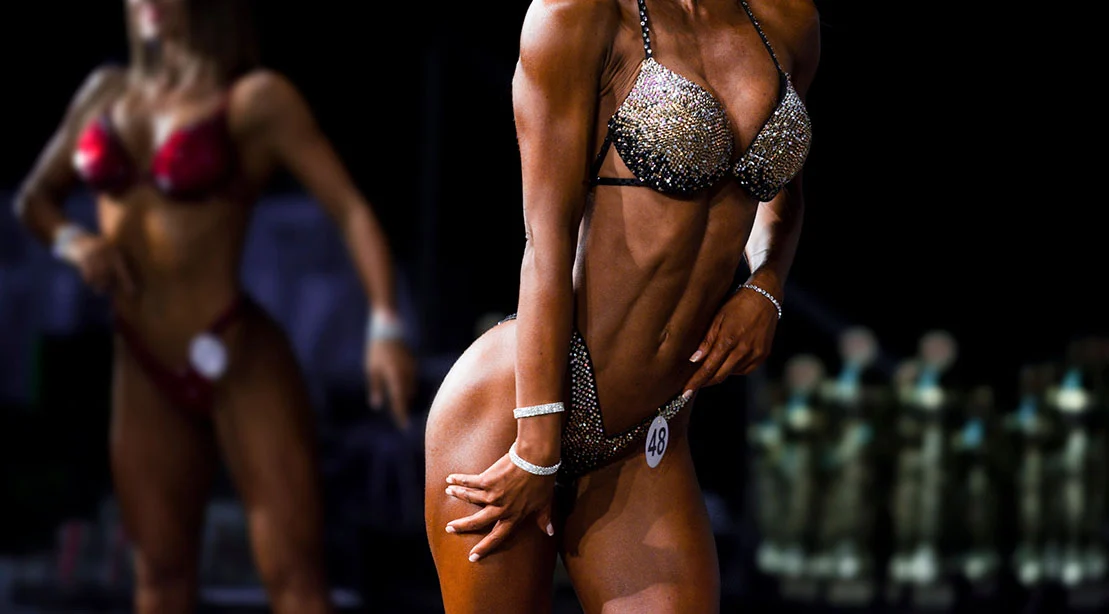
The presentation of the division reflects this mandate for elegance over mass. There are no mandatory bodybuilding poses. Instead, the round consists of simple front and back poses. The suits are plain-colored—a stark contrast to the Swarovski-encrusted, ultra-bright swimwear of the Bikini division. By emphasizing elegance, presentation, and symmetry over pure muscularity, the federation is clearly signaling that this is a "fashion-forward" show rather than a display of raw hypertrophy.
The Verdict: Will Fit Model Survive the "Creep"?
The long-term survival of the Fit Model division hinges on one critical factor: the consistency of the judging panel at the 2026 Olympia.
If the judges crown a winner who leans toward the "harder" end of the spectrum, the signal will be sent to every competitor to prioritize conditioning over the prescribed aesthetic. If that happens, the cycle of inflation will begin anew, and we will be looking at a "Fit Model Classic" in five years to correct the drift.
However, if the judges hold the line—if they reward the specific, "less-is-more" aesthetic outlined in the rulebook, regardless of the pressure to reward more muscle—the division could become a permanent, viable home for thousands of women who want to compete on the big stage without sacrificing their lifestyle.
I will be watching this weekend with a keen eye—not just for who takes home the inaugural trophy, but for the specific physique that the judges decide to validate. Because the first champion of the Fit Model Olympia will do more than win a title; she will set the standard for a generation of competitors. The IFBB Pro League has laid the groundwork for a new vision of fitness. Now, they must ensure that the reality of the stage matches the promise of the rules. Whether this division becomes a lasting success or just another footnote in the history of "division inflation" will depend entirely on the courage of the judges to reward the look that the sport so desperately claims to want: the healthy, fit, and elegant model physique.