










In the modern pursuit of health, the focus has often shifted toward high-intensity cardio or endurance sports. However, a significant paradigm shift is occurring in the longevity space. According to a landmark study published in June 2026, the secret to a longer, more resilient life may not be found in marathon running, but in the deliberate, consistent application of resistance training. By dedicating just 90 to 120 minutes per week to strengthening our muscles, we can drastically alter our physiological trajectory, particularly as we move into our later years.
The Core Data: A 30-Year Perspective on Muscle Health
The June 2026 research represents one of the most comprehensive looks at exercise longevity to date. By synthesizing data from three major studies and tracking over 147,000 adults over a staggering 30-year period, researchers were able to identify a "sweet spot" for physical activity.
The findings are profound: individuals who committed to between 90 and 120 minutes of resistance training weekly demonstrated a statistically significant reduction in all-cause mortality. The benefits were particularly pronounced regarding the prevention of neurological and cardiovascular diseases.
When muscle mass is preserved, the body’s metabolic rate remains higher, insulin sensitivity improves, and systemic inflammation—the silent driver of many chronic illnesses—is kept at bay. The study further emphasized that while resistance training is potent on its own, it acts as a force multiplier when combined with consistent cardiovascular exercise. Together, these modalities create a robust defense system against the degenerative effects of aging.
Expert Insight: Why Bodyweight Training Wins for Longevity
To bridge the gap between abstract research and practical application, we consulted with Malia Frey, M.A., ACE-CPT, and a renowned expert in functional aging. Frey, the author of Macro Diet for Dummies, argues that the best exercise program is not necessarily the one with the most expensive equipment, but the one that ensures consistency.
"Bodyweight exercises are highly effective simply because anyone can do them without equipment," Frey explains. "Many older adults feel uncomfortable in gym settings that cater to a younger, more intense clientele. When workouts are easy to complete at home without equipment, you are far more likely to be consistent and see results. You can also do these workouts on the road, which removes the barrier of travel or scheduling."

For those over 60, the primary goal of exercise shifts from "performance" to "preservation." We are not training to break world records; we are training to maintain bone density, joint mobility, and the functional strength required to remain independent.
A 12-Minute Blueprint for Strength
Frey suggests that for many, a 12-minute high-efficiency bodyweight routine can be more beneficial than an hour-long, low-intensity gym session. This approach leans on the principles of metabolic conditioning, keeping the heart rate elevated while challenging the musculoskeletal system.
The Warm-Up: Preparing the Engine
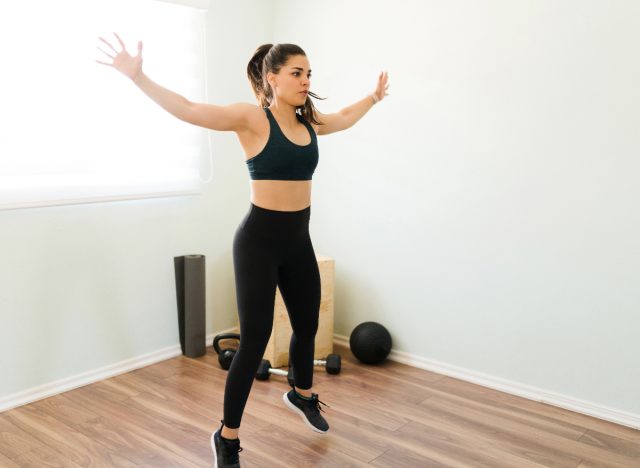
Before diving into the intensity, the body must be prepared. Spend one minute performing air squats and jumping jacks. If you seek a greater challenge, perform ten air squats, then transition immediately into squat jumps. This dynamic movement increases blood flow to the large muscle groups in the legs and primes the nervous system for the work ahead.
Segment One: The Foundation
- Pushups: The quintessential upper-body movement. Focus on maintaining a straight line from your head to your heels, engaging the core to stabilize the spine.
- Multidirectional Hops: These improve agility and proprioception—the body’s ability to sense its position in space, which is critical for fall prevention in older adults.
- Hollow Hold with Toe Touches: This targets the deep abdominals. A strong core is the anchor for all movement, protecting the lower back and improving posture.
Segment Two: Functional Power
- Inverted Rows: Often overlooked, this move is essential for back health. By pulling your chest toward a bar or sturdy surface, you counteract the "hunched" posture that often develops with age.
- Skaters with Side Touch: A lateral movement that builds stability in the hips and knees—areas that are frequent sites of injury as we age.
- Plank Shoulder Taps: This combines a static core hold with a dynamic weight shift, forcing the stabilizers of the shoulder girdle to engage.
Segment Three: The Posterior Chain
- Bridge with Alternating Taps: This targets the glutes and hamstrings. Strong glutes are the primary defense against lower back pain and are vital for walking, standing, and climbing stairs.
- Box Jumps or Leap Frogs: Explosive power is one of the first physical qualities lost with age. Maintaining the ability to exert force quickly is a key indicator of long-term functional health.
- Supermans: This final movement targets the erector spinae muscles in the lower back, reinforcing the spine and ensuring a strong, upright frame.
The Importance of Recovery
One of the most critical aspects of Frey’s advice is the prioritization of recovery. "Research consistently shows that we need more recovery time as we age," she notes. "To maximize muscle improvements, give yourself at least 24 to 48 hours between workouts."
This recovery period is not "time off" from health; it is when the actual physiological adaptations occur. During rest, the microscopic tears created during exercise are repaired, resulting in denser, stronger muscle tissue.
Implications for Public Health
The implications of these findings for the aging population are massive. If 90 to 120 minutes of resistance training can significantly lower the risk of cardiovascular and neurological decline, then society should view strength training as a form of preventative medicine, equivalent to blood pressure medication or cholesterol management.
The barrier to entry is low. By removing the need for a gym membership and focusing on bodyweight mechanics, the "longevity prescription" becomes accessible to everyone, regardless of socioeconomic status or geography.
Moving Forward: How to Start
For those looking to adopt this routine, the path is gradual.
- Start Small: Begin with two or three days a week.
- Listen to Your Body: If you feel excessive joint pain, adjust your range of motion.
- Progression: Once the routine feels manageable, you can increase the intensity by adding five to fifteen seconds to each segment, or by increasing the frequency up to a maximum of five days per week.
The goal is not to reach a peak of fitness in a month, but to cultivate a habit that will serve your body for the next three decades. By integrating this 12-minute routine into your week, you are investing in the most important asset you possess: your ability to move, explore, and live independently for as long as possible.
As we look toward the future of aging, the message is clear: Strength is not a luxury; it is a fundamental requirement for a vibrant, long life. Whether you are in your 50s, 60s, or beyond, the time to begin building that foundation is now.