If you have kept even a passing eye on the intersection of technology and wellness, you have likely encountered the polarizing figure of billionaire entrepreneur Bryan Johnson. The subject of the Netflix documentary Don’t Die, Johnson has become the face of a modern obsession: the quest to achieve the lowest possible "biological age"—a metric distinct from the calendar years we accumulate.
Johnson reportedly spends millions annually on an aggressive anti-aging regimen: dozens of daily supplements, weekly acid peels, hyperbaric oxygen therapy, and controversial procedures like plasma infusions. His goal is to reverse the clock, and he claims that his internal biomarkers indicate he is 5.1 years younger than when he began. Yet, this narrative is not without its skeptics; a New York Times investigation recently suggested that, despite the expenditure, Johnson’s biological age may have actually increased by 10 years.
This tension between high-tech intervention and traditional health markers is at the heart of the booming "bio age" industry. With podcasts hosted by the likes of Peter Attia, Joe Rogan, and Andrew Huberman frequently dissecting the topic, and a digital marketplace flooded with mail-order blood and urine kits, the question for the average person is no longer "is it possible?" but rather, "is it worth it?"
Understanding Biological Age vs. Chronological Age
To navigate this landscape, one must first distinguish between chronological and biological age. Chronological age is simply the number of candles on your birthday cake—a linear measurement of time. Biological age, or "bio age," is a measurement of cellular function and physiological integrity.
Consider two 50-year-old men: Chang, who works a sedentary desk job, lives in a high-pollution urban environment, and consumes a diet of processed snacks; and Jabari, who spends his time gardening, maintains a nutrient-dense diet, meditates, and trains for strength. While their chronological ages are identical, their cellular realities are likely miles apart. Biological age testing attempts to quantify these differences by looking at biomarkers—specific molecular or physiological signs that indicate the health of the body’s systems.
The Science Behind the Markers: How We Measure Aging
Modern testing kits rely on several distinct methodologies to estimate how fast a person is aging:
- DNA Methylation: This is the gold standard for many commercial tests, such as those utilizing the "Horvath Clock." Methylation is a biological process that chemically alters DNA. Because the rate of these chemical changes correlates with aging, it provides a snapshot of "epigenetic" age.
- Telomere Analysis: Telomeres are the protective caps at the ends of chromosomes. As cells divide over time, these caps shorten. Some tests measure this length, though their accuracy as a standalone predictor of longevity in healthy populations remains a subject of intense scientific debate.
- Physiological Biomarkers: Often overlooked in favor of "high-tech" DNA tests, these include blood pressure, cholesterol levels, blood glucose, and C-reactive protein. These metrics remain the bedrock of medical diagnostics because they are actionable, proven to predict disease risk, and highly responsive to lifestyle intervention.
The Chronology of the Bio-Age Boom
The interest in biological aging is not a sudden phenomenon but a result of decades of research in gerontology. In the early 2000s, studies on telomeres and chromosomal stability shifted the focus from merely "treating disease" to "slowing the process of decline."
The subsequent rise of the Quantified Self movement—pioneered by Silicon Valley figures—saw the introduction of consumer-facing diagnostics. Companies began packaging complex laboratory-grade tests (like DNA methylation assays) into consumer-friendly, mail-order kits. This shift brought clinical-level data into the living room, effectively democratizing access to information that was previously locked behind the doors of university research labs and specialized geriatric clinics.
Supporting Data: Why Fitness is the Best Indicator
While expensive DNA kits capture headlines, the most reliable indicators of biological age remain those rooted in physical capacity. Research consistently shows that functional fitness is a superior predictor of all-cause mortality.
- The Sitting-Rising Test (SRT): A simple measure of strength and balance. If you cannot rise from the floor without using your hands or knees for support, you are at a statistically higher risk of cardiovascular mortality.
- Grip Strength: Often called the "vital sign" of aging. Weakness in the hands is a strong predictor of systemic muscle loss, which correlates with mobility issues and cognitive decline decades later.
- Balance and Stability: The ability to stand on one foot for 10–60 seconds (depending on age) is a proxy for the integration of the eyes, inner ear, and nervous system. Inability to do so is a red flag for neurological and musculoskeletal decline.
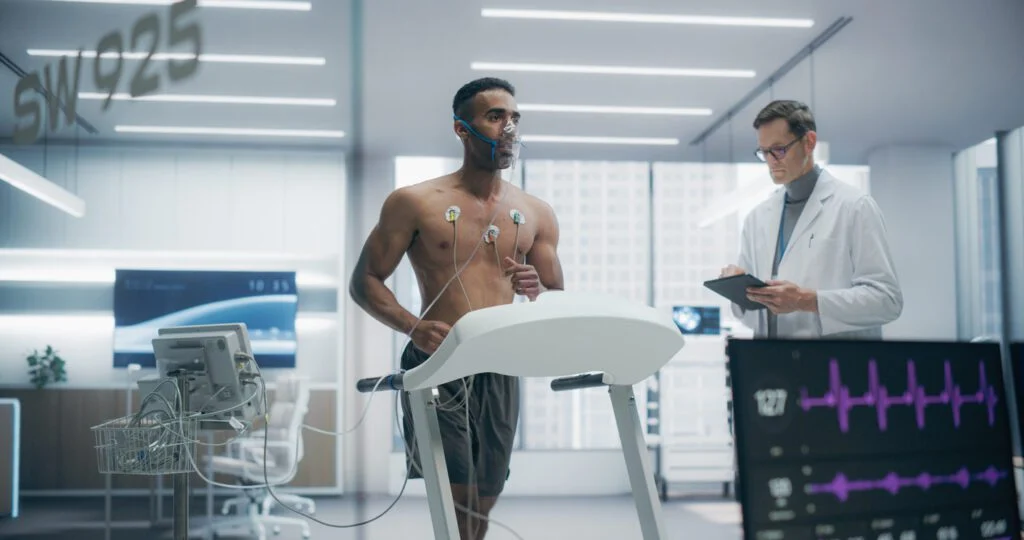
- VO2 Max: This measures how efficiently your body utilizes oxygen. A 46-year study of 5,107 Danish men found that VO2 max was a more accurate predictor of lifespan than cholesterol or blood pressure.
The Official Stance: Professional Perspectives
The medical community maintains a cautious stance on commercial bio-age testing. Organizations like the American Geriatrics Society emphasize that while these tests provide interesting data, they are not currently diagnostic tools for clinical medicine.
Physicians argue that a single "biological age" number can be misleading. Because different organs age at different rates—your liver might be "younger" than your heart—a composite number can obscure specific health threats. Furthermore, the concern regarding "commercial exploitation" is real: many companies that sell these tests upsell expensive, proprietary supplement protocols that lack clinical validation. The consensus among experts is clear: do not rely on a commercial test to guide your health journey without the oversight of a primary care physician.
Implications: Turning Data Into Action
If you or a client decide to pursue biomarker testing, the most critical step is the transition from data to behavior. Information, in isolation, is stagnant.
If a test reveals a high biological age, it should not be viewed as a permanent diagnosis or a moral failing. Instead, it is a roadmap for lifestyle adjustment. The most effective "anti-aging" protocols are not found in $300 vials of serum or exotic plasma, but in "evergreen" health pillars:
- Strength Training: Preserves bone density and hormonal health.
- Sleep Hygiene: The primary window for cellular repair.
- Nutrient Density: Reducing inflammation through whole foods.
- Stress Management: Mitigating the cortisol spikes that accelerate DNA methylation.
The Danger of "Test Fatigue"
A significant risk in the current bio-age landscape is "test fatigue" or, conversely, "test obsession." When individuals focus too heavily on the metrics, they often lose sight of the activities that actually move the needle. Replacing a consistent 30-minute walk with a complex, expensive supplement regimen is a net loss for long-term health.
The data gathered from these tests should be viewed as a baseline. The objective is to use this starting point to evaluate the efficacy of lifestyle changes. If you improve your VO2 max, lower your fasting glucose, and increase your grip strength, you are effectively lowering your biological age—regardless of what a proprietary DNA clock says.
Conclusion: A Proactive Future
The rise of biological age testing represents a paradigm shift in how we view health. We are moving away from the reactive model of waiting for disease to appear and toward a proactive model of monitoring and optimization. However, the path to longevity is not found in the latest app or the most expensive test. It is found in the discipline of movement, the consistency of sleep, and the rigor of a healthy diet.
Whether you are a fitness professional or an individual seeking to live a longer, more vibrant life, remember that data is merely a mirror. It shows you where you are, but it cannot take the steps for you. To truly reverse the clock, one must focus on the boring, difficult, and beautiful work of building a healthy life, one day at a time.