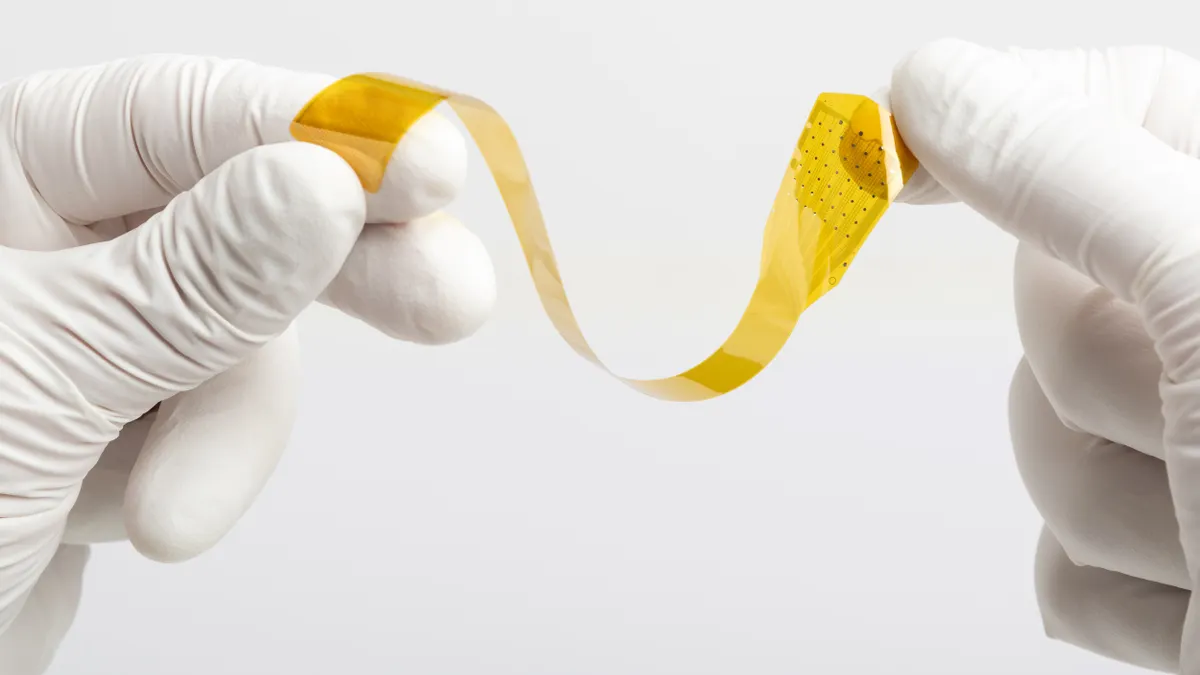
The landscape of brain-computer interface (BCI) technology is undergoing a rapid, high-stakes transformation. As investors increasingly flock to neurotechnology, Precision Neuroscience has emerged as a frontrunner, recently closing a significant Series D funding round that brings the company’s total lifetime capital raised to an impressive $430 million. This milestone, fueled by high-profile backing, underscores a pivotal moment for the industry: the transition from experimental laboratory research to clinical-grade, FDA-cleared medical interventions.
Main Facts: A Paradigm Shift in Neurosurgery
Precision Neuroscience is distinguishing itself in a crowded market by prioritizing a "minimally invasive" philosophy. While competitors like Neuralink have gained significant public attention for their direct-penetration electrode arrays, Precision has taken a different architectural approach with its "Layer 7" Cortical Interface.
The Layer 7 device is a technological marvel: a film thinner than a human hair, roughly the size of a postage stamp, embedded with 1,024 electrodes. The primary innovation lies in its surgical application. Rather than requiring a craniotomy—a major surgical procedure involving the removal of a section of the skull—the Layer 7 system is designed to be implanted through a "micro-slit" incision. This approach significantly reduces surgical trauma and recovery time, addressing one of the most significant barriers to the mass adoption of BCIs: safety and procedural complexity.
In 2025, the company achieved a critical regulatory victory when the U.S. Food and Drug Administration (FDA) granted clearance for the 30-day use of the device. This clearance serves as the foundation for the company’s current expansion, providing a pathway to gather human data that will be essential for permanent implantation approvals.
Chronology: From Concept to Clinical Reality
The trajectory of Precision Neuroscience reflects the accelerated pace of the broader medtech sector.
- Foundational Years: Established by a team of neuroscientists and engineers, the company focused on the physics of neural tissue interaction. The goal was to create a sensor that could record high-fidelity neural signals without damaging the delicate cortical surface.
- Engineering Milestones: Through years of iterative prototyping, the team developed the flexible film material that allows the array to conform to the brain’s unique topography, ensuring consistent contact with the cortex.
- 2025 Regulatory Breakthrough: After extensive preclinical validation, the company successfully navigated the FDA’s rigorous review process, securing 510(k) clearance for 30-day clinical use. This effectively moved the technology from the bench to the bedside.
- Present Day (2025/2026): The completion of the Series D round provides the necessary capital to scale operations, initiate larger-scale clinical studies, and begin the transition toward commercial-grade manufacturing.
Supporting Data: The Scale of the Investment
The $430 million in total funding represents more than just cash on a balance sheet; it is a clear signal of institutional confidence in the scalability of neurotechnology. The latest round was co-led by Pershing Square, the Ackman Oxman Institute, and an undisclosed life sciences investment fund.
The involvement of Bill Ackman, CEO of Pershing Square and co-founder of the Ackman Oxman Institute, is particularly notable. Ackman’s strategic pivot toward neurotechnology suggests that elite investment firms now view the brain as the next "frontier market."
When analyzing the BCI market, three data points remain paramount:
- Electrode Density: With 1,024 electrodes on a single stamp-sized device, the Layer 7 interface provides the high-resolution data streams required to decode complex motor and cognitive intentions.
- Surgical Efficiency: The shift from craniotomy to micro-slit is estimated to reduce procedure duration by several hours, significantly lowering hospital resource utilization.
- Clinical Longevity: The FDA’s initial 30-day clearance is a conservative but crucial stepping stone, intended to prove the biocompatibility of the material before moving to chronic (long-term) implantation.
Official Responses: The Strategic Vision
The leadership team at Precision Neuroscience views the funding as a catalyst for the next phase of the company’s lifecycle. According to internal statements released during the funding announcement, the capital is earmarked for three distinct pillars:
- Clinical Expansion: Scaling the number of patients in human trials to capture diverse neural data sets.
- Regulatory Advancement: Navigating the FDA’s "De Novo" or Premarket Approval (PMA) pathways for longer-term, permanent, or semi-permanent use.
- Infrastructure: Building the clean-room facilities and automated assembly lines necessary to produce these delicate interfaces at scale.
Bill Ackman offered a macro-level perspective on the investment, stating, "Neurotechnology will be central to the next generation of cures, treatments, and rehabilitation." His sentiment reflects the belief that the brain is essentially the last organ system to be effectively digitized and treated via hardware-software integration.
Implications: The Future of Human-Machine Symbiosis
The implications of Precision Neuroscience’s progress extend far beyond the operating room.
1. The Clinical Potential
In the short term, the primary focus remains on restorative medicine. For patients suffering from paralysis, stroke-induced motor deficits, or neurodegenerative conditions like ALS, the Layer 7 interface could eventually serve as a bridge, bypassing damaged pathways to allow for the control of robotic limbs or communication devices. By minimizing surgical risk, Precision makes this intervention viable for a much broader demographic of patients.

2. The Competitive Landscape
The BCI space is often viewed as a race between major players, but the reality is more nuanced. While Neuralink focuses on high-bandwidth, high-depth penetration, Precision is aiming for the "middle ground"—superior data resolution without the surgical morbidity of deeper-tissue electrodes. This diversification is healthy for the industry, as it allows for specialized solutions tailored to different patient needs.
3. The Ethical and Regulatory Frontier
As technology advances, the regulatory conversation is shifting from "Does it work?" to "What does it mean for the patient?" The ability to record and potentially interpret neural activity raises significant questions regarding cognitive privacy and data security. Precision Neuroscience, like its peers, will need to lead the conversation on how neural data is stored, encrypted, and protected as these devices move toward wider clinical adoption.
4. Economic Impact
If successful, the move toward minimally invasive BCI could significantly lower the cost of neural rehabilitation. If patients can be treated with a micro-slit procedure rather than a multi-day hospital stay, the economic barrier to access drops significantly. This makes the technology not only a medical triumph but a potential driver for a new sector of the healthcare economy.
Conclusion: A New Era of Medicine
The Series D funding for Precision Neuroscience is more than a financial milestone; it is a validation of a specific, surgically conservative approach to the most complex machine in the known universe. By prioritizing a delicate interface that conforms to the brain rather than penetrating it, the company is positioning itself at the center of the next great technological revolution.
As the company moves through its next phase of clinical trials, the medical community will be watching closely. If the Layer 7 interface continues to demonstrate safety and efficacy, it could well become the standard for neural intervention, proving that the future of medicine lies not just in pharmacology or surgery, but in the seamless integration of silicon and synapse. For now, the combination of robust capital, clear regulatory milestones, and a refined surgical technique suggests that Precision Neuroscience is well-equipped to navigate the challenges that lie ahead on the path to true neural restoration.