






For over half a century, hematologists and immunologists have been haunted by a microscopic enigma: the AnWj antigen. While the vast majority of the human population carries this marker on the surface of their red blood cells, a tiny fraction—less than 0.1%—lacks it entirely. For decades, this discrepancy remained a serological curiosity, a clinical puzzle that baffled researchers and left physicians in a state of high alert during rare, life-threatening transfusion scenarios.
However, a landmark breakthrough by an international team of researchers, led by the NHS Blood and Transplant service in Bristol and the University of Bristol, has finally brought this mystery to a close. By tracing the AnWj antigen to the MAL gene, scientists have not only established a new, official blood group system—the MAL system—but have also provided clinicians with the genetic tools necessary to save lives in some of the most difficult transfusion cases in modern medicine.
The Foundations of the Mystery: What is AnWj?
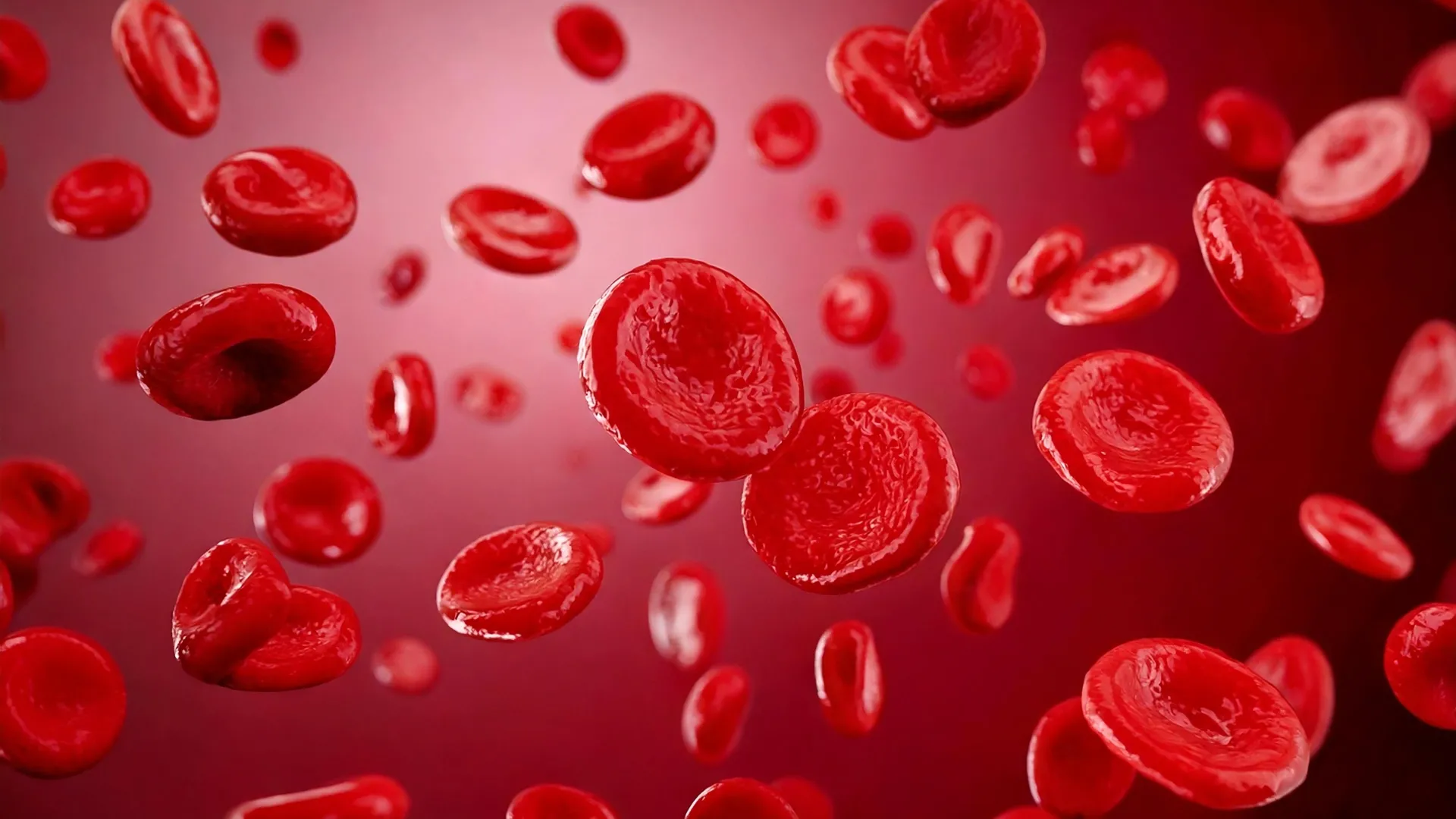
To the average person, blood types are categorized into the familiar ABO and Rh systems. However, these are merely the tip of a vast biological iceberg. Red blood cells are adorned with hundreds of different surface molecules—antigens—that act as identity markers for the immune system.
The AnWj antigen was first documented in 1972. While it is present in more than 99.9% of the global population, its significance only becomes apparent when a patient who is "AnWj-negative" develops antibodies against it. Because the antigen is so ubiquitous, finding compatible blood for these patients is an extraordinary logistical and clinical challenge. If an AnWj-negative patient receives blood from a standard donor, their immune system may perceive the transfused cells as "foreign," triggering a potentially fatal hemolytic transfusion reaction, where the body systematically destroys the donor’s red blood cells.
For decades, the "who" and the "how" of this antigen remained unknown. Scientists knew the antigen existed, but they could not identify the specific gene responsible for its production, nor the protein structure that carried it on the cell membrane. This lack of knowledge turned every transfusion involving an AnWj-negative patient into a high-stakes guessing game.
A Half-Century Chronology: From Discovery to Resolution
The timeline of the AnWj antigen is a testament to the slow, iterative progress of scientific discovery.
- 1972: The AnWj antigen is formally discovered, identifying a marker present in the overwhelming majority of the population.
- 1970s–2010s: The antigen is recognized as a clinical concern, but remains "orphaned" in the literature. Researchers understand that it can be absent due to hematological disorders or, much more rarely, inherited genetic factors, but they lack the molecular evidence to categorize it as a blood group system.
- 2015: A key breakthrough in data collection occurs when researchers gain access to blood samples from the first-ever identified AnWj-negative individual.
- 2023–2025: The research team at the International Blood Group Reference Laboratory (IBGRL) and the University of Bristol employs whole exome sequencing to compare the genomes of rare AnWj-negative individuals.
- 2026: The team confirms the MAL gene as the genetic source, identifying homozygous deletions as the cause of the inherited phenotype. The International Society of Blood Transfusion (ISBT) formally ratifies the MAL system as ISBT 047.
Decoding the Genetic Blueprint: The Role of the MAL Gene
The turning point in this decades-long investigation was the application of whole exome sequencing. By focusing on the parts of the human genome that encode proteins, researchers were able to sift through thousands of gene variants to find a common thread among the few individuals known to be born without the AnWj antigen.
The search led them to the MAL gene. Further analysis revealed that individuals with the inherited AnWj-negative phenotype carried homozygous deletions—meaning they lacked the functional gene entirely on both chromosomes inherited from their parents.
The MAL gene is responsible for producing the Mal protein, a small, unassuming membrane protein. Through rigorous laboratory experimentation, the team proved that when the MAL gene is present and functional, the Mal protein appears on the cell surface, carrying the AnWj antigen. When the gene is deleted, the protein is absent, and the antigen disappears. By introducing the normal MAL gene into laboratory-grown cells, the researchers were able to "switch on" the production of the antigen, confirming that the gene was not just associated with the blood group, but was its direct cause.
Clinical Implications: A New Standard for Patient Safety
The classification of the MAL system is far more than an academic achievement; it is a clinical necessity. The ability to now test for the MAL gene via genotyping allows blood banks to identify donors who are truly AnWj-negative.
Previously, identifying these rare individuals was a slow process of manual antibody screening. Now, genotyping can be integrated into existing high-throughput platforms. This speed is critical. As seen in recent clinical reports from 2026, the absence of compatible blood for patients with anti-AnWj antibodies can force physicians into impossible decisions—such as using incompatible blood and managing the resulting immune reaction with drugs like sutimlimab, a complement inhibitor.
These cases underscore the distinction between "acquired" and "inherited" AnWj-negativity. Patients with certain cancers or hematological disorders may lose the expression of the antigen due to their disease. Distinguishing these patients from those with the rare inherited genetic deficiency is now possible through the new genetic markers, allowing for more tailored, safer treatment plans.
Official Responses and the "Human Element"
The resolution of the AnWj mystery has been described by the research team as the "culmination of a long team effort."
Louise Tilley, a Senior Research Scientist at IBGRL, noted that she had spent nearly 20 years of her career pursuing this specific goal. "The genetic background of AnWj has been a mystery for more than 50 years," Tilley said. "It represents a huge achievement to finally establish this new blood group system and be able to offer the best care to rare, but important, patients."
Professor Ash Toye, Director of the NIHR Blood and Transplant Research Unit at the University of Bristol, emphasized the role of advanced technology: "It’s really exciting we were able to use our ability to manipulate gene expression in the developing blood cells to help confirm the identity of the AnWj blood group. This development will help identify these rare donors and help patients in the future."
The sentiment across the team is one of profound professional satisfaction. As Dr. Tim Satchwell, who contributed to the study, remarked, the Mal protein’s "interesting properties" made it an elusive target, requiring a synthesis of biochemistry, genetics, and clinical hematology to finally pin it down.
The Expanding Map of Human Blood
The ratification of the MAL blood group system is part of a broader, rapidly accelerating expansion of our understanding of human biology. In the period surrounding the 2026 ISBT report, four new blood group systems were ratified, including MAL, ER, CD36, and ATP11C. By September 2026, the discovery of the JAMA system pushed the official count to 49.
Each new system added to this list represents a deeper understanding of the molecular landscape of human life. The story of the MAL gene serves as a potent reminder that even after half a century of study, the human body remains full of hidden complexities. For the patient requiring a life-saving transfusion, these microscopic discoveries are the difference between a routine procedure and a medical crisis.
As we look toward the future of hematology, the transition from serological observation to genetic precision marks a new era. The mystery of the AnWj antigen has been solved, but it has paved the way for the next generation of rare-blood research, ensuring that no patient is left without the life-saving blood they need, no matter how rare their genetic profile may be.