








Originally published in the November-December 1982 issue of Yoga Journal, this archival deep-dive remains a cornerstone of mindful movement. As part of our ongoing Archives series, we revisit the foundational principles of Bharadvajasana to explore how the past informs the practice of today.
The Essence of Bharadvajasana: More Than Just a Pose
In the vast landscape of yoga, few postures offer the accessibility and profound therapeutic potential of the Seated Twist, known in Sanskrit as Bharadvajasana. Named for a revered sage from the Indian epic Mahabharata, this beginning-level spinal twist is a masterclass in alignment. It is uniquely suited for those less supple, older students, and individuals navigating the physical shifts of pregnancy.
While modern yoga classes often emphasize high-energy flows, the true power of the Seated Twist lies in its subtlety. By gently stretching the ligaments that bind the vertebrae, practitioners can create a newfound range of motion throughout the entire spinal column. This structural liberation does more than improve posture; it clears away the minor, chronic tightness that often acts as a roadblock to more advanced asanas, allowing the body to "spring" into its natural, gently curved alignment.
A Chronological Journey: From Ancient Epic to Modern Mat
The lineage of Bharadvajasana is as old as the philosophical traditions of India itself. However, its formal introduction into Western therapeutic yoga practice gained significant momentum in the late 20th century, largely due to the influence of B.K.S. Iyengar.
- Ancient Origins: The pose draws its name from the sage Bharadvaja, one of the Vedic Saptarishis (seven great sages). In the Mahabharata, his character represents wisdom and stability.
- 1966: The publication of B.K.S. Iyengar’s seminal text, Light on Yoga, provided the anatomical framework that would define modern postural yoga.
- 1982: Yoga Journal published this definitive guide, translating the complex biomechanics of the pose for a growing American audience.
- 2026: Today, the pose remains a staple in both clinical physical therapy settings and restorative yoga studios, proving that while exercise trends come and go, the necessity of spinal health remains constant.
Anatomical Integrity: Protecting the Sacroiliac Joint
Perhaps the most critical aspect of the Seated Twist—and the most frequently misunderstood—is the relationship between the pelvis and the spine. The pelvis acts as the essential bridge between the trunk and the lower extremities.
When a student attempts to twist while holding the pelvis rigid, they create dangerous torque at the sacroiliac (S-I) joint. This joint, which connects the sacrum to the ilium, is inherently stable but lacks the muscular support of a ball-and-socket joint. For women, this is a particular concern; anatomical differences in the pelvic structure, combined with hormonal fluctuations during menses, pregnancy, and lactation, can increase ligamentous laxity.
To protect this delicate junction, the base of the movement must be level. By ensuring both buttocks remain firmly rooted on the floor, the practitioner allows the pelvis to move as a unified extension of the spine. When the pelvis is permitted to participate in the twist, the strain is distributed safely throughout the body rather than concentrated at a single, vulnerable joint.
The Philosophy of Release: Moving Beyond Ego
A common pitfall for the modern practitioner is the tendency to approach yoga as an artificial discipline—a force to be exerted upon an "unwilling" body. This mindset, often rooted in asmita (egoism), views the body as an object to be conquered.
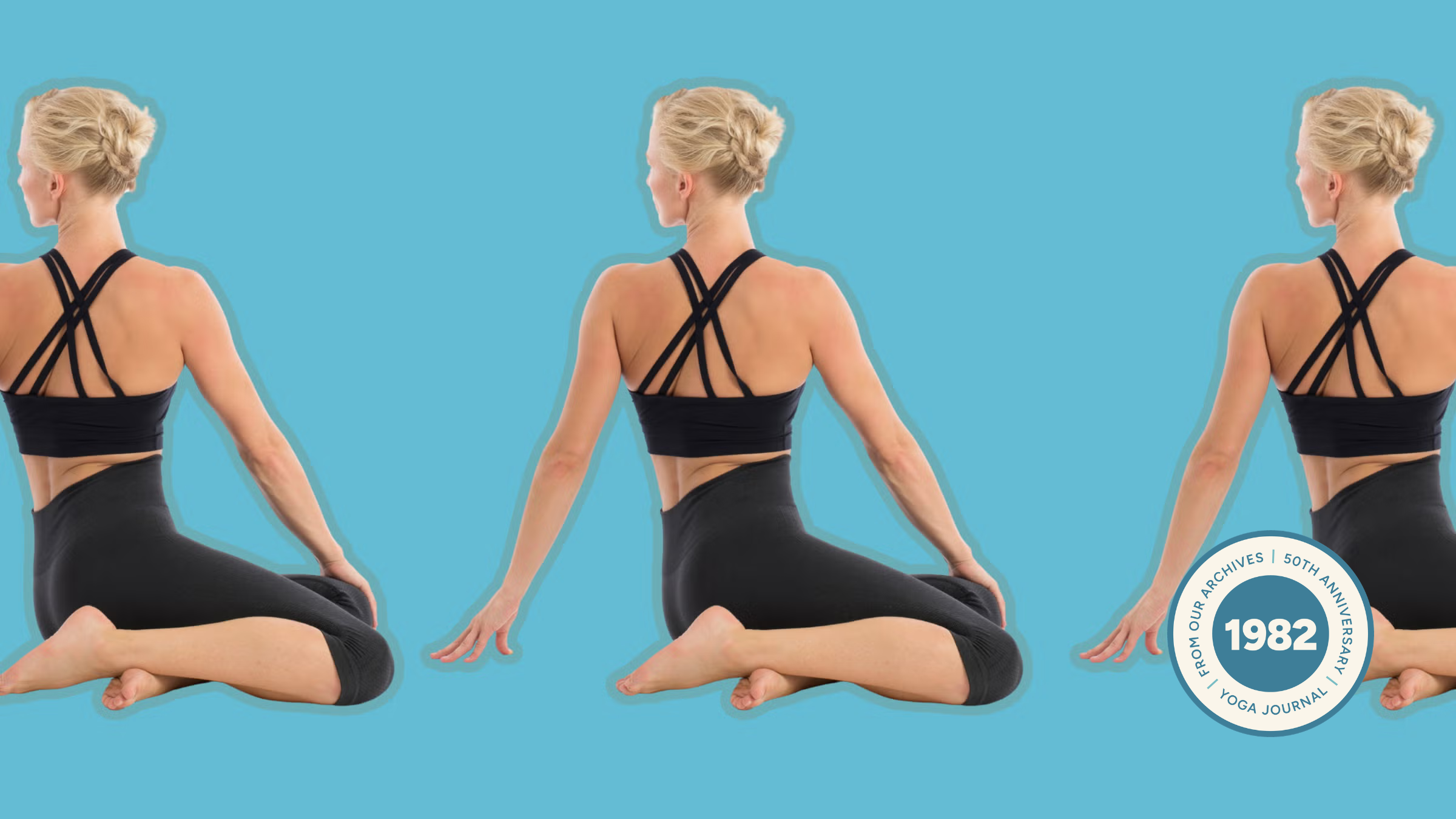
However, the true essence of yoga is not one of forcing, but of releasing. As practitioners, we are not trying to change the "path of the self," but rather to remove the roadblocks—the physical and mental tension—that prevent us from occupying that path fully.
Yoga teaches that the soul, or the Atman, is already perfect. The discipline, therefore, lies in the patience required to allow the asana to express itself through the body. The physical expression of this surrender is not weakness; it is a profound, intentional softness. The mental expression of this surrender is the breath—specifically, the exhalation. In the Seated Twist, the exhalation is the vehicle for release, allowing the spinal column to adjust and settle into the shape with ease rather than effort.
Clinical Perspectives and Pedagogical Best Practices
Teachers should emphasize that the Seated Twist is an inclusive posture. For beginners or those with limited mobility, the use of props is not a sign of "lesser" practice, but a tool for structural intelligence.
Techniques for All Levels
- The Wall Assist: Beginners can sit with their shoulders perpendicular to a wall. By pushing gently against the wall, the student gains the leverage necessary to mobilize the thoracic spine—an area often locked by modern sedentary habits. This is particularly valuable for pregnant students who may find traditional twisting across the abdomen uncomfortable.
- Prop Support: If a student finds that one buttock lifts off the floor, a folded blanket placed under the raised side can restore balance. A level base is the non-negotiable foundation of a safe twist.
- The Breath-Movement Connection: Every increment of the twist should be synchronized with an exhalation. This ensures that the nervous system remains in a parasympathetic state, signaling to the muscles that it is safe to lengthen.
Implications for Longevity and Posture
The implications of mastering the Seated Twist extend far beyond the yoga studio. By freeing the shoulder and hip girdles, we address the root causes of common postural issues, such as lordosis (sway back) or the habitual "slouch" caused by tight shoulders.
When these major joints are free, the spine is no longer forced to compensate for areas of restriction. It is allowed to return to its natural, elegant curvature. For the aging student, this preservation of spinal mobility is vital for maintaining independence and preventing the loss of range of motion.
Ultimately, the Seated Twist is an invitation to inhabit the body with honesty. By letting go of the need to force the body into a "desired mold," we discover a state of harmony. Whether you are a seasoned practitioner or a newcomer, the instruction remains the same: practice with patience, prioritize the integrity of your base, and allow the movement to emerge from a place of stillness.
How to Practice Seated Twist (Step-by-Step)
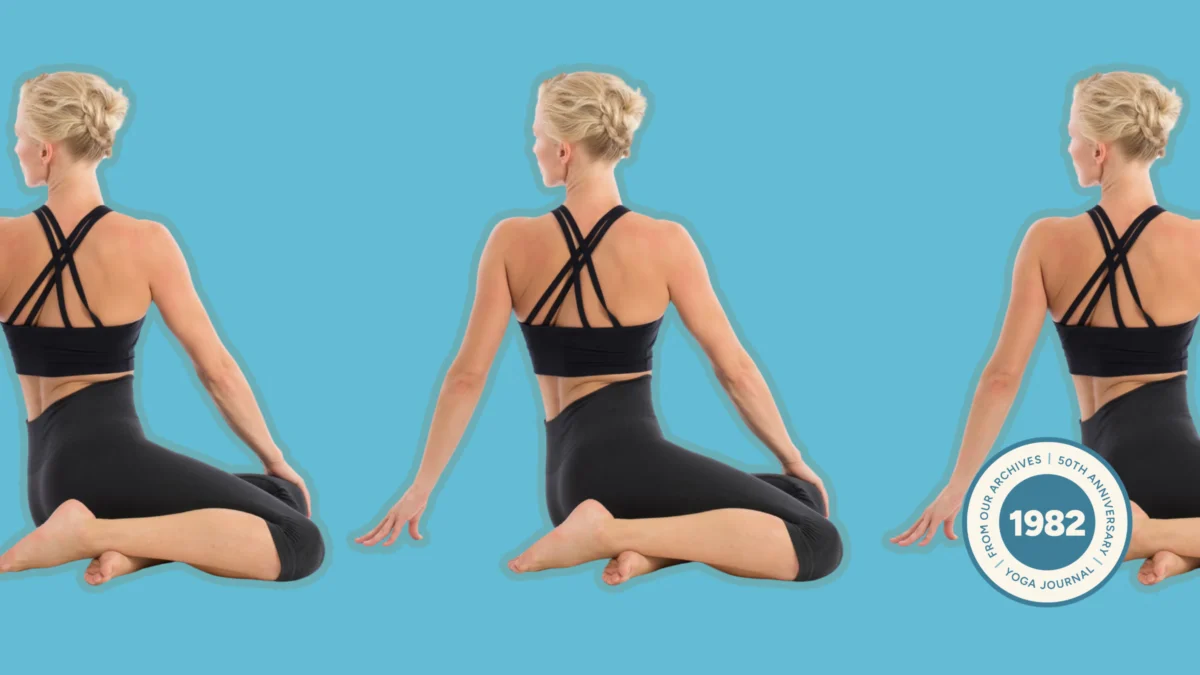
- Preparation: Sit with legs extended. Exhale, bending your knees to the left side of your buttocks. Your left ankle should nestle into the arch of your right foot.
- Grounding: Ensure both buttocks are anchored to the floor. If the hips are tight, use a folded blanket under the right buttock.
- The Ascent: On an exhalation, reach your right arm toward the sky, maintaining length, before bringing it around your back to capture your left arm just above the elbow. Keep the right shoulder rotated outward.
- The Twist: Reach your left arm across your body, hooking the palm under the outside of your right knee. Initiate the twist from the base of the spine, moving slowly and only on the exhalation.
- Alignment: Maintain eyes parallel to the horizon. Hold for several breaths, maintaining a sense of "softness" throughout the pose.
- Release: Come out slowly on an exhalation, and repeat on the opposite side.
The author acknowledges the profound influence of B.K.S. Iyengar’s "Light on Yoga" in the synthesis of these techniques, underscoring the importance of lineage in the study of asana.