











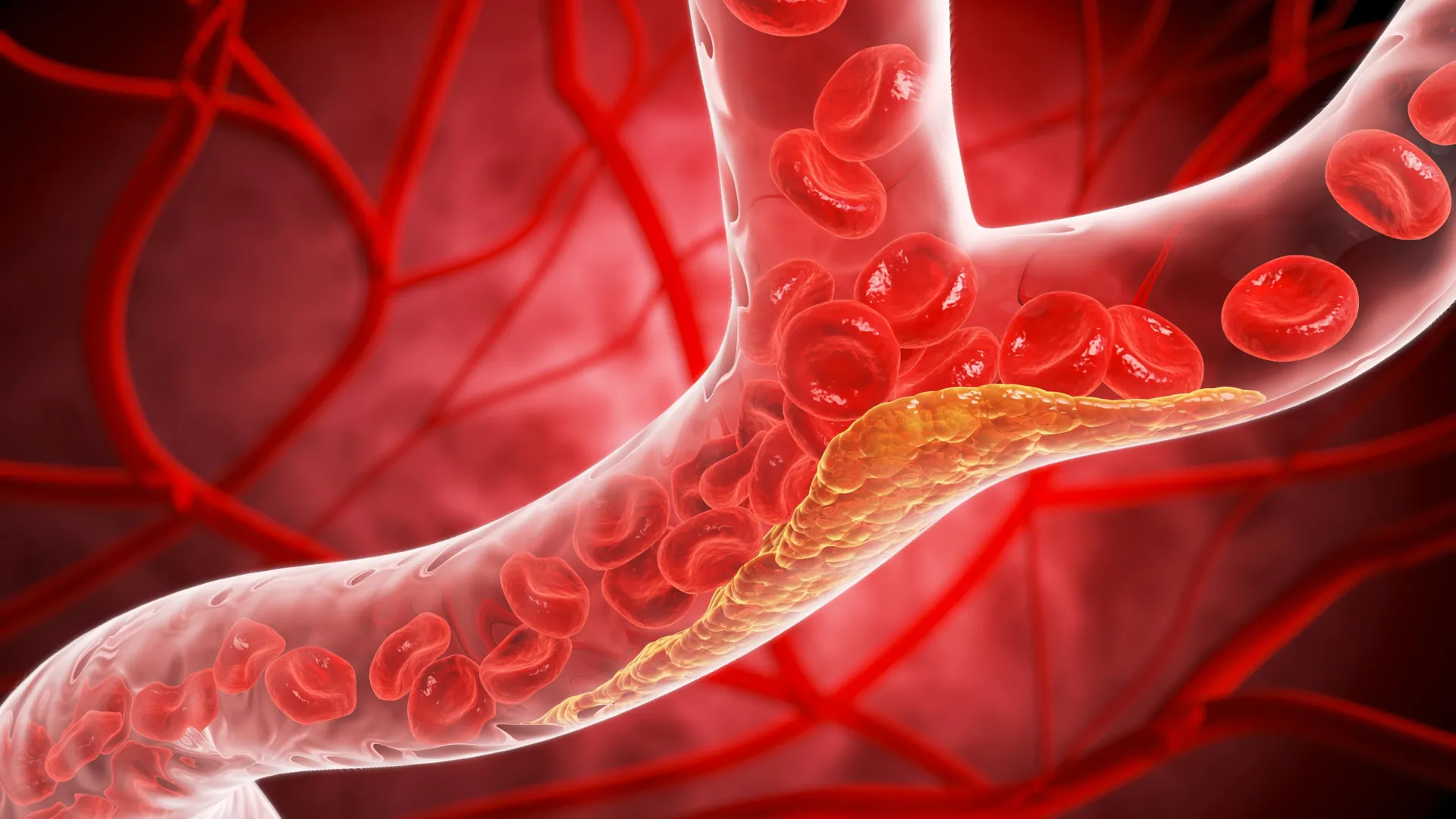
Atherosclerosis—the insidious accumulation of fatty plaque within arterial walls—has long been viewed as a disease of aging, a late-stage complication that surfaces only after years of neglect. However, a landmark international study unveiled at the ESC Congress 2026 and published simultaneously in The New England Journal of Medicine has shattered this conventional wisdom. The study reveals that the disease is not only present in a significant portion of seemingly healthy young adults but is far more pervasive across the adult lifespan than previously understood.
The findings, emerging from the first phase of the ambitious REACT (Research on Early Atherosclerosis and Clinical Treatment) project, suggest that the current medical paradigm of "estimating risk" may be fundamentally flawed. By shifting the focus from statistical probability to direct visual detection, researchers believe they have opened a new frontier in precision cardiovascular medicine.
Main Facts: A New Reality for Cardiovascular Health
The REACT study represents one of the most comprehensive investigations into subclinical atherosclerosis ever conducted. By examining over 16,000 asymptomatic participants, researchers have provided a granular, high-definition map of how arterial disease develops from early adulthood into the later stages of life.
The core finding is as startling as it is clear: 57.1% of the 16,808 participants—all of whom were free of known cardiovascular disease—showed evidence of atherosclerotic plaque in their arteries. This silent presence was not confined to older individuals; the data confirmed that the disease process takes root much earlier than clinicians typically screen for it.
The study utilized advanced imaging techniques to track plaque across three critical vascular territories: the carotid arteries in the neck, the femoral arteries in the legs, and the coronary arteries supplying the heart. The results indicate that rather than being an isolated event, atherosclerosis is a systemic condition that often appears in peripheral arteries long before it reaches a critical threshold in the heart.
Chronology of a Paradigm Shift
The REACT initiative is designed as an eight-year, two-phase project that aims to redefine how the world approaches heart health.
Phase 1: The Detective Phase (2024–2026)
The initial phase, titled "REACT-DETECT," focused on establishing the baseline prevalence of silent atherosclerosis. Researchers from Denmark (led by Professor Henning Bundgaard of Rigshospitalet) and Spain (led by Dr. Borja Ibáñez of CNIC) enrolled 16,808 participants aged 18 to 70. Beyond imaging, the team collected extensive cardiovascular risk data, blood biomarkers, retinal images, and "omics" samples, creating a gold-standard database for future research.
Phase 2: The Protective Phase (Planned 2027–2032)
If funding is secured, the project will transition into "REACT-PROTECT." This phase will involve a large-scale, randomized clinical trial to test whether a prevention strategy guided by direct imaging can effectively slow or reverse the progression of plaque. The ultimate goal is to prove that identifying the disease in its subclinical stage can reduce the incidence of heart attacks, strokes, and sudden cardiac deaths more effectively than the current standard of care.
Supporting Data: Age, Sex, and Distribution
The data harvested from the first phase provides a sobering look at the progression of the disease.
- The Early Onset: Among participants aged 18 to 29, approximately 1 in 13 already displayed signs of arterial plaque. This contradicts the traditional clinical assumption that young adults are effectively "immune" to the early stages of the disease.
- The Age-Prevalence Curve: The prevalence of the disease rises in a predictable, linear fashion with age. By the time participants reached the 60–70 age bracket, roughly 9 out of 10 exhibited some degree of atherosclerosis.
- Sexual Dimorphism: The study revealed distinct patterns between men and women. Men typically begin the process earlier, with their prevalence curve tracking five to ten years ahead of women. Conversely, women experience a sharp, accelerated increase in plaque formation between the ages of 40 and 60—a window that closely mirrors the hormonal shifts associated with the menopausal transition.
- The Ultrasound Advantage: A critical insight from the imaging data is the high correlation between plaque in peripheral arteries (carotid and femoral) and plaque in the coronary arteries. This is a game-changer for screening, as it suggests that clinicians do not necessarily need invasive or expensive CT scans to identify those at high risk; portable, non-invasive ultrasound of the neck and legs could serve as a highly accurate proxy for coronary health.
Official Responses: Moving Beyond Risk Estimation
The leaders of the REACT project argue that the current reliance on risk-assessment tools—such as the SCORE2 system—is insufficient because these tools only estimate the probability of disease, rather than detecting the presence of it.
"The REACT study is based on a simple but revolutionary idea," says Dr. Borja Ibáñez. "We are moving from the current model, which estimates the probability of cardiovascular disease on the basis of traditional risk factors like cholesterol and blood pressure, toward a new paradigm in which the disease is detected directly through imaging before it causes symptoms."
Professor Henning Bundgaard emphasizes that the vision is about personalization. "Until now, preventive decisions have been based on an estimate of risk, but we did not know whether the disease was already present," he notes. "REACT shows that atherosclerosis can be detected decades before clinical manifestations appear and provides the most comprehensive atlas of the evolution of the disease across adult life."
Dr. Valentin Fuster, Director General of CNIC and a key figure in the project, suggests the implications go beyond mere management. "For years, we have proposed that early intervention in atherosclerosis could not only prevent its progression but might even make it possible to cure the disease. REACT will answer this question."
Implications: A New Era of Cardiovascular Prevention
The implications of these findings are profound for both healthcare providers and the general public.
1. The Death of the "Low-Risk" Fallacy
Perhaps the most consequential takeaway is that traditional risk scores miss a vast number of individuals who are already harboring disease. Under current guidelines, a person might be classified as "low risk" based on their blood pressure and cholesterol levels, yet already have established plaque that requires intervention. The REACT data suggests that current screening protocols are essentially "blind" to the silent progression of the disease in the majority of the population.
2. Democratizing Screening
The finding that carotid and femoral ultrasound can act as a reliable surrogate for coronary imaging could democratize heart health screenings. By empowering healthcare professionals to use portable, bedside ultrasound devices, health systems could potentially screen for early-stage cardiovascular disease in primary care settings, rather than waiting for symptoms to manifest in an emergency department.
3. Precision Medicine and Global Applicability
The project’s expansion into India, Singapore, Tanzania, and Mexico highlights the need to validate these findings across diverse genetic and lifestyle backgrounds. Cardiovascular disease claims nearly 20 million lives annually; if the "imaging-first" approach proves successful, it could fundamentally alter the global strategy for addressing this, the world’s leading cause of death.
4. A Call to Action for Younger Generations
For younger adults, the study serves as a wake-up call. The presence of disease in 18-to-29-year-olds suggests that public health initiatives must move away from focusing exclusively on the elderly and start emphasizing long-term vascular health as a lifelong pursuit.
As the REACT project enters its next stage, the medical community will be watching closely. If the Phase 2 trials confirm that detecting and treating silent atherosclerosis improves long-term health outcomes, it will represent the most significant shift in cardiovascular medicine in half a century—a transition from a reactive approach that waits for the heart to fail, to a proactive, precision-based strategy that secures the future of the arterial system.