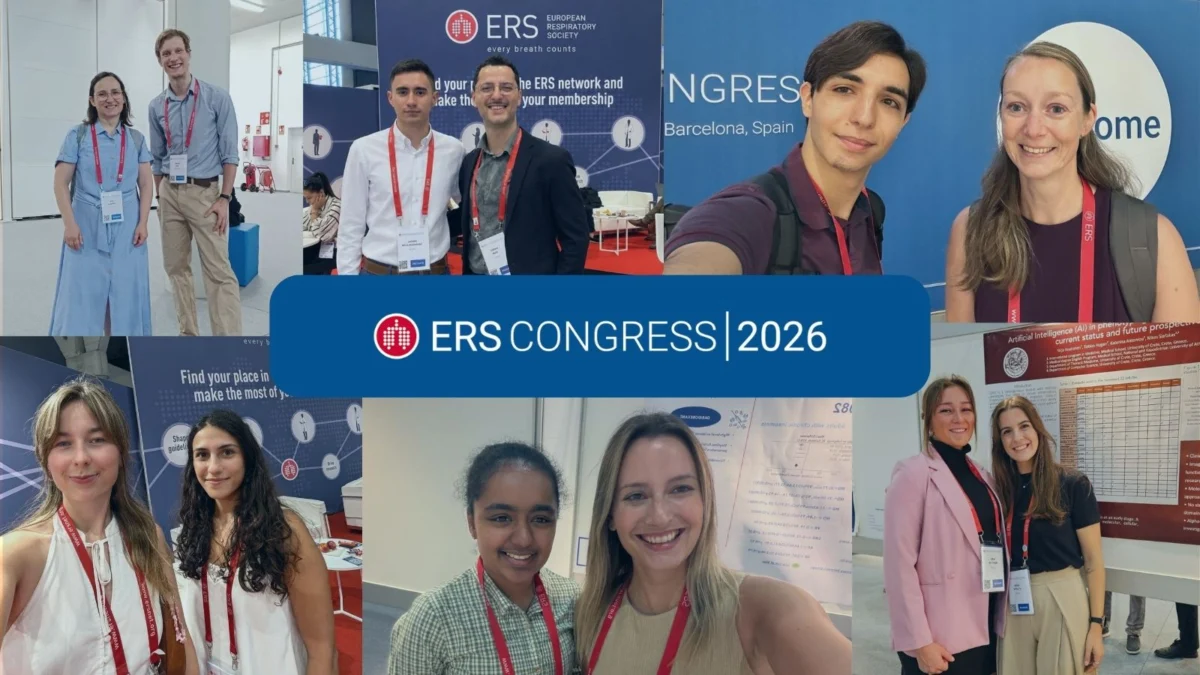
BARCELONA, 1 October 2026 – The European Respiratory Society (ERS) has officially concluded a landmark chapter in its commitment to medical education. At this year’s ERS Congress in Barcelona—the premier global gathering for respiratory science and clinical practice—the Society successfully hosted over 50 students and trainees through its expanded scholarship initiative, providing them with full access to the world’s largest respiratory conference.
This strategic move, which builds upon the foundation laid in Amsterdam during the 2025 Congress, marks a significant shift in how professional medical societies cultivate talent. By lowering financial barriers and providing structured mentorship, the ERS is actively shaping the future of respiratory medicine, ensuring that the next generation of researchers, scientists, and clinicians is prepared to tackle the global burden of lung disease.
The Evolution of an Initiative: From Pilot to Pillar
The seeds for this program were sown in 2025, when the ERS recognized a growing need to bridge the gap between academic theory and the high-level, fast-paced world of international respiratory research. While the inaugural program focused primarily on medical students, the 2026 iteration underwent a rigorous review process.
Recognizing that respiratory medicine is a multidisciplinary field, the ERS broadened the scope of eligibility. For the 2026 cycle, applications were opened to a diverse cohort, including basic and translational scientists, as well as allied health professionals in training. This inclusive approach reflects the reality of modern clinical practice, where the synergy between laboratory research and bedside care is essential for patient outcomes.
The expansion was not merely quantitative but qualitative. While the core benefit remained free registration, the ERS introduced a bespoke "Mentorship Integration" component. By pairing each student with an Early-Career Member (ECM) of the Society, the program transformed from a passive learning experience into an active, guided professional development journey.
Chronology of the 2026 Congress Experience
The journey for the 50+ participants began weeks before their arrival in Barcelona, as the ERS digital infrastructure facilitated early introductions between mentees and their mentors. This preparation period proved vital for navigating the dense, multi-track schedule of the Congress.
- Pre-Congress: Mentors provided initial guidance on session selection, abstract submission advice, and logistical support, helping to demystify the scale of the ERS Congress for first-time attendees.
- Opening Days: Participants were integrated into the broader ERS community, attending keynotes and opening ceremonies, with mentors acting as anchors to help the students navigate the vast exhibition halls and lecture theaters.
- Mid-Congress: The students transitioned from observers to contributors. Many of the scholars presented their own abstracts—ranging from clinical trials to molecular biology studies—in poster and oral sessions.
- The Educational Immersion: A standout feature of the 2026 program was the inclusion of trainees in educational sessions. Students were given the rare opportunity to observe hands-on clinical training, providing them with a "behind the scenes" look at how modern respiratory skills are taught and practiced at the highest level.
- Closing & Reflection: The initiative concluded with a networking forum, where the students could consolidate their connections and reflect on the career paths that lie ahead.
Supporting Data and Impact
The impact of this initiative is evidenced by the diverse academic backgrounds of the participants. The 2026 cohort included researchers from top-tier institutions such as the Cystic Fibrosis Centre of Verona, Hanover Medical School, and the University of Ljubljana.
The success of the program can be quantified through the high volume of abstract submissions from the scholars, as well as the positive feedback regarding the mentorship scheme. According to internal ERS surveys, 100% of participants reported that the mentorship component was "essential" or "highly beneficial" in helping them navigate the complexities of a professional medical conference.
Participant Voices: Insights from the Frontline
The value of the ERS initiative is best articulated by the students who experienced it firsthand. For many, the Congress was a transformative experience that altered their career trajectories.
Anca Manuela Hristodor, a 2nd-year PhD student at the Cystic Fibrosis Centre of Verona, noted the intensity of the event but highlighted its necessity. "Despite feeling overwhelmed at first, I enjoyed every moment of the programme," she stated. "I found the poster sessions particularly useful. They allowed me to come into contact with so many talented researchers and clinicians from fields outside of cystic fibrosis. This allowed me to gather tips to complement my research and to be truly inspired."
For Eva Bitežnik, a 4th-year student at the University of Ljubljana, the Congress provided a panoramic view of the profession. "Attending the ERS Congress in Barcelona has been an incredibly inspiring experience," Bitežnik remarked. "I have had the opportunity to learn from leading experts and experience the diversity of the field beyond what we normally encounter during medical school. I would definitely encourage the ERS to continue this initiative."
Daniel Martin Decker of Hanover Medical School highlighted the practical nature of the program, specifically the opportunity to witness professional skill development. "It was very interesting to gain insight into how hands-on clinical skills are taught and practiced at congresses like this," Decker noted.
The Role of Mentorship: A Catalyst for Connection
The introduction of the ERS Early-Career Member mentorship scheme has been heralded as the "missing piece" of student integration. By pairing scholars with professionals who are only a few years ahead in their careers, the ERS created a relatable, high-impact support structure.
Rita Maria Pereira Andrade dos Santos noted, "My mentor was very kind and available. They were helpful in explaining when and where to go, suggesting the best sessions to attend, and helping me to level my expectations."
For Daniel González García, the mentorship provided a psychological safety net during a critical professional moment. "Having a mentor to talk to before and during the Congress was very helpful, especially as I was giving an oral presentation. My mentor was very supportive and gave me useful advice that helped me feel more confident and relaxed."
This sentiment was echoed by Anne Mary John Uthaykumar, who emphasized the networking benefits: "Getting assigned a mentor based on my shared interests really helped and made the Congress more enjoyable. It is a wonderful platform to network with fellow doctors and researchers."
Implications for the Future of Respiratory Medicine
The ERS initiative has profound implications for the medical community. By investing in students and early-career professionals, the Society is ensuring that the "brain drain" often seen in medical academia is mitigated. When students feel supported, seen, and connected to a global network of peers and mentors, they are significantly more likely to commit to a long-term career in respiratory medicine.
The integration of scientists and allied health professionals alongside medical students also fosters a "One Health" approach, breaking down the silos that often exist between clinical practice and basic science. As these students transition into their respective roles, they will carry with them the interdisciplinary mindset fostered by the ERS.
Furthermore, the initiative serves as a model for other global medical societies. In an era where international travel and conference attendance are increasingly costly, the ERS has demonstrated that strategic investment in the next generation is not just a philanthropic gesture, but an essential component of professional sustainability.
A Commitment to Continued Excellence
As the 2026 ERS Congress comes to a close, the Society has already begun the process of evaluating the initiative for 2027. The leadership of the ERS has expressed its gratitude to the participants, the mentors, and the administrative teams that made the program a success.
"The ERS Congress is the world’s largest respiratory conference for a reason," noted a spokesperson for the Society. "It is a hub of innovation, but that innovation means nothing if it is not passed on to the next generation. We are committed to continuing this initiative, refining our mentorship models, and ensuring that every student who joins our community feels empowered to lead the charge in respiratory health."
The success of the 2026 program is a testament to the fact that while medicine is defined by science and technology, it is sustained by the people who practice it. By welcoming 50+ new voices into the fold, the ERS has ensured that the future of respiratory medicine is not only bright but well-connected, highly skilled, and profoundly inspired.