






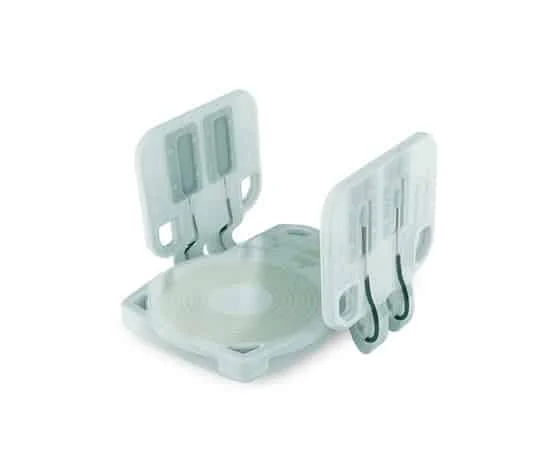
In a significant development for sleep medicine, medical technology company Nyxoah has announced positive top-line results from its ACCCESS pivotal study. The trial, which evaluated the efficacy and safety of the Genio hypoglossal nerve stimulation system, achieved statistically significant outcomes for patients suffering from obstructive sleep apnea (OSA) who present with complete concentric collapse (CCC) of the soft palate.
For many patients, the soft palate acts as a primary site of airway obstruction. Until now, these individuals have been largely excluded from the benefits of hypoglossal nerve stimulation—a treatment that uses an implanted device to prevent the tongue from collapsing and blocking the airway during sleep. By successfully meeting its primary efficacy and safety endpoints, the ACCCESS study marks a potential turning point in how clinicians approach this challenging anatomical profile.
The Challenge of Complete Concentric Collapse (CCC)
Obstructive sleep apnea is a chronic condition characterized by repeated interruptions in breathing during sleep, often leading to severe health complications, including cardiovascular disease, hypertension, and excessive daytime fatigue. While Continuous Positive Airway Pressure (CPAP) therapy remains the gold standard, patient compliance is notoriously low due to discomfort and intolerance.
For years, hypoglossal nerve stimulation has served as an alternative for those who cannot tolerate CPAP. However, the standard of care for these stimulators has traditionally been limited to patients who do not exhibit CCC—a specific pattern of collapse where the soft palate and pharyngeal walls close in a circular fashion. Because current unilateral stimulation devices have struggled to effectively open the airway in the presence of this specific structural collapse, patients with CCC were effectively left without a neurostimulation option.
The ACCCESS study was explicitly designed to determine if the bilateral stimulation approach offered by Nyxoah’s Genio system could provide the necessary mechanical support to overcome this barrier.
Chronology of the ACCCESS Study
The journey to these positive results involved a rigorous, multi-step clinical process designed to meet the high standards of the U.S. Food and Drug Administration (FDA).
- Study Design and Enrollment: The ACCCESS trial was structured as a prospective, multi-center, single-arm pivotal study. Enrollment focused on patients diagnosed with moderate-to-severe OSA who demonstrated CCC during drug-induced sleep endoscopy (DISE), a diagnostic procedure used to visualize the airway under sedation.
- Implantation and Activation: A total of 47 patients were included in the full analysis set. These participants underwent the surgical implantation of the Genio system. Following the recovery period, the devices were activated, and baseline sleep data was recorded.
- Ongoing Monitoring: Participants were monitored throughout the 12-month study period, with regular sleep testing conducted to measure the Apnea-Hypopnea Index (AHI)—the number of breathing pauses per hour—and the Oxygen Desaturation Index (ODI)—the frequency with which blood oxygen levels drop.
- Final Data Readout: In October 2026, researchers finalized the 12-month data, revealing that the system met its co-primary endpoints with statistical significance, paving the way for the next phase of the FDA regulatory process.
Supporting Data and Clinical Efficacy
The performance of the Genio system in the ACCCESS trial exceeded expectations, providing a robust dataset for regulators. The trial assessed two primary efficacy metrics: the 12-month AHI responder rate and the 12-month ODI responder rate.
Statistical Breakthroughs
At the one-year mark, patients demonstrated an AHI responder rate of 77.2% (p<0.001). Furthermore, the ODI responder rate reached 87.7%. These figures are particularly notable given the complexity of the CCC patient population, who are historically difficult to treat via traditional neurostimulation methods.
Safety Profile
Equally important to the efficacy results was the safety profile. Throughout the 12-month study, there were zero device-related serious adverse events reported. This "clean" safety profile is a critical component for the FDA’s review, as it demonstrates that the bilateral stimulation technique is not only effective but also poses a manageable risk profile for patients undergoing surgical implantation.
Perspectives from Clinical and Executive Leadership
The implications of these findings have been met with optimism by the medical community. Dr. Colin Huntley, a professor in the Department of Otolaryngology at Thomas Jefferson University and co-principal investigator of the ACCCESS study, emphasized the clinical necessity of this development.
"A significant number of patients with OSA are found to have CCC and, until this point, hypoglossal nerve stimulation has not been an option for this population," Dr. Huntley stated. "The ACCCESS results demonstrate that Genio delivers a strong responder rate with an excellent safety profile in patients with this pattern of airway collapse. These findings could give US physicians a new treatment option for the vast number of OSA patients with CCC who have struggled with positive airway pressure."
Nyxoah’s leadership has echoed this sentiment, framing the results as the fulfillment of a long-standing commitment to the patient community. Olivier Taelman, CEO of Nyxoah, remarked, "ACCCESS delivers on the promise we made to CCC patients. With a 77.2% AHI responder rate and zero device-related serious adverse events, Genio demonstrated both the efficacy and the safety this underserved patient population deserves."
Implications for Future Treatment Paradigms
The success of the ACCCESS trial has profound implications for both the medical device industry and patients currently struggling with OSA.
Expanding the Patient Pool
Currently, in the United States, patients with CCC are often left with limited surgical or therapeutic options once they fail CPAP. By validating the Genio system for this group, Nyxoah is poised to significantly expand the eligible candidate pool for hypoglossal nerve stimulation. This shift represents a move toward personalized medicine, where the choice of therapy is dictated by the specific anatomical pattern of the patient’s airway collapse.
Regulatory Trajectory
Nyxoah is now in the advanced stages of preparing a premarket approval (PMA) supplement submission to the FDA. The system already benefits from FDA Breakthrough Device Designation, a status granted to products that provide for more effective treatment of life-threatening or irreversibly debilitating conditions. This designation is expected to facilitate a more efficient review process, potentially bringing the device to the U.S. market in the near future.
Impact on Sleep Surgery
The upcoming presentation of the full 12-month dataset at the International Surgical Sleep Society annual meeting in Los Angeles serves as a cornerstone event for the field. It will allow leading surgeons and sleep specialists to scrutinize the data, discuss the nuances of the surgical technique required for bilateral stimulation, and consider how to integrate this technology into standard clinical workflows.
Conclusion: A New Horizon for Sleep Health
The ACCCESS trial is more than just a successful clinical study; it is a validation of the potential for innovation in the neurostimulation sector. By addressing the specific physiological challenges of complete concentric collapse, Nyxoah has moved one step closer to providing a viable, effective alternative for patients who have historically been underserved.
As the company moves toward its formal FDA submission, the sleep medicine community will be watching closely. If approved, the expansion of the Genio indication will provide a much-needed lifeline for patients with complex anatomical presentations of sleep apnea, offering them the possibility of restful sleep and a significant improvement in their overall quality of life. For now, the results stand as a testament to the power of targeted clinical research to solve some of the most persistent challenges in modern respiratory care.