








Contributing Author: Blood Cancer United
September marks Blood Cancer Awareness Month, an annual observance dedicated to celebrating medical breakthroughs and honoring the growing community of long-term survivors. As medical science pushes the boundaries of what is possible, patients and clinicians are increasingly turning their attention to the "after"—the quality of life, long-term health, and future possibilities for those who have successfully navigated the gauntlet of cancer treatment.
For younger patients facing a diagnosis, the primary goal is survival. Yet, once the immediate threat of disease recedes, the conversation naturally shifts toward long-term life goals. Among these, the ability to conceive biological children is a profound concern. A groundbreaking collaborative study led by researchers at Blood Cancer United, the Moffitt Cancer Center, and University of Florida Health is now working to bridge a critical knowledge gap: Does CAR T-cell therapy, a sophisticated form of immunotherapy, impact reproductive health?
The Evolution of CAR T-Cell Therapy: A Brief Chronology
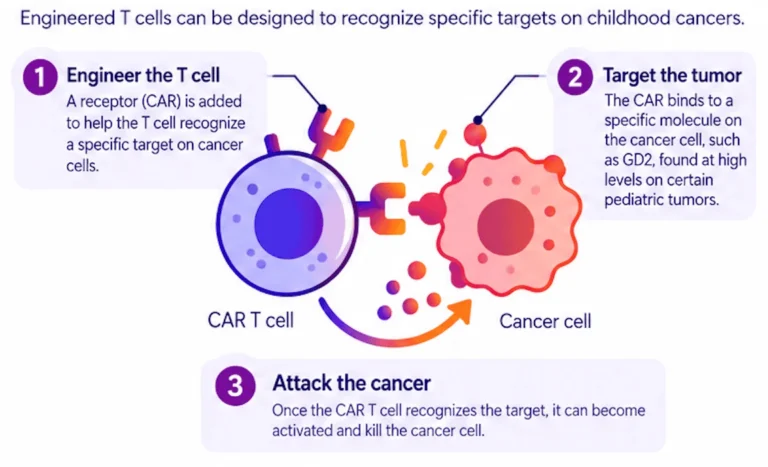
To understand the current research, one must first understand the mechanism of the treatment itself. Chimeric antigen receptor (CAR) T-cell therapy represents a paradigm shift in oncology. Unlike traditional treatments that target cells indiscriminately, CAR T-cell therapy is a highly personalized form of immunotherapy.
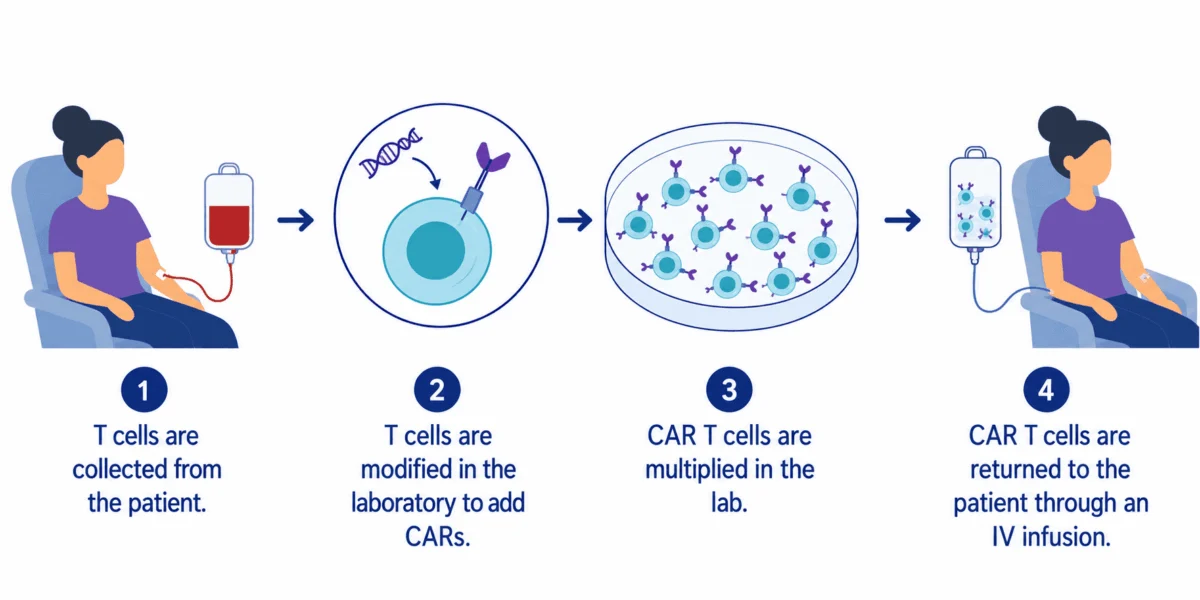
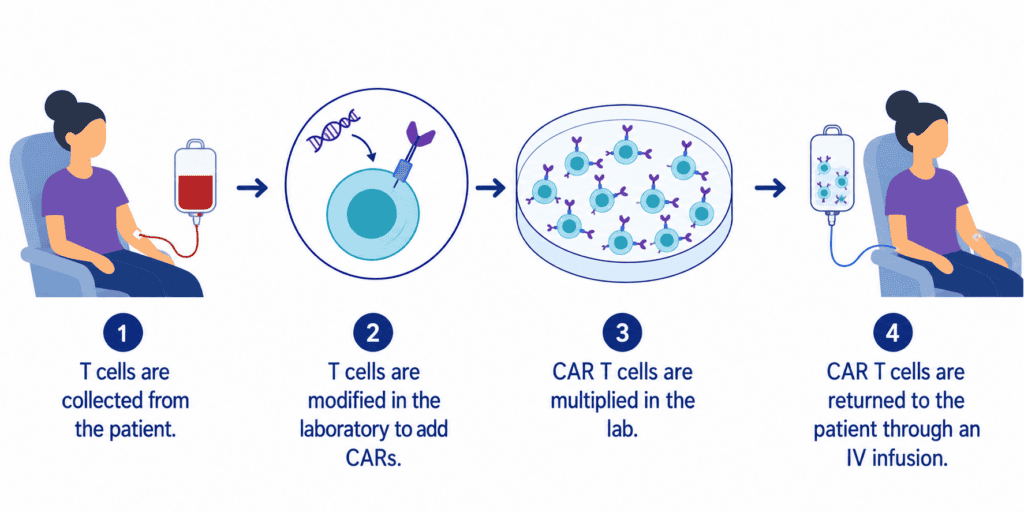
The process begins with "leukapheresis," where a patient’s T cells—the "soldiers" of the immune system—are collected from their blood. These cells are sent to a laboratory, where they are genetically engineered to express a specific "chimeric antigen receptor" on their surface. This receptor acts like a biological GPS, allowing the T cells to lock onto and destroy cancer cells that they might have otherwise ignored. Once these "supercharged" cells are multiplied in the lab, they are infused back into the patient.
The road to this technology was paved by decades of rigorous scientific inquiry. A seminal moment arrived in 2010, when research spearheaded by Dr. Carl June, a member of the Cancer Research Institute (CRI) Scientific Advisory Board, demonstrated that CAR T cells could achieve durable remission in patients with previously refractory leukemia. This proof-of-concept catalyzed the field, leading to the FDA’s historic approval of the first CAR T-cell therapy in 2017.
Since that milestone, the portfolio of available therapies has expanded significantly, now encompassing treatments for various leukemias, lymphomas, and multiple myeloma. However, as the therapy moves from a "last-resort" option to earlier lines of treatment, understanding its long-term physiological footprint has become an urgent clinical priority.
The Complexity of Fertility Data in Oncology
Why has it taken until now to gather comprehensive data on fertility and CAR T-cell therapy? The answer lies in the history of the patient population. Historically, those receiving CAR T-cell therapy were patients with aggressive, relapsed, or treatment-resistant blood cancers. Most had already endured years of intensive systemic treatments, including multi-agent chemotherapy, total-body irradiation, and high-dose stem cell transplants.
These legacy treatments are well-documented for their potential to damage reproductive organs and impair fertility. Furthermore, before a patient receives their CAR T-cell infusion, they must undergo "lymphodepletion"—a short, intense course of chemotherapy designed to clear space in the body for the new T cells to thrive.
This "treatment history noise" makes it difficult for researchers to isolate the specific impact of the CAR T cells themselves. If a patient experiences fertility issues, is it due to the genetic engineering of their immune system, the cumulative dose of prior chemotherapy, the radiation, or simply the age-related decline of fertility? Untangling these variables is a daunting task, but it is one that the current research collaborative is tackling head-on.
New Findings: A Glimmer of Evidence
To move beyond anecdotal evidence, the research team developed a patient-facing survey designed to capture raw, real-world data from adults who have navigated the CAR T journey.
The preliminary data, gathered from 106 respondents, offers the first formal glimpse into this question. Among the participants, 32 individuals expressed a desire for children post-treatment, and 12 had actively attempted to conceive. Of that group, six reported a successful pregnancy—four involving female respondents and two involving the partners of male respondents.
Crucially, at the time of the analysis, three of these pregnancies had resulted in healthy live births, and three were ongoing. None of the six couples reported the use of assisted reproductive technology (ART), such as IVF.
While the sample size is small, these findings provide a vital starting point. They do not yet provide a definitive "all-clear" signal or a statistical risk assessment, but they do provide something arguably more important: proof that conception and successful pregnancy are possible after CAR T-cell therapy.
Perspectives from the Field: Expert Commentary
The research team emphasizes that while the preliminary data is heartening, it is not the end of the inquiry.
"These early findings are encouraging, but they also highlight how much we still need to learn," says Dr. Nina Logan, Senior Director of Research & Clinical Programs at Blood Cancer United. "Our goal is to give patients and their care teams better information about fertility after CAR T-cell therapy so they can have informed conversations about treatment, survivorship, and their plans for the future."
The implications of this research are far-reaching. If clinicians can quantify the risks—or lack thereof—associated with CAR T-cell therapy, they can provide personalized counseling. For some, this may mean prioritizing fertility preservation (such as egg or sperm banking) before the lymphodepletion process begins. For others, it may offer the peace of mind necessary to plan for a future that feels attainable again.
Expanding the Horizon: Autoimmune Disease Data
Interestingly, the study of CAR T-cell therapy is no longer confined to the oncology ward. CAR T cells are currently being investigated as a revolutionary treatment for autoimmune diseases, such as lupus. Because patients with autoimmune diseases often have different treatment histories compared to cancer patients, they provide a unique, secondary lens through which to view the technology’s effects.
A 2026 report provided additional data points, tracking 14 pregnancies across 13 patients who had received CAR T-cell therapy for autoimmune conditions. By the time of the publication, eight healthy infants had been born. While these patients differ from cancer survivors in terms of their underlying biology and clinical path, the accumulation of this data helps build a broader, more robust understanding of how the human reproductive system interacts with CAR T-cell therapy.
The Future of Survivorship: Why This Research Matters
The shift in focus from "curing" to "thriving" is the hallmark of modern oncology. As treatments become more effective and more patients achieve long-term remission, the definition of success must evolve.
For the researchers at Blood Cancer United, the Moffitt Cancer Center, and the University of Florida, this study is a testament to the fact that patient experience is a vital component of clinical data. By integrating patient-reported outcomes with clinical laboratory measures, the team aims to establish clear, evidence-based guidelines that can be integrated into standard oncology care.
The path forward involves continued examination of patient outcomes, hormonal levels, and long-term reproductive health indicators in larger, more diverse cohorts. The researchers are actively calling on the survivor community to participate, noting that the contribution of every individual is essential to building the evidence base that will guide future patients.
How to Participate
The CAR T-Cell Therapy and Fertility Survey remains open to adults aged 18 and older who have undergone CAR T-cell therapy for a blood cancer. By participating, patients are not just providing data; they are helping to rewrite the narrative of what it means to be a cancer survivor in the era of immunotherapy.
If you are a survivor who has navigated this journey, your story could be the piece of the puzzle that helps a future patient make an informed decision. You can learn more about the initiative and participate by visiting the official CAR-T Fertility Survey.
Disclaimer: This article is provided for informational purposes only. The organizations mentioned do not endorse or recommend specific study participation and are not involved in the determination of eligibility. Patients interested in contributing to this research should consult with their oncology care team to ensure that participation aligns with their overall health and survivorship goals.