




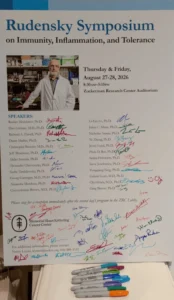
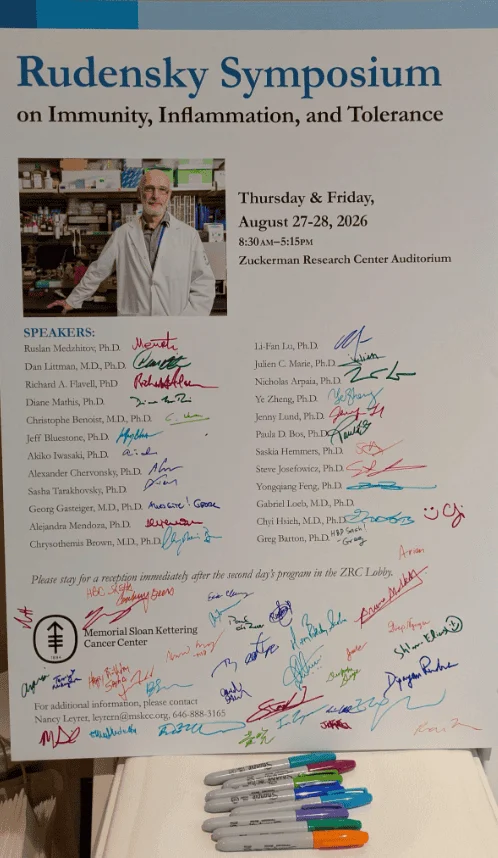
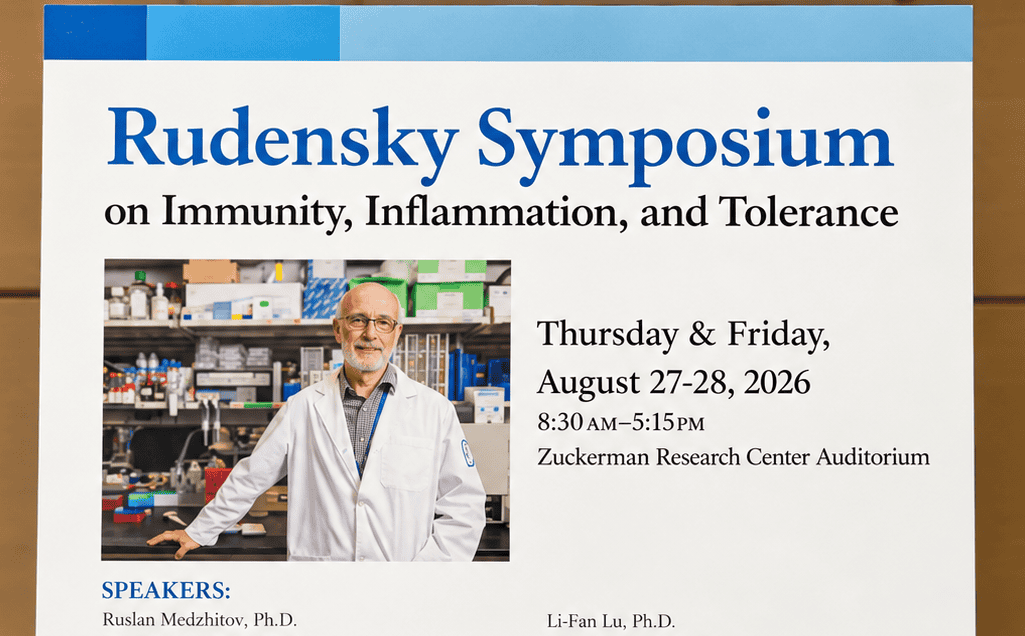
The scientific landscape of immunology is rarely shaped by isolated "eureka" moments; rather, it is carved out by decades of persistence, mentorship, and the relentless pursuit of fundamental biological questions. This reality was on full display from August 27–28, 2026, at the Rudensky Symposium on Immunity, Inflammation, and Tolerance.
Held to honor the 70th birthday of Dr. Alexander “Sasha” Rudensky, a distinguished investigator at the Memorial Sloan Kettering Cancer Center, the event served as a testament to the power of a collaborative intellectual lineage. The symposium was far more than a mere academic gathering; it was a reunion of generations of scientists—trainees, peers, and collaborators—whose careers have been inextricably linked through their shared quest to decode the immune system’s delicate balance.
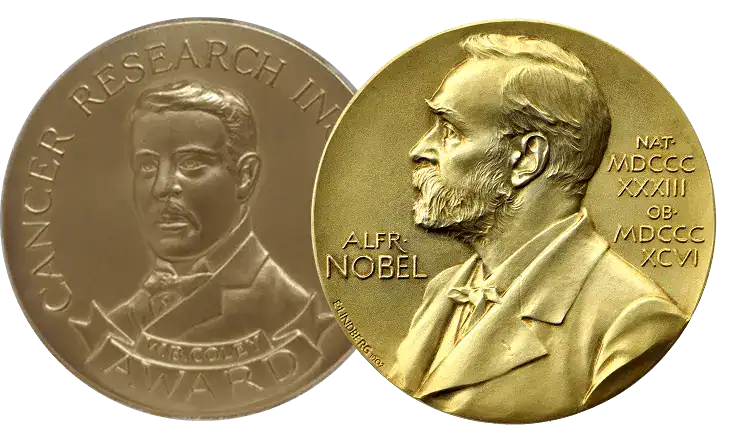
For the Cancer Research Institute (CRI), which has supported Dr. Rudensky’s pioneering work for over two decades, the symposium served as a poignant reminder of the enduring impact of long-term investment in basic science. From the 2015 conferral of the CRI William B. Coley Award upon Dr. Rudensky for his foundational discoveries in regulatory T cells (Tregs), to the dozens of CRI-funded fellows who have blossomed under his mentorship, the institute’s history is woven into the very fabric of the research presented.
The Symphony of Science: A Chronological Retrospective
The symposium’s agenda was carefully curated to mirror the trajectory of modern immunology. It began with the foundational principles of tissue homeostasis—how the body maintains order in the face of constant stress—and moved progressively toward the complex, often chaotic, tumor microenvironment.
Day 1: The Maintenance Crews of Biology
The opening sessions emphasized that the immune system is not solely a "defender" against external pathogens; it is a vital maintenance apparatus for the body’s internal architecture.
Dr. Ruslan Medzhitov, a 2003 CRI Coley Awardee, set the tone by reframing our understanding of macrophages. Far from being simple foot soldiers, these cells act as "custodial crews," identifying and removing protein “garbage” from stressed tissues. This perspective shift is crucial for cancer research, as it suggests that the failure of these maintenance systems could be a precursor to oncogenesis.
Following this, 2024 CRI Coley Awardees Dr. Diane Mathis and Dr. Christophe Benoist presented compelling evidence that immune cells, particularly Tregs, are essential for tissue repair. Dr. Mathis highlighted their role in muscle recovery and scar limitation, while Dr. Benoist elucidated the molecular mechanisms that define Treg identity. Their work underscores a vital paradox: the same mechanisms that allow a body to heal and maintain balance are the very tools that, when subverted, allow cancer to persist.
Day 2: The Pre-Tumor Landscape and Systemic Ecosystems
As the symposium transitioned into its second day, the focus shifted to the "pre-clinical" state—the critical window before a tumor becomes clinically visible.
Dr. Richard A. Flavell, a 2012 CRI Coley Awardee, presented groundbreaking mouse-model research tracking mutant intestinal stem cells. His work suggests that immunosurveillance begins long before a mass is formed, with the immune system acting as a judge, determining which mutant cells survive and which are eliminated. The discovery that Tregs and the signaling molecule IL-10 act as early checkpoints in this process offers a new, proactive paradigm for cancer prevention.
Dr. Julien C. Marie further expanded on this by exploring the plasticity of immune cells. His research into TGF-β signaling showed that when these regulatory signals are disrupted, Th17 cells—normally protective—can be forced into a pro-inflammatory state that encourages DNA damage. The fact that this state is potentially reversible via the restoration of signaling pathways offers a glimmer of hope for intercepting cancer development at its source.
The Ecosystem of the Tumor Microenvironment
The afternoon sessions were dedicated to the "wider ecosystem" of cancer. It has become increasingly clear that a tumor is not an island; it is an integrated part of a complex, systemic biological network.
The Microbiome and Systemic Immunity
Dr. Dan Littman, a 2016 CRI Coley Awardee, provided a masterclass on the gut-immune-cancer axis. His research has consistently demonstrated that the microbiome is not merely a bystander but a potent educator of the immune system. By training T cells in the gut, the microbiome can dictate the efficacy of checkpoint immunotherapy at distant sites in the body. This reinforces the idea that an effective cancer treatment may one day start with the health of the patient’s gut.
Sculpting the Tumor Microenvironment
The symposium also delved into the physical and cellular architecture of the tumor. Dr. Paula D. Bos presented data on how Tregs manipulate the tumor microenvironment by influencing macrophage behavior and collagen fiber alignment. By temporarily inhibiting specific Treg functions, researchers were able to "soften" the tumor’s defenses, disrupting the "highways" used by cancer cells to metastasize.
Building on this theme, Dr. Nicholas Arpaia explored how tumors construct "immune-suppressive neighborhoods" by recruiting specific fibroblast populations. His collaborative work with CRI Lloyd J. Old STAR Dr. Tal Danino represents the cutting edge of the field: using engineered bacteria to deliver therapeutics directly into the tumor. This "neighborhood-focused" strategy seeks to maximize immune modulation while minimizing systemic side effects.
Implications for Future Therapeutic Paradigms
The recurring theme across all presentations was the necessity of precision. We have moved past the era of "blunt-force" immune stimulation. The future lies in the nuanced calibration of the immune system.
The symposium highlighted that for every clinical success, there is a fundamental biological question that was asked years, sometimes decades, prior. Whether it was the study of how a muscle heals or how a bacterium interacts with the gut lining, these basic science inquiries have provided the scaffolding for modern cancer immunotherapy.
The implications for patients are profound. If we can identify the “pre-tumor” signals, we might one day prevent cancer rather than just treating it. If we can manipulate the “ecosystem” of the tumor, we can transform tumors that are currently resistant to therapy into ones that are sensitive to the patient’s own immune system.
A Legacy of Mentorship: The Human Element
Beyond the data, the symposium was a celebration of the "Rudensky School" of immunology. A poster board signed by dozens of his former trainees—now leaders in their own right at institutions across the globe—stood as a monument to the human side of scientific progress.
Scientific innovation does not occur in a vacuum. It is fostered by environments that encourage "rigorous disagreement," as many speakers noted, and the freedom to pursue curiosity-driven research. Dr. Rudensky’s career, supported by the CRI, stands as a model for how a single mentor can influence the trajectory of an entire field.
The CRI’s long-term commitment to this scientific community reflects a deeper philosophy: that the most transformative discoveries often come from research that, at its inception, seemed purely academic. By investing in the people—the trainees, the fellows, and the visionary leaders—the CRI ensures that the ripple effect of discovery continues to expand.
Conclusion
The Rudensky Symposium was a microcosm of the current state of immunology: ambitious, collaborative, and deeply grounded in the fundamental laws of biology. As the field moves forward, the lessons learned in the room over those two days will undoubtedly inform the next generation of cancer treatments.
By bridging the gap between tissue homeostasis and cancer progression, and by nurturing the mentorship networks that sustain the scientific community, researchers like Dr. Rudensky and his colleagues are not just writing the next chapter of cancer research—they are fundamentally changing the language in which that research is written. The legacy of this symposium will be found in the future patients whose lives are saved by the discoveries born from these questions, these collaborations, and these deep-rooted connections.