









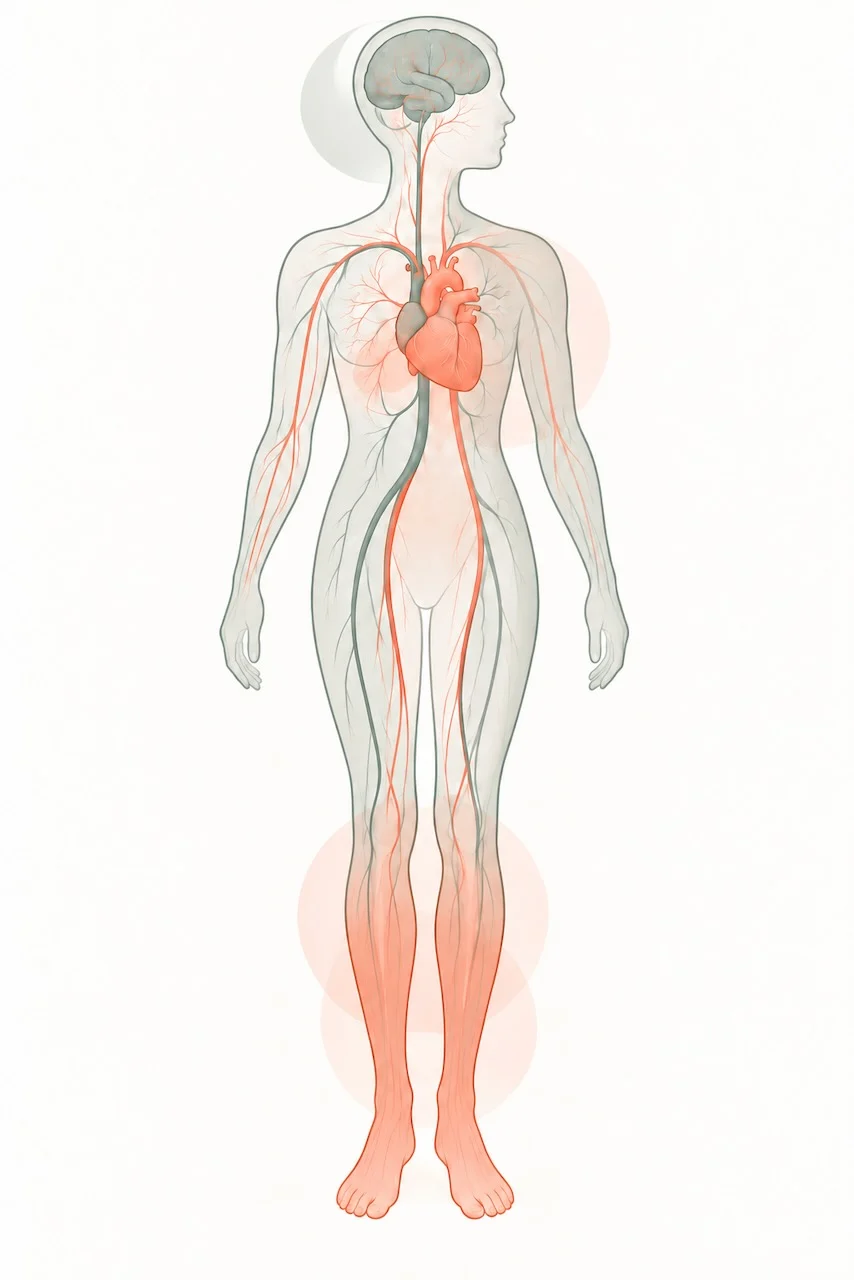
For thousands of patients worldwide, the path to a diagnosis for unexplained lightheadedness, brain fog, palpitations, and chronic fatigue is a grueling gauntlet. When a general practitioner finally provides a referral to an autonomic specialist, the patient often undergoes a tilt table test—the gold standard for assessing how the body reacts to gravity. They may exhibit classic markers of autonomic dysfunction: preload insufficiency, where the heart receives insufficient blood return, or reduced end-tidal CO2 levels. Some may even undergo a rare transcranial Doppler exam, which reveals a dangerous drop in cerebral blood-flow velocity while upright.
Yet, for many, the journey hits a wall at the finish line. If their heart rate fails to increase by the rigid, established threshold—a sustained rise of 30 beats per minute (bpm) for adults or 40 bpm for adolescents—they are often told they do not have Postural Orthostatic Tachycardia Syndrome (POTS). Despite living with identical symptoms, equal functional impairment, and similar physiological markers of autonomic instability, these patients are left in a diagnostic limbo, often denied the treatment, insurance coverage, and workplace or academic accommodations they desperately need.
A landmark international consensus paper, however, is now challenging this rigid status quo, arguing that the “POTS cutoff” should not be the gatekeeper for medical care.
The Core Facts: Redefining the Dysautonomia Landscape
The central argument presented by a multidisciplinary panel of forty experts from seven countries is that the current reliance on heart-rate criteria is overly exclusionary. While POTS remains a distinct, well-defined clinical entity, the experts acknowledge a significant, underserved subset of patients who exhibit the "POTS phenotype"—the same clinical presentation and functional burden—without the tachycardia required for a formal POTS diagnosis.
The panel emphasizes that the symptoms associated with this condition—orthostatic intolerance, exercise intolerance, cognitive dysfunction (brain fog), and chronic fatigue—are not merely subjective complaints. They are driven by measurable physiological phenomena. The clinical reality for these patients is that their bodies struggle to maintain homeostasis under gravity, regardless of whether their heart rate crosses a specific numerical threshold. By centering the diagnosis on the heart rate, the medical community has inadvertently marginalized a large population of patients whose autonomic nervous systems are failing them in ways that are clinically actionable.
Chronology of the Consensus: How Experts Converged
The movement to address this diagnostic gap did not happen overnight. It is the result of a multi-year shift in how cardiologists, neurologists, and specialized researchers view the autonomic nervous system.
- The Observation Phase (2020–2024): Researchers began noticing a growing discrepancy in clinics: patients with high-quality, research-grade data showing cerebral hypoperfusion (reduced blood flow to the brain) and autonomic dysfunction were being turned away from POTS support groups and specialized clinics because their tilt table data showed a heart rate increase of, for example, 28 bpm rather than 30 bpm.
- The Gathering of Minds (2025): Recognizing the need for a unified stance, an international group of forty experts—including neurologists, cardiologists, pediatricians, and patient advocates—convened to address the systemic failure to treat this group.
- The Consensus Process (2026): The group utilized a rigorous voting methodology to reach a consensus on 31 distinct statements. These statements were designed to move the medical community away from the "all or nothing" approach to dysautonomia.
- Publication and Dissemination (October 2026): The resulting paper, which provides the foundation for this shift, was published to serve as a beacon for clinicians who wish to treat patients based on functional impairment rather than rigid diagnostic coding.
Supporting Data: Why the Heart Rate is an Incomplete Metric
The argument for expanding the scope of dysautonomia care is rooted in the physiological reality of the patients. The consensus panel relied on several key data points:
- Cerebral Blood Flow: Research consistently shows that patients with "non-POTS" dysautonomia often exhibit the same substantial drop in cerebral blood-flow velocity as those with confirmed POTS. When blood flow to the brain is insufficient, cognitive impairment and lightheadedness are inevitable, regardless of the heart rate.
- Functional Impairment Metrics: Data presented to the panel indicated that quality-of-life scores for patients with non-POTS dysautonomia are statistically indistinguishable from those of patients with formal POTS diagnoses. Both groups face severe limitations in their ability to work, attend school, and participate in daily life.
- Consensus Agreement: The strength of the panel’s conviction was evidenced by the vote counts. Of the 31 consensus statements, all received over 90% agreement. Most impressively, 24 of these statements—including the assertion that these patients deserve accommodations—achieved 100% unanimity among the diverse group of international experts.
Official Responses and the Status of "Non-POTS Dysautonomia"
A critical nuance of the paper is its terminology. The term "non-POTS dysautonomia" is explicitly defined by the authors as a working term, not a formal, ICD-coded diagnosis. The authors emphasize that they are not looking to replace POTS or complicate the current diagnostic manual. Instead, they are looking to facilitate a conversation.
Many panel members proposed alternative descriptors to better reflect the underlying pathology, including:
- Orthostatic Cerebral Hypoperfusion Syndrome (OCHOS): Highlighting the reduction in blood flow to the brain as the primary clinical concern.
- Hypocapnic Cerebral Hypoperfusion (HYCH): Focusing on the reduced carbon dioxide levels often observed in these patients.
- Postural Symptoms without Tachycardia (PoSWoT): A descriptive term that directly addresses the diagnostic discrepancy.
The panel’s refusal to mandate a single, formal name underscores their primary goal: to ensure that the patient’s clinical needs, rather than the name of their condition, dictate the standard of care.
Implications for Patients and Physicians
The implications of this consensus are profound, particularly for the patient-physician dynamic. For too long, the phrase "you don’t have POTS" has functioned as a door-closer, ending the search for answers and leaving patients to suffer in isolation.
A New Path to Treatment
With this consensus, physicians now have a professional framework to justify treating patients who fall just outside the POTS criteria. If a patient experiences significant orthostatic intolerance, the expert consensus provides the clinical backing to implement evidence-based interventions. These include:
- Pharmacological support: Using medications to increase blood volume or stabilize vascular tone.
- Physical interventions: Utilizing compression garments and specialized exercise protocols that have been proven effective in broader dysautonomia populations.
- Lifestyle modifications: Increasing fluid and sodium intake as medically appropriate.
Advocacy and Accommodations
Perhaps most importantly, the consensus confirms that these patients are entitled to the same accommodations as those with POTS. Whether it is an ergonomic chair at work, flexible hours for a student, or specialized insurance coverage, the medical community has now formally recognized that the "lack of a label" is not a valid reason to deny support.
Moving Forward: The Future of Dysautonomia Research
While this consensus is a monumental step forward, the authors are clear that there is much work to be done. The POTS diagnostic criteria remain unchanged; the goal is not to "water down" POTS, but to elevate the care of those who have been left behind.
Future research priorities identified by the panel include:
- Biomarker Discovery: Finding objective, measurable biological markers that can define these subtypes of dysautonomia more clearly than heart rate alone.
- Standardized Diagnostic Pathways: Developing clinical guidelines that help general practitioners identify when a patient requires autonomic testing, even if they don’t present with the classic "tachycardia" symptom.
- Physician Education: Broadening the awareness of dysautonomia among primary care providers to prevent the years-long diagnostic delays that currently plague this patient population.
A Message to the Patient
If you have been told that you do not have POTS despite suffering from symptoms that feel debilitatingly similar, do not lose hope. The medical establishment is beginning to listen to the lived experience of patients and the clinical data that has been staring us in the face for years.
Bring this paper to your next appointment. Ask your doctor to focus on your symptoms—your brain fog, your lightheadedness, your exercise intolerance—rather than just the beats-per-minute count on a single test. The conversation around dysautonomia is evolving, and "not having POTS" should no longer mean that you have no path to relief, no path to support, and no path to care. You are not alone, and your symptoms are real.