







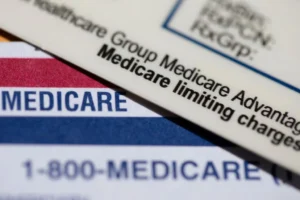




As health care costs across the United States continue to climb, a quiet but profound crisis is unfolding for millions of American seniors. With the annual Medicare open enrollment period currently underway, many beneficiaries are discovering that the private insurance plans they have come to rely on—Medicare Advantage (MA)—are becoming increasingly unstable.
From insurers pulling out of specific regional markets to the sudden elimination of long-standing plans, the landscape of senior health care is shifting beneath the feet of those who can least afford the volatility. This instability has left many navigating a complex, high-stakes puzzle, forced to choose between skyrocketing out-of-pocket costs and the daunting reality of "no-backsies" insurance rules that penalize those with pre-existing conditions.
The Shrinking Safety Net: A Growing Burden
The current pressure on seniors is part of a broader national trend. According to KFF, a leading health policy research organization, premiums for employer-sponsored family health insurance jumped 9 percent this year, pushing the average annual cost for workers beyond $7,000. While this figure reflects the general inflationary trend in medical care, the impact on the Medicare population is magnified by the structural design of Medicare Advantage.
Medicare Advantage, an alternative to "Original" Medicare, is chosen by more than 30 million Americans. These plans are run by private insurance companies that bundle hospital, medical, and often prescription drug coverage into a single package. For many, these plans have been a financial lifeline, offering lower premiums and benefits that original Medicare lacks, such as vision, dental, and hearing coverage. However, as these private insurers recalibrate their business models to protect shareholder interests, they are increasingly shedding plans that they deem insufficiently profitable.
A Chronology of Instability: From Security to Uncertainty
The frustration expressed by seniors across the country highlights a systemic failure to protect the vulnerable from market volatility.
The Illusion of Permanence
For many, the appeal of Medicare Advantage was its simplicity and its "all-in-one" nature. As Susan Hayse, a long-term Medicare Advantage user, noted, the annual notification from insurance providers—usually a routine administrative update—has turned into a source of dread. This year, many beneficiaries were shocked to see standard copays of $50 replaced by 50 percent coinsurance, effectively shifting a massive portion of the financial risk from the insurer back to the patient.
The Retreat of Carriers
The situation for Bob Heffernan, a Vermont resident, illustrates the fragility of these plans. Heffernan, who had utilized two different Medicare Advantage plans over three years, found himself with no options when both insurers withdrew from the Vermont market entirely. He was forced to scramble back to "Original" Medicare, only to find the transition fraught with financial hurdles.
The Impact of Chronic Illness
For patients facing serious health challenges, the stakes are life-altering. Diane Payne, who was diagnosed with breast cancer last November, described the harrowing experience of trying to navigate plan changes while undergoing chemotherapy and radiation. For patients like Payne, the primary concern is not just the cost of office visits, but continuity of care—ensuring that their current oncologists remain within their provider network. As benefits are cut and deductibles rise, many seniors are finding that even with insurance, their ability to afford necessary care is diminishing.
Supporting Data: The Anatomy of the Coverage Gap
To understand why this is happening, one must look at the fundamental differences between the two systems.
Traditional Medicare vs. Advantage
- Original Medicare: Managed by the federal government, it covers 80 percent of medical bills. The remaining 20 percent is the patient’s responsibility. Critically, there is no out-of-pocket maximum, meaning a catastrophic health event could lead to ruinous medical debt unless the patient purchases a supplemental "Medigap" policy.
- Medicare Advantage: Managed by private entities, these plans offer an out-of-pocket maximum, which is their most attractive feature. However, they operate on a "network" model. If a doctor or hospital is not in the network, the insurer can refuse to cover the procedure.
The "No-Backsies" Trap
Perhaps the most significant, yet least understood, obstacle is the difficulty of switching back to Original Medicare. In most states, once a senior selects a Medicare Advantage plan and attempts to return to Original Medicare later, they are subject to "medical underwriting" for Medigap supplemental insurance. If a beneficiary has developed a chronic condition—like the cancer diagnosis mentioned by Diane Payne—insurers can deny them a supplemental policy or charge them premiums so high they are effectively priced out of the market. This creates a trap where seniors feel forced to stay in a suboptimal Advantage plan because they are physically or financially barred from returning to the federal program’s safety net.
Corporate Strategy and Shareholder Pressure
When asked about the driving force behind these mass cancellations and benefit reductions, health care expert Dan Weissmann, host of the podcast An Arm and a Leg, points to a simple, cold reality: private insurance companies are answerable to their shareholders, not their patients.
"Insurance companies are private companies, and they have been deciding in a lot of cases that these plans are not going to make enough money," Weissmann explained. When a plan’s profitability drops, insurers have two options: increase costs for the patient or exit the market entirely. This corporate-first approach to public health funding has created an environment where seniors are essentially negotiating their health outcomes with a profit-seeking entity on the entity’s own terms.
The Path Forward: What Seniors Must Do
With the December 7 deadline for open enrollment approaching, the advice for seniors is to act with urgency and seek objective guidance.
1. Monitor Communications
If an insurer sends notice that a plan is changing or being eliminated, it is imperative to investigate new options immediately. Delaying this process can result in a loss of coverage or being defaulted into a plan that does not meet individual medical needs.
2. Utilize SHIP (State Health Insurance Assistance Programs)
The most valuable resource for seniors is the SHIP program. Unlike private brokers who may work on commission, SHIP counselors are part of a federally funded initiative dedicated solely to helping beneficiaries navigate their options.
3. Beware of Enrollment Caps
A concerning new development this year is that some carriers have received federal permission to cap enrollment in specific plans. This means that even if a senior identifies a plan that meets their needs, there is no guarantee they will be able to enroll if they wait too long.
Implications for the Future of Health Care
The instability in the Medicare Advantage market raises broader questions about the role of private corporations in essential public services. As the U.S. population continues to age, the reliance on private insurers to bridge the gaps in federal Medicare will likely continue to be a point of political and economic contention.
For the millions of Americans caught in the middle, the current system requires an unsustainable level of "legwork." As Diane Payne noted, the process of choosing a plan should not feel like an intelligence test or a financial gamble. Until the system offers greater transparency and protections against market volatility, the burden of navigating the high-stakes world of modern health care will continue to fall on the shoulders of those least equipped to carry it.