








In the landscape of oncology, few diagnostic tools are as fundamental—or as misunderstood—as the mammogram. As we mark National Mammography Day, the conversation surrounding breast cancer screening is shifting. While the mammogram remains the gold standard for early detection, the narrative is evolving from a binary "positive or negative" outcome to a nuanced understanding of risk, biological complexity, and the promising horizon of cancer interception.
Finding breast cancer earlier fundamentally alters the trajectory of a patient’s journey. By identifying malignant changes before symptoms manifest, clinicians can intervene when the disease is confined to the breast, often expanding the range of available treatment options. However, navigating the world of screening requires a clear-eyed view of what these tests can achieve and where they encounter their limitations.
The Core Facts: Why Screening Remains Paramount
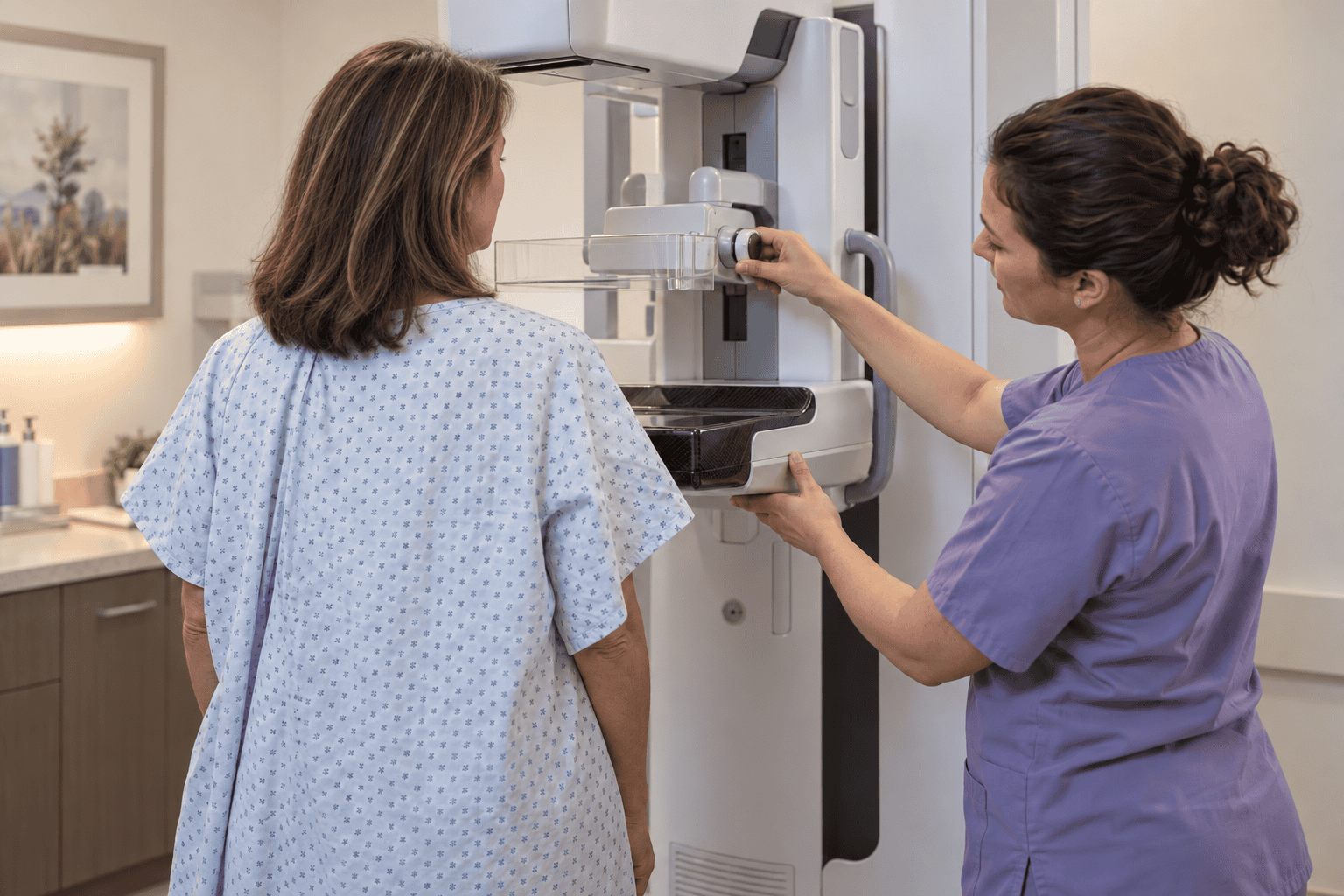
At its most basic level, a mammogram is a specialized, low-dose X-ray examination designed to visualize breast tissue. Its primary utility lies in its ability to detect calcifications or masses that are far too small to be felt during a clinical or self-exam.
1. Detection Before Symptoms
The goal of screening is to catch the disease in its silent, asymptomatic phase. When cancer is found during a screening mammogram, it is often in a stage where the primary tumor is small and contained. This provides clinicians with a critical time advantage, allowing for a more conservative approach to surgical and systemic therapies.

2. The Impact of Early Diagnosis
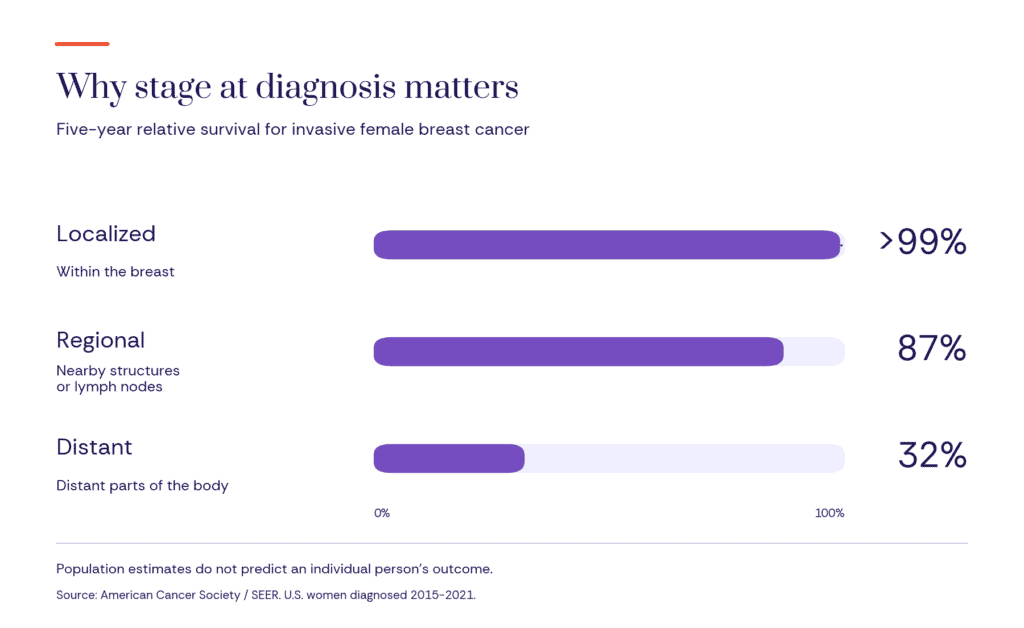
The correlation between the stage of diagnosis and long-term survival is stark. According to 2026 data from the Surveillance, Epidemiology, and End Results (SEER) program, the five-year relative survival rate for localized female breast cancer—where the disease has not spread beyond the primary site—is greater than 99%. This figure drops to 87% for regional disease and declines to 32% for distant, metastatic disease. While these population-level statistics cannot predict the outcome for any single individual, they provide an indisputable argument for the necessity of regular, evidence-based screening.
3. Treatment De-escalation
One of the most profound benefits of early detection is the potential for "treatment de-escalation." When breast cancer is detected early, patients may be eligible for less aggressive surgical interventions, such as lumpectomy rather than mastectomy, and may avoid the systemic toxicity of certain chemotherapy regimens. Regular participation in screening programs is strongly associated with a higher likelihood of finding smaller tumors that are amenable to these less invasive, yet highly effective, treatment protocols.

A Chronology of the Mammographic Journey
Understanding the screening process can alleviate the anxiety often associated with the appointment. The process follows a standardized clinical pathway:
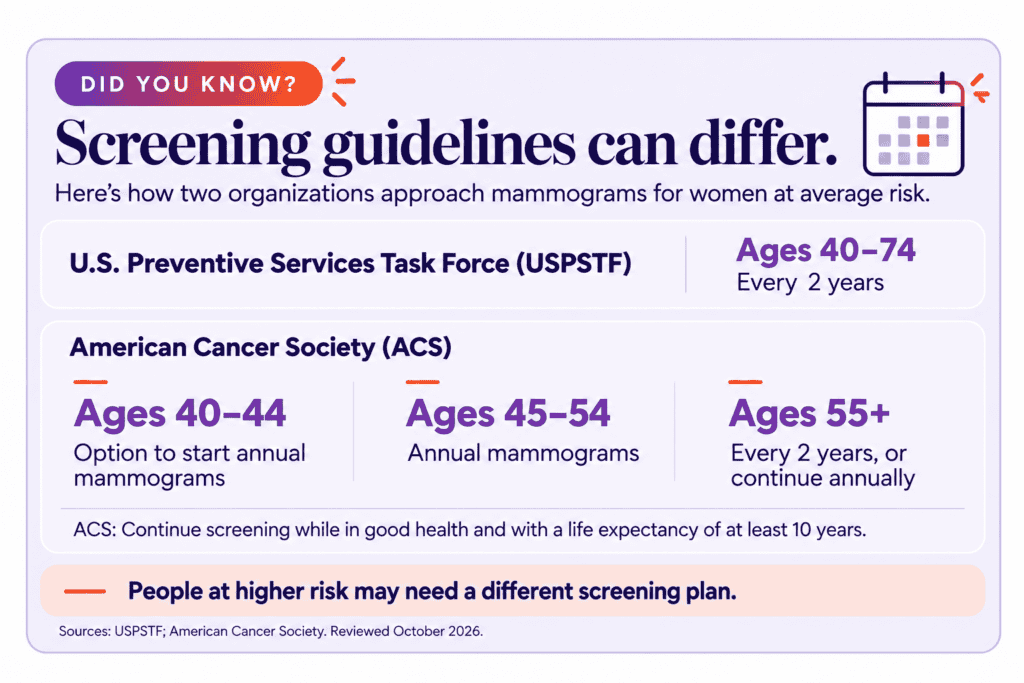
- The Baseline Scan: For most women, screening begins in their 40s. These images serve as a personal reference point, allowing radiologists to track subtle changes in breast architecture over time.
- The Interpretation Phase: A radiologist examines the images for asymmetries, masses, or clustered calcifications.
- The Callback: Approximately 10% of screening mammograms result in a "callback." It is critical to note that an abnormal mammogram is not a cancer diagnosis. In the vast majority of cases, these findings are benign—cysts, fibroadenomas, or simply dense tissue that requires a second look.
- Diagnostic Follow-up: When a callback occurs, the patient is invited for diagnostic imaging. This may involve high-resolution "spot compression" mammography, breast ultrasound, or, in specific cases, an MRI. If a suspicious area remains, a biopsy—the only definitive way to diagnose cancer—is performed.
Supporting Data: The Complexity of Tissue Density
One of the most significant challenges in modern radiology is breast density. Nearly half of all women over the age of 40 have dense breast tissue, which is characterized by a higher proportion of glandular and fibrous tissue relative to fatty tissue.
On a mammogram, both dense tissue and tumors appear white. This creates a "masking effect" that can make it difficult for radiologists to distinguish between healthy, dense structures and potentially malignant ones. Furthermore, medical research has established that dense breast tissue is an independent risk factor for the development of breast cancer. This duality—that density both masks potential cancer and indicates a higher risk—has led to significant updates in patient notification laws and a movement toward personalized screening protocols, such as supplemental ultrasound or contrast-enhanced imaging.
Official Perspectives and Screening Guidelines
Health organizations, including the American Cancer Society and various clinical colleges, continuously refine screening guidelines based on evolving longitudinal data. The consensus is that while no screening test is perfect, the balance of benefits—specifically the reduction in breast cancer mortality—outweighs the risks, such as false-positive results or overdiagnosis.

Overdiagnosis occurs when a mammogram identifies a "cancer" that would have grown so slowly that it never would have caused health problems during the patient’s lifetime. Because we currently lack the clinical tools to perfectly predict which cancers will become aggressive and which will remain indolent, screening inevitably captures these cases. This reality is why the medical community emphasizes the importance of shared decision-making between patients and their physicians, particularly for those with unique risk factors, such as family history or genetic predispositions (e.g., BRCA1/2 mutations).
The Future: The Era of Cancer Interception
The next frontier in oncology is moving beyond the "detection of a tumor" toward the "interception of biology." Researchers are currently pivoting toward identifying the molecular and cellular markers that exist before a tumor is ever formed.
The Rise of "Cancer Interception"
Scientists are now investigating the tumor microenvironment, early immune system signatures, and genetic indicators that precede clinical breast cancer. The goal is to develop diagnostic tools that can identify a "precancerous" state. By intervening at this stage—perhaps through immunoprevention or therapeutic vaccines—we may one day be able to stop cancer in its tracks before a mass is ever visible on an X-ray.
Investing in Innovation
Organizations like the Cancer Research Institute (CRI) are spearheading this shift. Through initiatives like the 2027 Clinic and Laboratory Integration Program (CLIP), funding is being funneled directly into research focused on immune-based prevention. This represents a paradigm shift: instead of waiting for a cancer to develop and then attacking it, we are learning how to bolster the body’s natural defenses to prevent the malignancy from gaining a foothold.

Clinical Implications: A Call to Action
On this National Mammography Day, the message is one of empowerment through information. We must move past the fear of the "callback" and recognize it as a safety mechanism, not an indictment.
The clinical implications of the current research are clear:

- Personalize your care: Speak with your doctor about your breast density and your personal risk profile. One size does not fit all.
- Stay consistent: Early detection is a longitudinal effort. The value of a mammogram is often found in the comparison to previous years’ images.
- Stay informed: As the field of cancer interception advances, keep abreast of new screening technologies that may eventually supplement or replace traditional mammography.
While we wait for the day that cancer can be intercepted or prevented entirely, the mammogram remains our most reliable ally. It provides the crucial, life-saving window of opportunity to diagnose breast cancer early, when the disease is most manageable, and when the options for successful treatment are at their peak.
As we look toward the future, the integration of new diagnostic biomarkers and immune-based surveillance promises to expand that window even further, turning the tide from reactive treatment to proactive, personalized health management.
Sources and Further Reading
- American Cancer Society (2026): "Survival Rates for Breast Cancer" – An analysis of stage-at-diagnosis outcomes.
- Cleveland Clinic (2026): "What is a Mammogram?" – Clinical definitions and procedural safety guidelines.
- Mayo Clinic: "Understanding Your Mammogram Report" – Guidance on breast density and follow-up protocols.
- Cancer Research Institute (CRI): "2027 Clinic and Laboratory Integration Program (CLIP)" – Research documentation on immune-based cancer interception.