






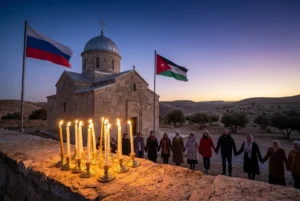



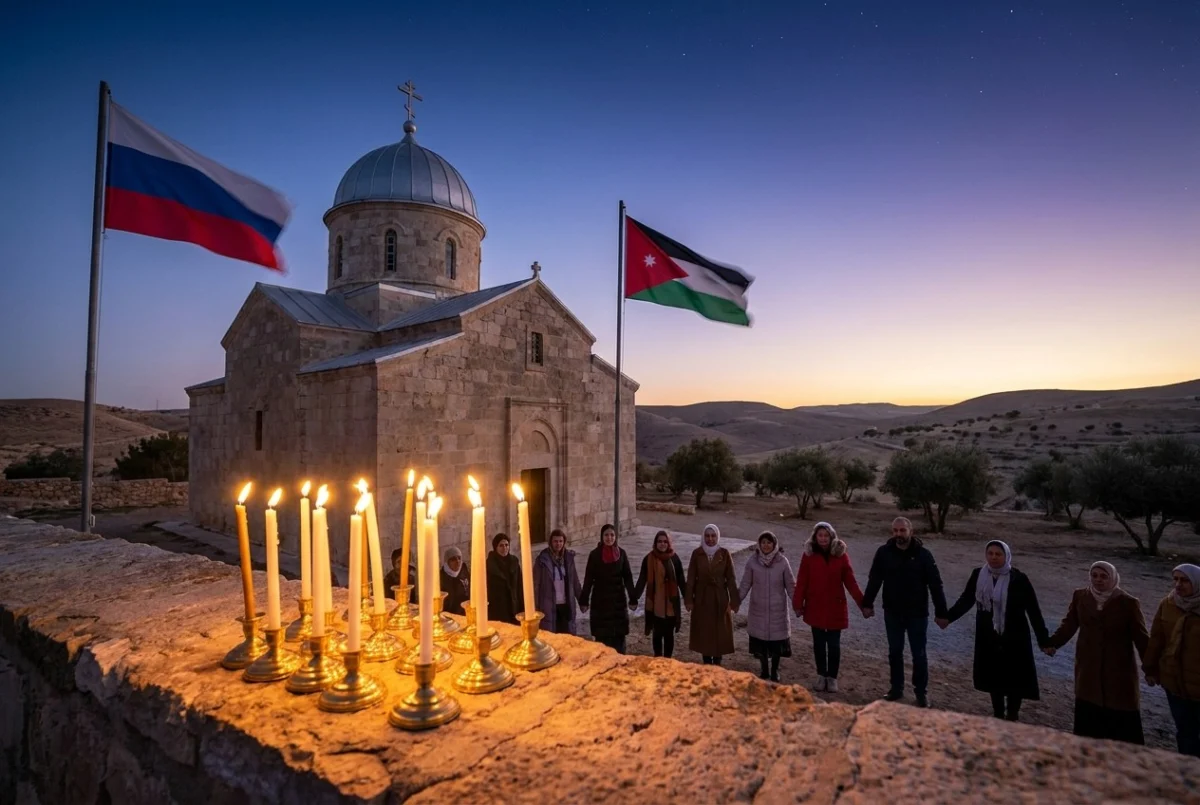
MOSCOW/AMMAN – The Russian Ministry of Foreign Affairs (MID) issued a stern condemnation this week following a devastating terrorist assault on a Christian place of worship in southern Jordan. The attack, which struck the St. George’s Rûm Orthodox Church in the village of Hamoud, Karak Governorate, has drawn widespread international outrage, sparking a unified diplomatic response against extremist violence aimed at fracturing the delicate social fabric of the Hashemite Kingdom.
The Russian government, through official statements released by spokeswoman Maria Zakharova, characterized the incident as a deliberate provocation designed to undermine interfaith harmony. As global leaders and regional organizations rally in support of Amman, the tragedy has once again spotlighted the persistent threat of radical militancy in the Levant.
Main Facts: A Targeted Assault on Faith
The attack occurred on a quiet Saturday, targeting a memorial service held within the walls of St. George’s Rûm Orthodox Church. According to reports from the Syriac Press and local Jordanian authorities, the violence resulted in at least nine deaths, with approximately 40 individuals sustaining injuries, some of whom remain in critical condition.
The Islamic State (IS) group has claimed responsibility for the carnage, a development that has prompted security agencies across the region to heighten alert levels. While the Russian Ministry of Foreign Affairs did not explicitly name the perpetrators in its initial diplomatic communiqué, it emphasized that the assault on a religious site and the congregants gathered within it constitutes an "unacceptable" violation of human rights and international moral standards.
The Russian statement, published on the Ministry’s official website and echoed via its presence on X (formerly Twitter), underscored Moscow’s unwavering commitment to the stability of the Jordanian state, a nation Russia views as a key partner in the Middle East.
Chronology of the Incident
The sequence of events unfolded rapidly, leaving the local community in shock and the international diplomatic community scrambling to respond.
- Friday, Oct 23: Preparations for a memorial service at St. George’s Rûm Orthodox Church in Hamoud village were underway. Intelligence reports later suggested a heightened state of alert, though the specific threat remained elusive.
- Saturday, Oct 24 (Morning): Militants executed the attack during the memorial service. The assault, involving both kinetic force and explosive elements, led to immediate casualties among the attendees.
- Saturday, Oct 24 (Afternoon): Jordanian security forces secured the site, though the death toll began to climb as emergency services arrived. Initial reports suggested fewer casualties, but as the Syriac Press and other outlets corroborated, the figure eventually settled at nine confirmed fatalities.
- Saturday, Oct 24 (Evening): The Russian Ministry of Foreign Affairs published its official statement. Simultaneously, the Islamic State group issued a claim of responsibility.
- Sunday, Oct 25: A wave of international condemnations began to flood the diplomatic channels, with the Organization of Islamic Cooperation (OIC), Pakistan, France, and various regional powers issuing formal declarations of solidarity with Jordan.
Supporting Data: Casualty Discrepancies and Security Context
One of the primary challenges in the immediate aftermath of the attack was the variance in reporting. While the Russian Ministry’s official statement remained broad—focusing on the nature of the attack rather than granular statistics—Jordanian domestic media provided a more harrowing account.
The discrepancy in figures—often a hallmark of chaotic terror incidents—is largely attributed to the initial confusion on the ground and the time required for hospitals to verify identities and statuses of the wounded. With 40 people injured, the strain on the Karak Governorate’s medical infrastructure was significant, prompting an emergency mobilization of healthcare workers from the capital, Amman.
The choice of target—a church during a memorial service—is viewed by security analysts as a tactical attempt to exacerbate sectarian tensions. Jordan has long been lauded as a model of interfaith coexistence in a region often plagued by religious strife. By striking a Christian site, the perpetrators aimed to provoke a reactionary divide between the Muslim majority and the Christian minority, a goal that both the Jordanian government and international observers are working to neutralize through calls for national unity.
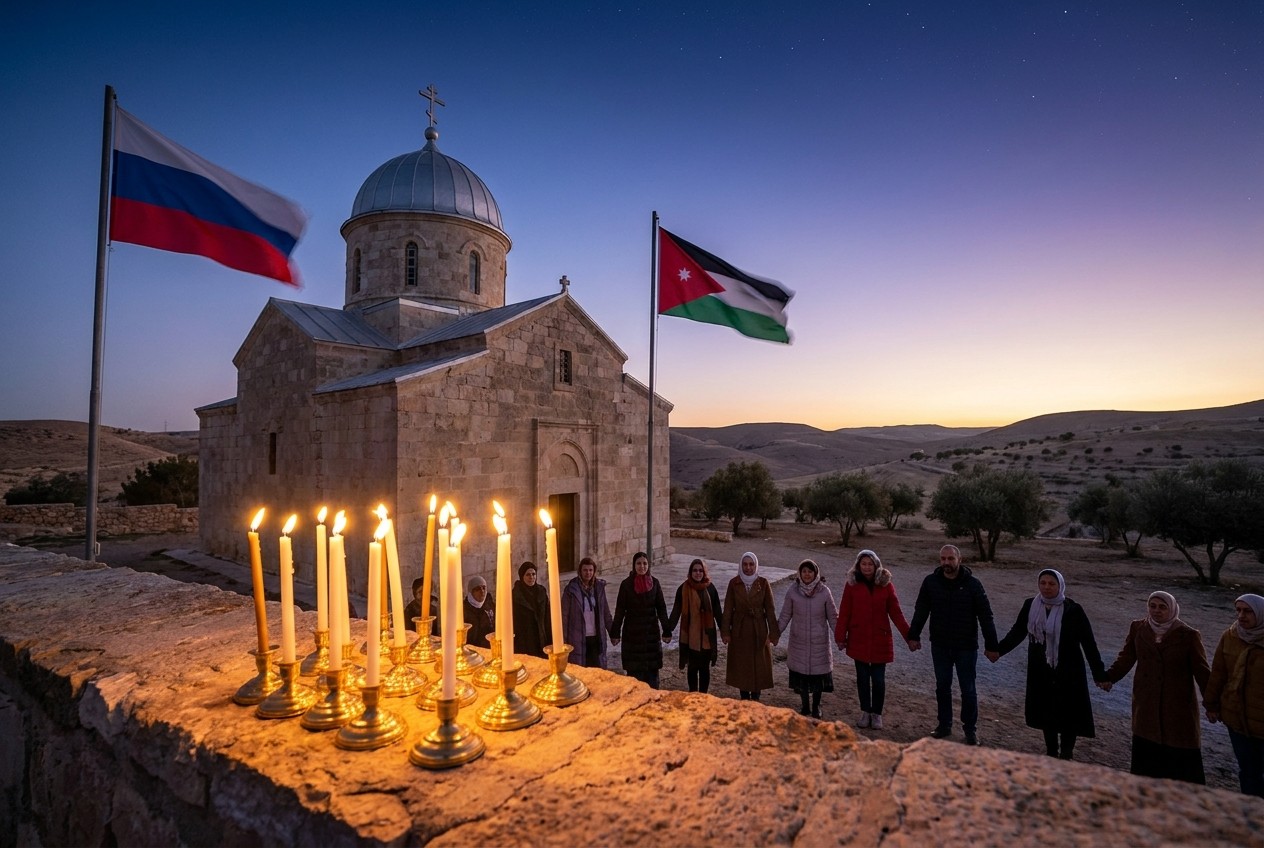
Official Responses: A Diplomatic Front Against Extremism
The condemnation from Moscow follows standard diplomatic protocols, yet its emphasis on "interfaith peace and harmony" reflects Russia’s broader foreign policy interest in maintaining secular, stable governance in Middle Eastern states to prevent the spread of regional instability.
The Russian Position
Maria Zakharova’s statement emphasized that Moscow stands in "solidarity with Amman in countering terrorism and extremism." By categorizing the event as an attack on "those who visit religious sites," Russia reinforced its long-standing stance that protected places of worship are inviolable, a message that holds significant resonance in the context of Russian Orthodox interests globally.
The International Response
The incident triggered an immediate global response, showcasing the high level of diplomatic concern regarding the security of Jordan:
- Organization of Islamic Cooperation (OIC): Secretary-General Ismail Oueld Cheikh Ahmed issued a scathing denunciation, labeling the act "heinous" and emphasizing that such violence has no place in the Islamic world or modern society.
- Pakistan: The Pakistani Ministry of Foreign Affairs echoed these sentiments, highlighting the tragedy of the attack taking place during a funeral procession, an act deemed particularly egregious under local cultural and religious norms.
- France and the GCC: Both the French government and the Gulf Cooperation Council (GCC) issued statements reaffirming their support for the Jordanian leadership, emphasizing that the security of the Hashemite Kingdom is paramount to regional peace.
Implications: The Future of Jordanian Security
The attack on St. George’s Rûm Orthodox Church serves as a grim reminder that despite Jordan’s relative stability compared to its neighbors, the threat of lone-wolf actors and organized cells remains a critical concern.
The Challenge to Social Harmony
The primary objective of the terrorists was to shatter the peace between Jordan’s religious communities. However, the immediate response from Jordanian leaders—who were quick to meet with religious representatives—suggests that the state is prepared to weather this storm. The government’s narrative has focused on the victims as "children of Jordan," deliberately avoiding the sectarian categorization the terrorists hoped to ignite.
Counterterrorism Cooperation
The Russian response, while diplomatic in nature, hints at a deeper, ongoing intelligence and security cooperation between Moscow and Amman. Russia’s affirmation of solidarity suggests that the Kremlin sees the fight against the Islamic State not just as a regional Jordanian concern, but as a prerequisite for its own security interests in the Levant. Moscow’s lack of announcement regarding "additional measures" should not be interpreted as passivity; rather, it indicates that the existing framework of counterterrorism cooperation—involving intelligence sharing and diplomatic alignment—remains the preferred vehicle for addressing such crises.
The Road Ahead
As the investigation into the Hamoud village attack continues, the Jordanian government faces the difficult task of balancing robust security crackdowns with the need to maintain public trust. The international community, including Russia, will likely continue to monitor the situation closely, providing both moral and, if requested, technical support in tracking the remnants of the cell responsible for the attack.
In conclusion, while the violence at St. George’s Rûm Orthodox Church was designed to divide, the global reaction has been one of unified condemnation. The tragedy has solidified the resolve of nations like Russia, Pakistan, and members of the OIC to stand by Jordan. The resilience of the Jordanian state, bolstered by this international backing, will be the decisive factor in ensuring that this act of terror does not achieve its ultimate goal of dismantling the hard-won harmony of the Hashemite Kingdom.
The focus now shifts to the pursuit of justice for the nine victims and the forty injured, ensuring that the perpetrators are held accountable and that the sanctity of religious life in Jordan remains protected against the tides of radicalism.