








For over a decade, Dr. Gabrielle Fundaro was the gold standard of nutritional discipline. With a PhD in Human Nutrition, an extensive career in high-level coaching, and a resume featuring six competitive powerlifting meets, she was the person peers turned to for advice on macros, caloric density, and metabolic efficiency. Yet, behind the scenes, a quiet crisis was unfolding.
Despite her expertise, Dr. Fundaro felt increasingly disconnected from her own biology. She was a prisoner to the very metrics she used to guide others, trapped in a cycle of meticulous macro tracking that left her feeling anxious, restricted, and unable to enjoy a simple meal without checking a database. Her story is not unique; it is a reflection of a growing movement in the fitness world that is finally questioning the sustainability of rigid data-tracking as a lifelong lifestyle.
The Chronology of a Nutritional Burnout
For years, macro counting served Dr. Fundaro well. It provided the data-driven structure needed to optimize body composition and powerlifting performance. However, there came a tipping point. The exhaustion of constantly balancing protein, fats, and carbohydrates began to outweigh the benefits.
The turning point occurred when Dr. Fundaro realized that her reliance on external metrics had eroded her internal trust. She found herself paralyzed by "what-ifs": What if I don’t hit my protein target? Will my muscle mass evaporate? What if I overeat at dinner?
She realized that despite her professional qualifications, she had lost the ability to simply listen to her body. She began to experiment with alternatives, yet found common solutions lacking. Traditional "Intuitive Eating" felt too vague for her, as she had spent years training her brain to respond to numbers rather than sensations. She needed a middle ground—a system that offered the structure of a framework but the autonomy of internal cues.
The breakthrough came at the gym. While training, she utilized the Rate of Perceived Exertion (RPE) scale, a well-established method in strength sports that allows athletes to gauge their intensity based on subjective feel rather than arbitrary weight percentages. It dawned on her: If RPE could help a lifter gauge their recovery and output safely, could it not also help a person navigate their relationship with food? Thus, the "RPE-Eating" framework was born.
The Mechanics of RPE-Eating: A New Paradigm
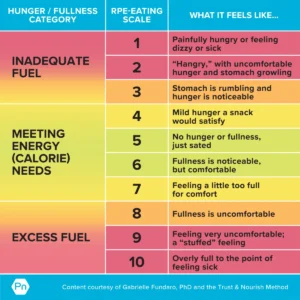
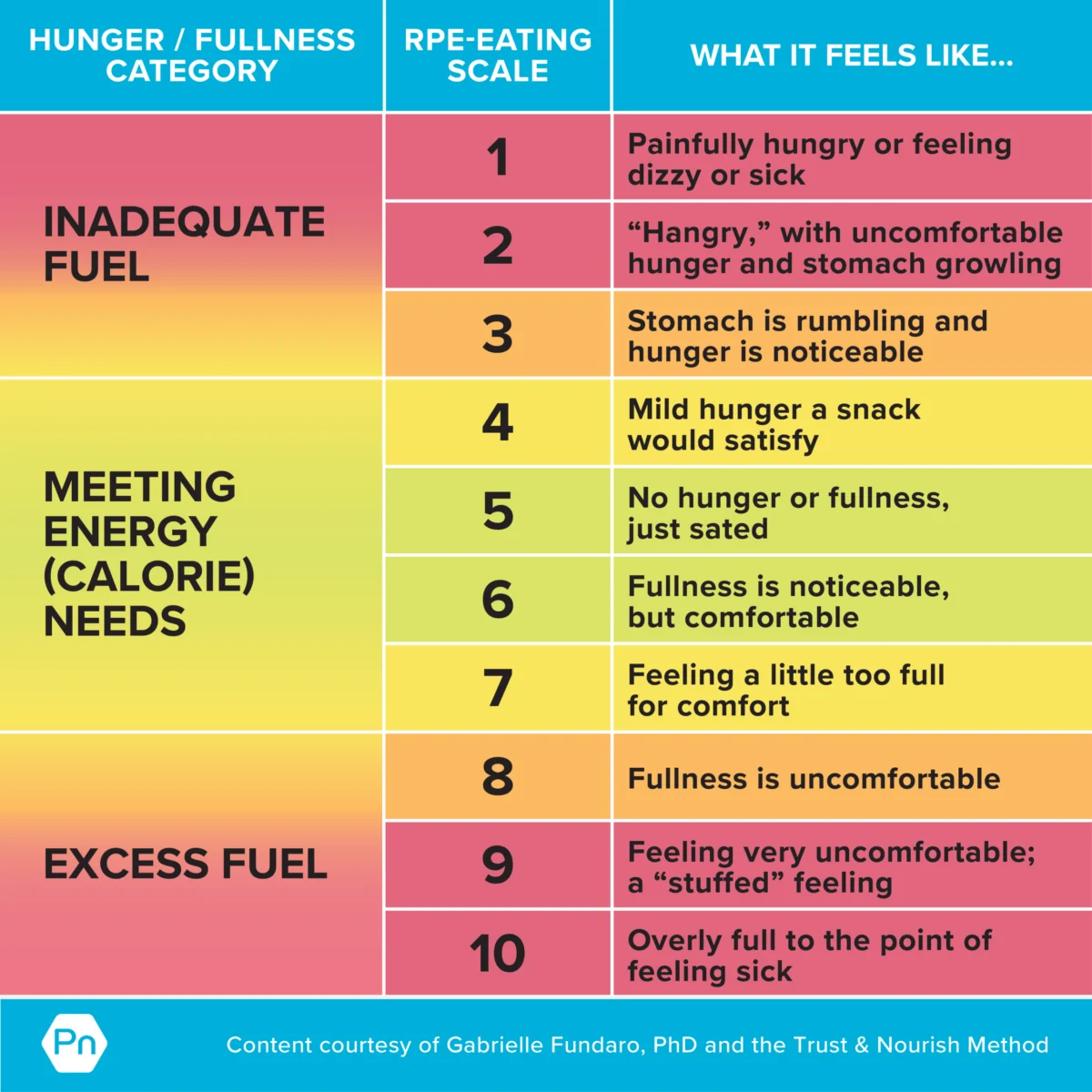
At its core, RPE-Eating is an application of Gunnar Borg’s 1960s exercise exertion scale to the act of fueling the body. While standard RPE for exercise ranges from 6 to 20, Dr. Fundaro adapted a simplified 1–10 scale for nutrition.
- 1–3 (Inadequate Fuel): Characterized by dizziness, physical weakness, or "hangry" irritability.
- 4–7 (Adequate Fuel): The sweet spot of satisfied hunger, stable energy, and comfortable digestion.
- 8–10 (Excess Fuel): Ranges from uncomfortable fullness to physical sickness.
The objective is not to hit a perfect number, but to develop "interoceptive awareness"—the physiological skill of identifying internal sensations. By moving away from an app-based tracker, the practitioner learns to "download" the feeling of satiety into their long-term memory, effectively replacing software with self-awareness.
Supporting Data and the Science of Interoception
Critics often dismiss RPE-Eating as "eating by feelings," but the science suggests otherwise. Interoceptive awareness is a measurable physiological process involving the integration of signals from the gut, the brain, and the endocrine system.

Research in sports science has long validated that RPE is often as reliable as, and sometimes superior to, external tracking metrics like velocity-based training. By teaching the body to recognize the absence of hunger as a proxy for satiety, individuals can regulate their energy intake without the stress of constant data entry. This is not a return to "mindless" eating; it is a shift to "mindful" regulation.
Official Perspectives: When to Use RPE-Eating
Dr. Fundaro emphasizes that this method is not a replacement for medical nutrition therapy in cases of clinical eating disorders. However, for the general population or clients with a history of restrictive dieting, it serves as a crucial "off-ramp."
Who is this for?
- The Tracker-Weary: Individuals who feel burdened by the necessity of constant app usage.
- The "All-or-Nothing" Dieter: Those who spiral into anxiety the moment they stop counting calories.
- Performance Athletes: Those looking for a more sustainable way to manage nutrition during off-seasons or maintenance phases.
A Note on Weight Modification
Contrary to the belief that non-tracking methods lead to weight gain, Dr. Fundaro notes that RPE-Eating can be used for intentional weight goals. For weight loss, the goal is to consistently navigate meals within the 4–5 range—prioritizing satiety over emotional gratification. For weight gain, the target shifts to the 7–8 range. Crucially, she argues that this method provides a "safety net" that traditional macro-tracking lacks, as it encourages individuals to stop eating when the body truly indicates it has had enough, rather than when a calculator says so.
The Implications: Beyond the Plate
The implications of RPE-Eating extend far beyond the physical act of eating. It addresses the emotional and psychological weight of the "always-on" diet culture.
Satiety vs. Satisfaction
A pivotal aspect of the framework is the distinction between satiety (the physical state of being full) and satisfaction (the emotional state of being nourished). Many restrictive diets achieve satiety by filling the stomach with high-volume, low-calorie foods, but fail to provide satisfaction. This leads to the "pendulum effect"—restricting "forbidden" foods until the inevitable binge. RPE-Eating encourages users to incorporate foods they enjoy, provided they pay attention to the scale. This prevents the psychological categorization of foods as "good" or "bad," which is often the precursor to disordered eating.
The Challenge of Modern Life
One must acknowledge the practical hurdles. Modern life—rushed lunches, professional stress, and the constant digital bombardment—is often the enemy of interoceptive awareness. Dr. Fundaro acknowledges that this is a laborious process. It requires the courage to sit with one’s own sensations and the discipline to step away from distractions. She suggests that if a person cannot perform a full RPE-Eating cycle during a busy workday, they should simply implement parts of the practice, such as "noticing and naming" their triggers before eating.
Conclusion: Reclaiming the Internal Compass
The shift toward RPE-Eating is, at its heart, a shift toward autonomy. For years, the fitness industry has relied on the promise that "if you measure it, you can control it." While this is true for short-term body composition changes, it is often a poor long-term strategy for human psychology.
By transitioning from external metrics to internal ones, Dr. Fundaro has provided a bridge for those who are tired of the cycle of tracking but terrified of letting go. The goal is no longer to be a perfectly optimized machine; the goal is to be a person who can trust their own body to signal what it needs.
As Dr. Fundaro puts it, the ultimate measure of nutritional success is not a green checkmark in a tracking app. It is the quiet confidence of knowing you are nourishing yourself, fully and completely, with no tracker in sight. For many, that is the most sustainable gain they will ever make.